Chinese FM kicks off Africa visit in Egypt

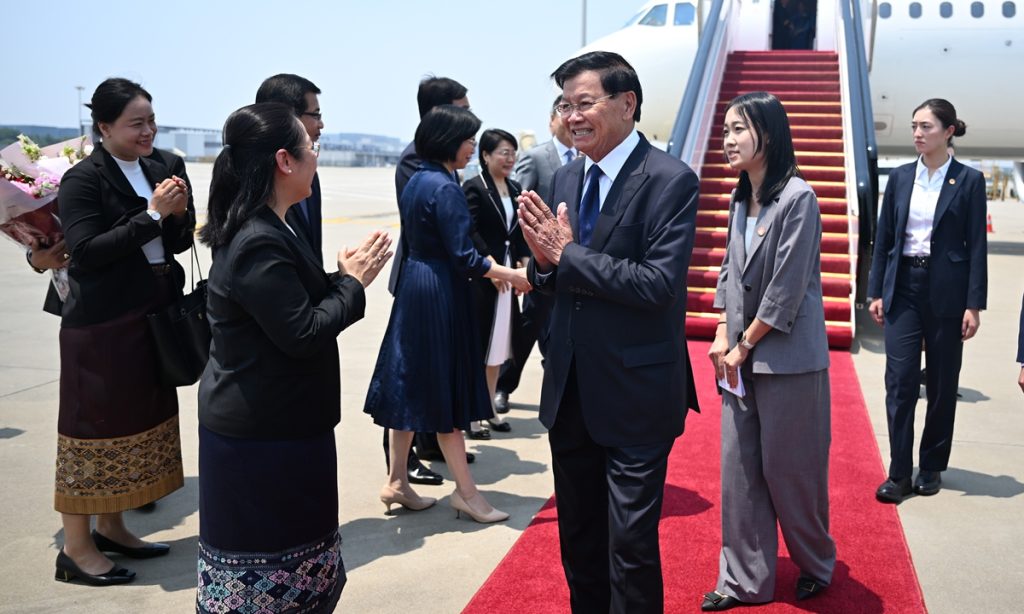
Chinese Foreign Minister Wang Yi on Saturday night local time arrived in Egypt, the first leg of his four-nation Africa tour this week. This is the 34th consecutive year when a Chinese foreign minister has visited Africa as their first overseas trip at the beginning of the year.

Coming shortly after Egyptian President Abdel-Fattah al-Sisi's successful reelection in December 2023, and amid the already 100-day Palestinian-Israeli conflict in the Middle East, Wang's visit is of great significance, Chinese analysts said. They predicted that further coordinating their positions concerning hot-spot issues, especially the Palestinian-Israeli conflict in the Gaza Strip, and its spillover in the region such as the Red Sea turmoil, will be high on the agenda during Wang's exchanges with Egyptian officials.

China and Egypt are to explore the potentials of their bilateral and multilateral cooperation in a variety of fields under multilateral frameworks that include the China-proposed Belt and Road Initiative and BRICS, analysts said on Sunday.

On Sunday, President Sisi met with Wang Yi in Cairo. The Egyptian president expressed gratitude for China's strong support for Egypt's social and economic development, noting significant achievements in jointly building the Belt and Road Initiative.

He reaffirmed Egypt's commitment to the one-China principle and opposition to interference in China's internal affairs.

Wang Yi thanked Egypt for supporting China's rightful stance. China appreciates Egypt's active response to the Belt and Road Initiative and will remain to be a long-term, reliable strategic partner in Egypt's development and revitalization. China aims to strengthen the alignment of development strategies and practical cooperation for greater achievements, working together toward modernization, Wang said.

Both sides agreed to continue strengthening communication and collaboration within frameworks such as BRICS and the United Nations. Wang Yi stated that Egypt, as an Arab, African, Islamic, and developing major country, is congratulated on becoming a new member of BRICS.

They also exchanged views on the Palestinian-Israeli situation, agreeing on the need for an immediate cease-fire and preventing further conflict escalation. A joint statement regarding the situation was issued.

During the visit, Wang Yi and Egyptian Foreign Minister Shoukry also discussed and signed the second five-year plan for the China-Egypt comprehensive strategic partnership.

Wang Yi, in a joint press conference with Shoukry after their talks, expressed deep concern over the recent rapid escalation of the situation in the Red Sea, and called for an end to attacks on civilian ships.

At the same time, China believes that the UN Security Council has never authorized any country to use force against Yemen, and actions should be avoided that would add fuel to the tension in the Red Sea and increase the overall security risks in the region. It must be emphasized that the tension in the Red Sea is a prominent manifestation of the spillover of the Gaza conflict, Wang said.

The urgent task is to quickly quell the war in Gaza to prevent the conflict from further expanding or even getting out of control. All parties need to jointly maintain the safety of the Red Sea waterway in accordance with the law, while genuinely respecting the sovereignty and territorial integrity of the Red Sea coastal countries, including Yemen, he noted.

Egypt is the first African nation Wang would visit during his current Africa trip, which is of significance, coming so soon after President Abdel-Fattah al-Sisi's successful reelection. The Egyptian government has launched development plans and targets, including attracting investment and boosting tourism, to tackle the country's economic challenges, He Wenping, a director with the Institute of West Asian and African Studies under the Chinese Academy of Social Sciences, told the Global Times on Sunday.

Regarding bilateral and multilateral cooperation, Zhu Yongbiao, executive director of the Research Center for the Belt and Road at Lanzhou University, told the Global Times that the conversation will be carried out within the framework of the China-proposed Belt and Road Initiative, as well as under the BRICS framework.

BRICS inducted five new member countries - Saudi Arabia, the United Arab Emirates, Egypt, Iran and Ethiopia - into the bloc in early January 2024. The integration of new member states marked a major expansion for the bloc originally founded by Russia, Brazil, China, and India in 2006, and later joined by South Africa in 2011.

Wang's visit seeks to implement the outcomes of the China-Africa Leaders' Dialogue held in August, 2023 in Johannesburg, South Africa, according to Zhu.

China announced at the 2023 Leaders' Dialogue it would launch the Initiative on Supporting Africa's Industrialization, the Plan for China Supporting Africa's Agricultural Modernization and the Plan for China-Africa Cooperation on Talent Development, as part of the efforts to chart the course for China-Africa practical cooperation in the next stage and help Africa bring its integration and modernization into a fast track, according to the Xinhua News Agency.

China and Africa will host the ninth ministerial conference of the Forum on China-Africa Cooperation (FOCAC) in China in 2024, which will likely take place in Beijing towards the end of the year.

FOCAC is hailed by the international community as an epitome of an efficient and effective platform for South-South cooperation and is a springboard for Africa and China to firmly support each other in strengthening development interests and collaboration in international affairs, as well as at multilateral occasions.

China-Egypt cooperation covers various fields, including infrastructure like development of the new Egyptian capital, railway projects and space collaboration with the launch of Egypt's second satellite. There is also cooperation in oil development, with new oil fields discovered in Egypt, as well as in aviation and technology, He Wenping said.

Wang's visit will further align the China-proposed Belt and Road Initiative with Egypt's 2030 development vision. Egypt's new government has many plans in motion, including tourism cooperation and dealing with their foreign exchange shortage, which might involve trade and import of non-Egyptian agricultural products. All these areas are expected to feature in the bilateral discussions and potential cooperation agreements, He explained.

World's longest super sea-crossing bridge marks phased progress, with largest drill piles filled with cement

The Xihoumen Highway and Railway Bridge in East China's Zhejiang Province marked phased progress when 18 drill piles belonging to pier No 5 of the bridge, each with a diameter of 6.3 meters - the world's largest - were injected with cement on Sunday, state broadcaster CCTV reported.

The final cement injection was completed on Sunday, according to CCTV.

Since drilling work began in July last year, workers overcame technological challenges in the construction of the drill piles, which have the world's largest diameter, measuring 84 meters in length, of which a 37-meter-section is plunged firmly into bedrock beneath choppy water at a maximum depth of 60 meters in the area. 

The completion of the cement injection at pier No 5 was completed ahead of schedule, according to the report.

The Xihoumen Highway and Railway Bridge, dubbed the world's longest super sea-crossing bridge with a total length of 3,118 meters, and connecting Zhoushan's Jintang and Cezi islands, is among a total of 10 landmark projects Zhejiang Province is undertaking to boost regional connectivity. 

The bridge will allow trains travel at speeds of up to 250 kilometers per hour and will link up with Zhoushan, Zhejiang's last city not connected by rail.

The bridge has a main span of 1,488 meters. Its width, at 68 meters, is also the world's widest for a dual-purpose sea bridge. 

As China rings in 2024 with a bang, a number of Chinese localities including East China's Anhui and Central China's Hunan provinces have launched a new round of major projects, reflecting a robust start to the new year, which Chinese experts describes as an encouraging sign for economic growth.

Volkswagen audit strong rebuttal to Western 'forced labor' smearing

Volkswagen's announcement that no evidence of forced labor was found in its supply chain in Northwest China's Xinjiang Uygur Autonomous Region not only refutes lie spun by some anti-China forces in the West, it also reflects an intensified tussle between European business and political circles, as the latter politicizing human rights issues runs counter to market rules and European companies' interests, said Chinese experts. They also warned Europe against following the US in weaponizing claims of "forced labor," as such move will hurt Europe's interests more than the US.

The audit on Volkswagen's jointly owned plant in Xinjiang was carried by Loening Human Rights & Responsible Business GmbH, among the site's 197 employees in SAIC-Volkswagen (Xinjiang) Automotive Co.

The audit encompassed on-site document checks in Urumqi city as well as interviews with staff and executives of the legal entity in Xinjiang. Several on-site inspections, including walkabouts of the outdoor premises of the plant were also part of the auditing process.

As of November 1, 2023, the legal entity had 197 employees, of which 150 employees are of Han ethnicity, accounting for 76.1 percent, and 23.9 percent of employees are ethnic minorities including Uygurs.

Loening said that the employees are qualified, having worked for the company for a long time of up to 10 years, have a low work intensity and are being remunerated above the average in the region. Overtime work is next to non-existent.

There were no indications of any use of forced labor among the employees at the plant, it said.

The result serves as a strong rebuttal to certain Western countries' smear campaign hyping the claims of "forced labor" in Xinjiang, as the audit process was conducted independently, in accordance with US and European standard and in line with the truth, a professor specializing in human rights issues at Southwest University of Political Science and Law, who requested anonymity, told the Global Times.

Earlier this year, Volkswagen investors demanded that the carmaker request cooperation from SAIC to conduct an independent audit of labor conditions at the site in Xinjiang, Reuters reported. Volkswagen's China chief Ralf Brandstaetter said there was no evidence of human rights violations or forced labor when he toured the site in February.

Big German companies, such as Volkswagen, have become targets of blame by some forces in Europe over human rights issues in China, because Germany has the closest trade cooperation with China within the EU, said Cui Hongjian, a professor with the Academy of Regional and Global Governance with Beijing Foreign Studies University. He said that those forces intend to use big corporations to pressure Germany and they believe once Germany changes its stance on China, it would help form a tougher stance against China within the EU.

Cui noted that the Volkswagen case has proved that the tendency in EU using political issues to poison cooperation has repulsed the European business circle. Big European companies now find the judicial and legal environment they thrived on has been eroded by certain China hawks in the EU, noting that cases such as forcing companies to prove their innocence will be repeated as long as some in Europe still see China as a threat.

In September 2022, the European Parliament proposed a regulation to ban products made using forced labor, including child labor, in the European Union (EU) internal market. However, the regulation has stalled, as member states struggle to agree on a common position that would allow inter-institutional negotiations to begin.

Part of the rationale behind Europe's "forced labor" move is to push for supply chain reconstruction, which might run against market rules as well as companies' interests, said Yan Shaohua, a research associate professor at the Center for China-Europe Relations, Fudan University. He noted that Volkswagen's example mirrors a tussle between business and political circles in Europe and helps to clear some misperceptions toward Xinjiang in Europe.

Dispel misunderstanding

"Forced labor" topic has been frequently abused by Western countries, especially the US, to pressure foreign companies who do business with China and Chinese companies. Similar to Volkswagen, US shoe company Skechers had a batch of its products manufactured in China seized by US customs, citing the so-called Uyghur Forced Labor Prevention Act, the Global Times learned from sources in 2022.

In order to meet the demand of the US customs, Skechers organized an independent investigation conducted by a third party, which found no evidence to support the "forced labor" allegations.

In September, US Department of Homeland Security said in a statement that it added three Chinese companies - Xinjiang Tianmian Foundation Textile Co Ltd, Xinjiang Tianshan Wool Textile Co. Ltd, and Xinjiang Zhongtai Group Co. Ltd - to the Uyghur Forced Labor Prevention Act (UFLPA) Entity List for their business practices involving "persecuted" minorities in Xinjiang, media reported.

In response, Chinese Foreign Ministry spokesperson Wang Wenbin said that China has made clear time and again that the allegations of "forced labor" in Xinjiang are nothing but an enormous lie propagated by people against China to smear our country's image.

Washington is determined to spin "forced labor" lie in order to strip China from the global supply chain, as Xinjiang remains a relatively small market for the US. However, Xinjiang's market is much more important for Europe, thus if Europe follows the US to weaponize "forced labor" claims, European companies and its economy will feel the pinch, Cui said.

In 2021, Xinjiang recorded around 261.8 billion yuan ($41 billion) in foreign trade with EU countries in the first 11 months of the year, up 30 percent year-on-year.

As agreed between China and the EU, the 24th China-EU Summit will be held in Beijing on Thursday, Foreign Ministry spokesperson Hua Chunying announced on Monday.

Wang Yiwei, director of the Institute of International Affairs at the Renmin University of China said that as usual, human rights issue will be discussed between the two sides. "The Volkswagen case has proved that the reckless smearing of China and politicians' thwarting of China-Europe cooperation out of ideological prejudice has provoked antipathy among Europe's business communities, while the public is eager to get a more rational and objective picture of China."

First reusable launch vehicle test flight completed, marking milestone for China's space industry

Chinese private aerospace firm iSpace completed the country's first reusable launch vehicle test on Sunday. The achievement marks a milestone in China's development of space technology.

The Hyperbola-2 is the company's latest model for reusable launch vehicle tests. During the flight, the vehicle reached an altitude of 343.12 meters, with a flight time of 63.15 seconds, and landed with a landing speed of 1.1 m/s and a landing attitude angle of 1.18 degrees.

The rocket had its first stage test flight on November 2, with a well-controlled descent and touchdown. I-Space then spent less than 20 days on preparation and maintenance work for the rocket.

The test flight verified the reuse capability of a full-size liquid-oxygen-methane rocket and its reliability for low-altitude descent and touchdown, as well as the testing process, norms, and standards. It also verified the company's rocket recovery system, marking a step forward in the global market of reusable launch vehicles.

The successful test flight of the Hyperbola-2 rocket represented more than just a technological breakthrough for iSpace. In the field of reusable launch vehicles, large companies including SpaceX and Blue Origin have established dominant technology advantages. The success of the iSpace test signals that the Chinese company is making strides in the emerging market.

China has continuously invested in the space sector and maintains advancements in key areas. On Sunday, the Yaogan-39 satellite was successfully launched from the Xichang Satellite Launch Center in southwest China's Sichuan Province, marking the completion of the 500th flight mission of China's most iconic Long March series rockets.

China's private companies have been increasingly involved in the development of space technology in recent years. On Saturday, Landspace successfully launched a Zhuque-3 rocket with three satellites, Honghu, Honghu-2, and Tianyi-33, marking the first time the startup company has sent satellites into orbit.

China’s next generation artificial sun opens for global shared research and use in cooperation with ITER

The China National Nuclear Corporation (CNNC) announced on Thursday the global opening of the next generation artificial sun, "China Circulation-3," after the group's affiliated Southwestern Institute of Physics signed an agreement with the International Thermonuclear Experimental Reactor (ITER). The initiative invites scientists worldwide to come to China and collaborate toward the shared goal of pursuing "artificial sun energy."

The "China Circulation-3" is currently China's most advanced and largest-scale nuclear fusion device, also referred to as China's next generation "artificial sun." 

In August this year, it successfully achieved high-constraint operation mode under a plasma current of 1 million amperes, marking a significant advancement in China's magnetic confinement nuclear fusion device, propelling it to the forefront of international research. 

Over the years, the Southwestern Institute of Physics has been deeply involved in the development of key components for ITER, the world's largest "artificial sun" project, CNNC said, and together overcame numerous engineering and technical challenges.

This involvement of the Chinese institute has led to the accumulation of extensive experience in the construction, debugging, operation, and maintenance of fusion devices, laying a solid foundation for China to integrate with international advanced technology and eventually construct its own fusion reactor. 

Due to the similarity in the principles of the two experiments, the openness of "China Circulation-3" will not only focus on addressing key technical issues of interest to the ITER but will also enhance China's research and development capabilities and foster talent development.

In April this year, the other Chinese "artificial sun," the Experimental Advanced Superconducting Tokamak (EAST), which is also the world's first fully superconducting tokamak device in operation, saw a major breakthrough as it achieved a high power, stable, 403-second steady-state long-pulse high confinement mode plasma operation, setting a new world record for steady-state high confinement mode operation of a tokamak device.

Developer of the EAST, the Institute of Plasma Physics under the Chinese Academy of Sciences, said that they are aiming to use the EAST to generate fusion power before the centenary of the founding of the People's Republic of China, which falls in 2049.

Team China’s Guo Hanyu claims women’s singles tennis title

China's Guo Hanyu won the women's singles tennis gold medal at the FISU Games on Sunday by making a comeback victory over Chinese Taipei player Yang Ya-yi 2-6, 6-1,6-1 

"The FISU Games have been fruitful for me," Guo told reporters after the match, as Sunday's win came on top of her silver medal in the women's doubles with teammate Jiang Xinyu on Saturday.

"I enjoyed the match today after seeing room for improvement in yesterday's defeat," said the Southwest University student athlete, who had won the doubles title in the previous FISU Games in 2019 in Napoli, Italy. 

Guo was one of the two flagbearers for China at the opening ceremony of the FISU Games. She said it gave her more of a boost rather than pressure. 

"It gives me a little pressure but more importantly impetus," Guo told the Global Times.

Guo played the match under the gaze of tennis great Zheng Jie, one of the Chinese female tennis trailblazers who won the Grand Slam doubles title at the Australian Open and the Wimbledon Championships in 2006.

Zheng, who is a Chengdu native and now a vice president of the Chinese Tennis Association (CTA), has been promoting tennis among the young generation in the recent years.

In 2010, she initiated youth tournaments with the aim of increasing the number of opportunities for young players to compete. 

Over the past 14 years, the CTA has incorporated more than 90 youth tournaments into their ranking system, providing ample chances for aspiring young talents to showcase their skills. 

"Nowadays, young Chinese tennis players, if they are willing to play, can find matches to play, which is something I never could even imagine during my playing career," Zheng told the Global Times. 

Fans watching the game at the Sichuan International Tennis Center in Chengdu, capital of Southwest China's Sichuan Province, were troubled by the rain, as it has postponed the men's singles as well as pairs final.

Vietnamese version of hit Chinese reality show gains huge popularity

The Vietnamese version of China's hit reality show Sisters Who Make Waves has recently been released on the country's national television platform VTV3 and sites like YouTube. The show is crowded with Vietnam's hottest celebrities and has become highly popular, attracting a wide range of local viewers. The original show made a similar splash in the Chinese entertainment market when it was first released in 2020.

The Chinese version included stars like Zhang Yuqi, who has gained over 13 million viewers on China's Sina Weibo, and the Vietnamese show is star-studded as well. 53-year-old Vietnamese singer Hồng Nhung has joined the show, along with actress Ninh Dương Lan Ngọc and model H'Hen Niê.

Wanghe Minjun, a TV industry expert, told the Global Times that celebrities on the show need to be successful women, but also need to have contrasting personalities.

"Like all reality shows, the program needs tension and something that can spur discussion," said the expert, such as "a woman who has been to red carpet events many times but still remains childish in everyday life."

The show has become popular on YouTube, with an episode released two weeks ago having been viewed by 4.97 million viewers.

"A singer can connect with listeners' emotions through her voice. Listening to Hồng Nhung is like watching a movie unfold in my mind. I'm impressed that her skill is increasing as she gets older," a Vietnamese netizen said in a post on YouTube.

Xu Shuming, a cultural sociologist, told the Global Times that Sisters Who Make Waves is actually an "encouraging show that gives the audience an image of modern women's potential in the social sphere."

"Compared to shows about young idols, ones about mature and successful women can be more eye-catching since they can draw the attention of a larger group of people," Xu told the Global Times.

Vietnamese actress and singer Chi Pu joined the original Chinese show for its 2023 season and became widely popular with domestic viewers.

Her appearance on the show reassured the international market about the "universal acceptance of the subject of women's power," Wanghe told the Global Times. Chi Pu's Chinese journey was also significant for the later Vietnamese adaptation.

The original Chinese version is available on China's video platform Mango TV, which collaborated with Vietnamese platforms VTV3 and YeaH1 Group, as well as production company STV Production.

"With the advantages of multiple platforms and a large audience, we are confident in creating a reality show that will be successful in the Vietnamese entertainment market in 2023," Le Phuong Thao, the chief investment representative of YeaH1 Group, told the media.

So far, the Vietnamese version of Sisters Who Make Waves has attracted a total of 33 sponsors, the highest ever for a Vietnamese reality TV show.

The show's international success also indicates that the burgeoning Chinese entertainment industry is able to produce cultural IP of a "global standard," Wanghe said.

Other Chinese reality shows like Street Dance of China and Our Songs, a singing program, have also been adapted into Vietnamese and Spanish versions. The singing program Super Vocal has also been brought to audiences in North America.

"Chinese IP is good not only because of the shows' creativity, but also the growing Chinese entertainment industry. Its scale has convinced many international insiders," Wanghe told the Global Times.

Ancient painting highlights Chinese culture in the US

With a smart wristband and a mobile phone, Amaris Malfa, a young Bostonian, "walked" into the ancient Chinese painting An Era in Jinling, and even interacted with the people depicted therein. 

"This is amazing! It is so vivid and vibrant, like a moving painting," Malfa said. "I really wish my fiancé could have seen it!"

The digital artwork An Era in Jinling, which enables visitors to physically immerse themselves in the dynamic city scape of Jinling, the ancient name of Nanjing, and wander in real time through the historical city from China's Song Dynasty (960-1279), has wowed many US visitors at the See Nanjing cultural exhibition at the Faneuil Hall Marketplace in Boston, Massachusetts.

The exhibition features Chinese garden arts and Nanjing's intangible cultural heritage, as well as Global Smile Delivery, a display of Nanjing's best wishes to the world that highlights the historical and modern elements of the 2,500-year-old Chinese city near the Yangtze River. 

"Seeing is believing and being part of it allows the overseas audiences to have a better and deeper understanding of the cultural heritage of Jinling and what people's lives looked like dating back 1,000 years ago," Ai Lin, the director of the Deji Art Museum in Nanjing who has led her team to develop this digital exhibition inspired by the ancient painting of the same name, told the Global Times on Wednesday..

According to Ai, the handscroll, magnified and projected onto a 110-meter by 3.6-meter screen, depicts a total of 533 figures, 90 animals, and over two dozen carriages, horses and sedans. Audiences can wander the streets and interact with these figures in real time. 

"The Deji Art Museum hopes to encourage visitors to explore and interact with history and art across time with the assistance of advanced technology, making each an ambassador of Chinese culture," said Ai. 

Before the US tour, Ai and her team members completed a lot of research in order to ensure every detail is close to locals' understanding of Chinese culture. 

"We managed to make it easy for them to access Chinese culture even if some of them may have little knowledge about China. We have an over 5,000-year-old culture, but how to show it and its stories to overseas audiences still remains a topic that we all need to explore," she said. 

"As a city that served as the capital of six dynasties in Chinese history, Nanjing is one of the cradles of Chinese civilization and produced a myriad of great people in history," Chinese Consul General in New York Huang Ping said in his opening address. 

"Like the Charles River in Boston, the Qinhuai River running through Nanjing has witnessed numerous major historical events."

With this Chinese art program and "the cultural feast" at the Faneuil Hall Marketplace, "I have no doubt that the 'Nanjing Week' will offer audiences totally new and multiple perspectives of this wonderful part of China," he said. 

He also released a tweet to recommend the exhibition: "The digital exhibition of an ancient painting, letters and paintings drawn by animals and insects will show you a perfect combination of culture, nature and urban development."

For Deji Art Museum, An Era in Jinling not only provides a window for the people of the US to get to know China's cultural treasures, but also raises their interest in China and Chinese civilization. Among the figures in the painting is a waiter being called "Tea Doctor," not because they had a doctoral degree, but because they are good at making and serving tea.

They are tea professionals from 1,000 years ago. Their amazing skills were not only popular in China, but were also introduced to other Asian countries like Japan, which was highly influenced by China's tea culture. 

"Things like that are interesting information that they want to learn and makes them want to learn more," Ai added. 

"The display and interaction of a single ancient painting is far from enough. The most important thing is to open a door for them into Chinese culture. A figure in the painting will say, 'Hello, Boston! Welcome to Nanjing,' inviting them to visit China to have a close look at this friendly country and people," added Ai, who said she hopes this creative digital artwork of Deji Art Museum can tour to more places and show more people "how wonderful Chinese art is and how cool China's technology is."

Boston Council President Ed Flynn said that the exhibition "is serving as a remarkable symbol of cultural understanding and exchanges, fostering goodwill, and strengthening the bonds of friendship between our two cities."

Besides this, the exhibition also features unique "Insect Poetry" and "Insect Painting," which represent a beautiful land of dreams and harmonious coexistence between mankind and nature.

As a renowned Chinese city with a long history and rich culture, Nanjing boasts a wealth of intangible cultural heritage, including Pingtan, a form of storytelling and singing in a local dialect, and Kunqu Opera, known as a living fossil of Chinese theatrical art.

Kunqu Opera, known as a living fossil of Chinese theatrical art.

Building high-quality infrastructure, enhancing regional integration priorities in CPEC second phase: ambassador

Editor's Note:

China and Pakistan's "ironclad" friendship has long been characterized by strong diplomatic ties, economic cooperation and strategic collaboration. This year marks the 10th anniversary of the China-proposed Belt and Road Initiative (BRI) as well as the 10th anniversary of the launch of the China-Pakistan Economic Corridor (CPEC), a flagship project under the BRI. Over the last decade, the CPEC has achieved fruitful results which have not only deepened bilateral cooperation but also opened up new avenues for regional connectivity and economic development. What has the CPEC brought to Pakistan over the last decade? What will be prioritized in the next decade? On the occasion of the 10th anniversary of the CPEC, Global Times reporters Xie Wenting and Bai Yunyi (GT) talked to Pakistani Ambassador to China Moin ul Haque (Haque) on the development of the CPEC.  

GT: This year marks the 10th anniversary of the launch of the China-Pakistan Economic Corridor (CPEC). How does Pakistan assess the overall impact and achievements of the CPEC on Pakistan's economy and development?

Haque: The China-Pakistan Economic Corridor (CPEC), a flagship project of the Belt and Road Initiative (BRI) marked a new phase in China-Pakistan relations by placing economic cooperation and connectivity at the center of the bilateral agenda. 

This year, as we celebrate the CPEC's 10th anniversary, it is an opportune time to review and reflect upon its achievements and successes. The CPEC has been a "game changer" transforming the economic landscape of Pakistan. It has helped Pakistan to develop and upgrade its transport and communication infrastructure and address our essential energy needs. A network of highways and motorways has provided more reliable China-Pakistan connectivity across the Karakoram Mountains and smoother inland communications. 

Around 50 projects under the CPEC have been completed with a total investment of approximately $25 billion. The creation of over 200,000 jobs through these projects has helped Pakistan to improve livelihoods and reduce poverty, leading to the economic empowerment of its people. 

The CPEC has seen the success of important early harvest projects and has now entered into its second phase which is even more promising as it broadens the scope of cooperation and focuses on socio-economic development, science and technology, agricultural cooperation, and industrialization. 

GT: What specific sectors have benefited the most from the CPEC? How has it contributed to job creation and economic diversification in Pakistan?

Haque:
 Fully aligned with the national development agenda of Pakistan, the CPEC is the key to our socio-economic development and is an excellent example of an open, coordinated, and inclusive development paradigm that benefits all parts of the country and all segments of the society. Governed by the Cooperation Framework, the CPEC is supported by four pillars: Gwadar Port, energy, transport infrastructure, and Industrial Cooperation. 

Construction of Gwadar Port is a key CPEC Project, and is now operational and ready to serve as a hub for trade and investment. Phase I of the Gwadar Free Trade Zone has been completed. In order to support these economic activities, Prime Minister Shehbaz Sharif inaugurated the Eastbay Expressway in June 2022. In a few months' time, the Gwadar New International Airport (GNIA) will be inaugurated. We are confident that all these projects will lend a fresh impetus to the high-quality development of Gwadar Port in the coming years. 

Similarly, our energy cooperation, under the CPEC has been satisfactory. Thirteen new energy projects have been completed, injecting 8,000 MW of electricity into the system, boosting industrial output, and thus contributing to steady economic growth. 

Transport infrastructure cooperation, under the CPEC, has also achieved significant progress. Signature projects like the KKH-II (Havelian-Thakot), the Peshawar to Karachi Highway (Sukkur-Multan), and the Lahore Orange Line are fully operational. Both sides are also committed to implementing the ML-1 railway and Karachi Circular Railway (KCR) projects, once matured.  

Industrial cooperation, under the CPEC is pivotal for the second phase of its high-quality development. In 2022, both sides signed the CPEC Framework Agreement on Industrial cooperation. The Special Economic Zones (SEZs), being developed under the CPEC, are aimed to rejuvenate Pakistan's industrial sector and further spur economic development.

Socio-economic development cooperation, under the CPEC, has also achieved remarkable progress. So far, 27 projects in six areas of agriculture, education, health, poverty alleviation, energy, and professional training have been implemented leading to an improvement of people's livelihoods. 

GT: As the CPEC enters its second decade, what are Pakistan's priorities and expectations for further cooperation with China under this framework?

Haque:
 Building high-quality infrastructure and enhancing connectivity and regional integration would be prioritized in the second phase of CPEC development. 

Speaking at an event hosted by Pakistan to commemorate the 10th anniversary of the CPEC, Prime Minister Shehbaz Sharif underscored that the "CPEC is not merely a collection of different projects but a symbol of prosperity and shared development" for the entire region, including neighboring countries. He added that the first phase of the CPEC was about fixing the "hardware" side of development, and the upcoming second phase would upgrade the "software" of development by focusing on agriculture, science and technology, skill development, innovation, industrialization, economic growth, health, and education.

In that context, Pakistan and China would hold regular meetings of the CPCE's Joint Working Groups (JWGs) to evaluate and review progress made by each side in relevant fields. This would enable us to attain desired results expected from CPEC. 

GT: How does Pakistan view its role in the broader context of the BRI and its potential to foster regional economic integration and connectivity?

Haque:
 Pakistan considers the historic BRI is a win-win proposition aimed at bringing shared prosperity for humankind. It has emerged as a new model for deepening regional connectivity and economic integration among partner countries. The BRI provides a strong impetus for a wave of globalization by boosting bilateral and multilateral trade and foreign direct investment projects. 

Through a network of various corridors, the BRI is reshaping the geo-economics of the participating countries and has become a beacon of hope for them.

The BRI has also significantly contributed to stabilizing supply chains along the route while promoting a culture of economic resilience through industrialization, creation of jobs, entrepreneurship promotion, innovation, and advancing technology.