City in E.China pilots central cooling with abandoned coal mine water, saving big on emission and power bills
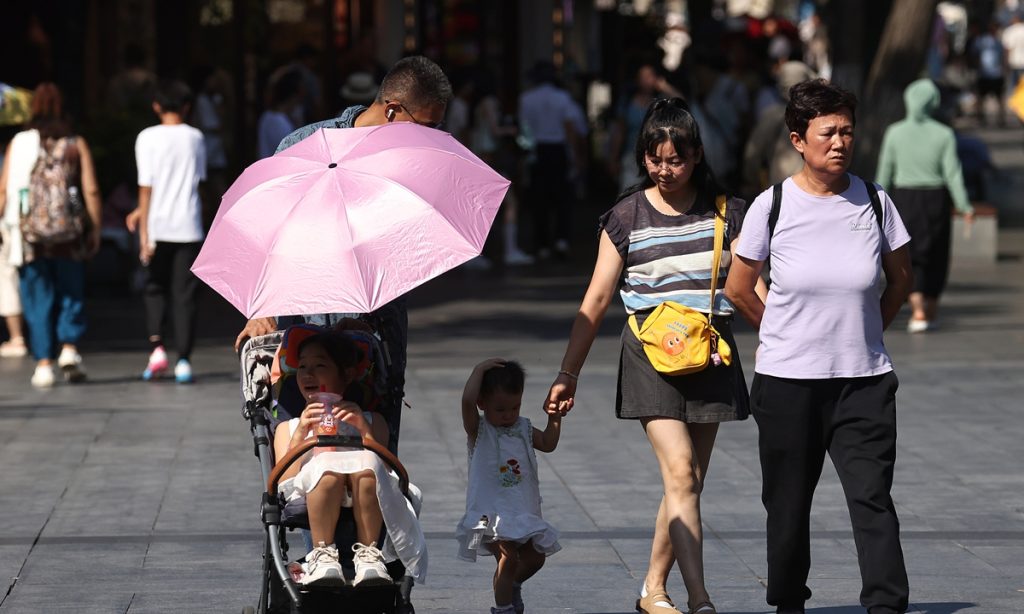
Amid scorching summer heat, some residents in Xuzhou, East China's Jiangsu Province, are enjoying central cooling: indoor temperatures can remain around 25 C without turning on air conditioners in households, thanks to the cool water running beneath their feet from an abandoned coal mine.
Over the past two days, temperatures in Xuzhou have exceeded 35 C. However, a local resident surnamed Wang in the city's downtown area found that the temperature inside her home stayed below 26 C even without air conditioning, according to Xinhua News Agency.
The coolness comes from the city's abandoned Woniushan coal mine. Although the mine has been shut down, water accumulated in the mine tunnels remains around 19 C year-round, making it a natural "coolant," the media report said.
A local company managed to channel the mine water to a heat exchange station in residential communities, and then uses the heating pipeline network deigned for winter central heating to cool homes in summer.
Many people have wondered how pipes used for heating in winter can provide cooling in summer. The principle is simple: In winter, 40 C hot water flows through the pipes to heat homes, while in summer, cold water around 20 C slowly removes heat from rooms, per Xinhua.
The entire process "only makes use of the coolness without consuming water." After the mine water pumped from underground completes heat exchange at the station, it returns underground through closed pipelines.
According to reports, another advantage of the cooling system is that it uses the existing winter heating network. Residents do not need to tear up floors or renovate their homes. They only need to drill holes in ceilings and rooms and install special dehumidifiers. Both the initial installation and operation cost much less than those of traditional air-conditioning systems.
The entire technology system is suitable for residential buildings, giving it potential for large-scale promotion.
The resident Wang said that in previous summers, she and her husband spent more than 400 yuan ($55) a month on electricity bills when using air conditioners. Long AC use caused neck discomfort for her husband, while not using it made it difficult to sleep due to the heat.
Now, the couple pays only 410 yuan for the entire four-month cooling season. The home maintains a constant temperature around the clock, with no noise or discomfort caused by direct airflow.
Compared with traditional air conditioners, the system reduces energy consumption by about 50 percent. Based on the cooling demand of nearly 100 households in the pilot residential community, it can reduce carbon dioxide emissions by about 50 tons annually.
Relevant departments in the city also noted that after the pilot cooling system proves successful, the method will be promoted on a larger scale. The cooling fee for residents in the pilot community will be charged quarterly at 4 yuan per square meter.
Without refrigerants or compressors, a pipe carrying cold water can cool an entire home. During this hot summer, some netizens on Chinese X-like platform Weibo described the technology as "really appealing."
However, some netizen wondered whether the technology can be applied on a large scale because it depends on the availability of natural cold water.
Such cooling systems require special conditions and would remain a niche application in most cases, Lin Boqiang, chair professor and dean of the China Institute for Studies in Energy Policy of the School of Management at Xiamen University, told the Global Times on Monday.
If these resources can be utilized, there is no doubt that it can save energy and reduce emissions, Lin said. "However, this is a very small-scale case because it depends on special conditions that most places do not have."
Meanwhile, central cooling in traditional ways, such as central air-conditioning in shopping malls, is not necessarily more efficient than individual AC sets in households, Lin said, adding that, all in all, centralized cooling is still a rare practice.