China adds new university majors to support national strategic needs

With China's national college entrance exam, also known as gaokao, set to kick off this weekend, around 12.9 million candidates will potentially have access to more academic options, following the introduction of a raft of new majors.

Multiple Chinese universities have rolled out new undergraduate programs such as embodied intelligence, low-altitude economy and management, and marine intelligence and unmanned technologies, in seeking to meet the country's emerging strategic and industrial needs, noted an updated catalog recently issued by the Ministry of Education (MOE).

The addition of these new majors underscores continued improvement in the structure of academic disciplines, said Zhang Nanxing, director of the Institute of Higher Education at the China National Academy of Educational Sciences.

The outline of China's 15th Five-Year Plan (2026-2030) for economic and social development calls for an orderly expansion of enrollment in high-quality undergraduate and graduate education, with a focus on science, engineering, agriculture and medicine-related programs.

In an earlier interview with Xinhua, Education Minister Huai Jinpeng said that China will establish a coordinated talent cultivation mechanism that aligns sci-tech innovation, industrial development and national strategic needs.

China will further adjust and optimize academic disciplines and majors, and explore new models for nurturing top innovative talent in strategically critical fields like artificial intelligence and integrated circuits, Huai said.

In this year's catalog, Sichuan University in southwest China was approved to launch a major in semiconductor process and equipment, the first program of its kind in the country.

Yang Yang, dean of the university's School of Electronics and Information Engineering, said this new major is designed to provide a strong pipeline of talent to support self-reliance across the entire integrated circuit industrial chain.

As demand grows for talent with cross-disciplinary expertise, the latest catalog has added 15 interdisciplinary majors, including embodied intelligence and brain-computer science and technology.

Harbin Institute of Technology (HIT) in northeast China is among the universities approved to launch the embodied intelligence major. Jin Jing, a doctoral supervisor at HIT, said the program is designed to equip students with theories and engineering approaches related to the field, while developing systems thinking and interdisciplinary innovation skills needed for next-generation intelligent technologies.

Notably, new programs also carry a strong focus on people's livelihood, such as Tai Chi to support public health, smart landscape design to promote high-quality urban and rural living environments, and art therapy to enhance the mental health service.

A Beijing resident surnamed Zhang, whose son is set to sit the college entrance exam starting on Sunday, said the new majors are expected to be highly sought-after by college applicants this year. "I will introduce the programs to my son," Zhang told Xinhua, "but whether he chooses them or not is up to him."

In recent years, the MOE has explored a fast-track mechanism for establishing strategically important and urgently needed majors, opening a dedicated channel for qualified universities to launch such programs.

According to education officials in Heilongjiang Province, northeast China, the province has capitalized on the growth of its ice-and-snow economy, supporting local colleges to launch a major focused on ice-and-snow dance performance, and fostering talent in ice- and snow-related industries.

At Anhui University in east China, nearly 80 percent of undergraduate programs directly serve Anhui Province's emerging industries. "The priority of a regional university should be closely aligned with local socio-economic development, focusing on training talent that meets the region's needs," said Cai Jingmin, a researcher at the university.

The ultimate goal of academic program planning is to improve the quality of talent cultivation, experts explained, suggesting universities push for closer industry-education integration, reshape curricula and optimize the allocation of resources.

"We have established a number of industry-education integration clusters, bringing together undergraduate institutions, vocational colleges, enterprises and research institutes," said Jiang Yunfang, an education official of Chongqing Municipality in southwest China.

Xi'an Jiaotong University, located in northwest China, allows students to choose from different curriculum approaches focusing on scientific research, interdisciplinary integration and entrepreneurship, with each major offering a rich selection of courses spanning these three domains.

As a parent, Beijing resident Zhang called for greater integration in basic disciplines, believing this will help achieve breakthroughs in basic scientific research and further drive innovation.

Lao top leader Thongloun arrives in China for five-day state visit

General Secretary of the Lao People's Revolutionary Party Central Committee and Lao President Thongloun Sisoulith arrived in Hangzhou, capital of East China's Zhejiang Province, on Tuesday for a five-day state visit running from June 2 to June 6.

The first afternoon of the Lao top leader's China visit in Hangzhou, the hub city of Chinese cutting-edge robotics and e-commerce, was packed with rich hands-on experiences of China's technological progress, Global Times reporters observed in close distance. The visit demonstrates the immense potential for future cooperation between the two sides in industrial upgrading.

According to the Lao News Agency on May 30, the visit aims to further strengthen the longstanding friendship and cooperation between Laos and China and advance the comprehensive strategic partnership between the two countries.

It is also expected to promote closer bilateral relations and enhance cooperation across various areas of mutual interest, contributing to the continued development of Laos-China ties.

From 2021 to 2026, Thongloun served as Lao president and he was re-elected president at the first session of the 10th Lao National Assembly in March 2026, the Xinhua News Agency reported.

The year 2026 also marks the 65th anniversary of diplomatic relations between China and Laos as well as the Year of China-Laos Friendship, Xinhua reported in April.

Highlighting that the visit comes at such significant juncture, Gu Xiaosong, dean of the ASEAN Research Institute of Hainan Tropical Ocean University, told the Global Times that it will further advance bilateral relations. The important consensus reached by the leaders of both sides will strongly guide the continued development of China-Laos friendly relations, Gu added.

New sectors

Global Times reporters observed on Tuesday afternoon that shortly after his arrival in tech center Hangzhou, Thongloun visited Deep Robotics, leading Chinese robotics company specializing in quadruped (four-legged) robots, where he viewed a variety of robots. He then moved outdoors to watch performances by robots and robot dogs, including somersaults, running, and sprinting.

During the visit to Deep Robotics, Thongloun watched a robot demonstration. A robot later approached him and placed a small plush toy into his hands as a gift. After receiving it, he smiled and expressed his thanks in Chinese, drawing warm responses from those present, Global Times reporter observed on site.

Thongloun also tried operating a robot dog himself, successfully making it roll over. He ended the interaction by waving goodbye to the robot dog.

Thongloun then visited China's e-commerce giant Alibaba, where he reviewed the company's development history and its global data center.

The Alibaba guide spoke about China-Laos trade and e-commerce cooperation before Thongloun had an engaging interaction with a digital human. When the guide asked, "Who is the president of Laos?" in Chinese, the digital human accurately gave his name. Upon hearing the answer, Thongloun laughed, and those around him applauded.
In recent years, Hangzhou has vigorously developed the digital economy and intelligent industries, making it one of China's leading innovation hubs. This choice of stops shows that while Laos continues to value traditional trade and investment cooperation, it is also actively paying attention to cooperation in emerging fields such as the digital economy and artificial intelligence. This is of great significance for Laos in achieving industrial upgrading and cultivating new economic growth drivers, Gu Xiaosong noted.

Laos may hope to leverage cooperation with China to secure a position in the Fourth and Fifth Industrial Revolutions, achieve industrial upgrading, and overtake competitors by taking a strategic shortcut, Zhou Shixin, director of the Center of Southeast Asia Studies, Shanghai Institutes for International Studies, told the Global Times on Tuesday.

This is of great strategic significance for Laos, which is currently undergoing a critical transition from least developed country to that of developing country.

Booming flagship project

Thongloun's visit this time coincides with the fifth anniversary of the China-Laos Railway entering operation. The completion of the China-Laos Railway has enabled Laos to connect northward through China, and southward to Thailand, Malaysia, Singapore and other countries, becoming a vital corridor for Laos to reach out to the world. This is undoubtedly a model project for infrastructure connectivity between China and Laos, and a source of pride for both nations, Gu highlighted.

Xie Yike with the China Railway Kunming Group shared with the Global Times on Tuesday that as a flagship project of the China-proposed Belt and Road Initiative, the China-Laos Railway which runs from Kunming, Southwest China's Yunnan Province, to Lao capital Vientiane, has seen passenger and freight transport volumes repeatedly hit new highs since it entered operation.

Per the latest data provided by the Kunming Group, the China-Laos Railway has become the main artery of regional connectivity. As of June 1, 2026, the railway has operated more than 100,000 passenger trains, carrying over 73 million passengers, including more than 840,000 cross-border passengers from more than 120 countries and regions. Freight performance has also been impressive, with the total volume of goods transported across the entire line surpassing 84 million tons, of which cross-border freight exceeded 19 million tons.

The China-Laos Railway has also undergone a significant transformation from "connected" to "smooth" and from "smooth" to "prosperous," per the railway operators. The monthly passenger volume on the entire line has jumped from approximately 600,000 at the initial stage of operation to a peak of 2.25 million, a nearly four-fold increase.

The China-Laos Railway has not only strengthened confidence in infrastructure development, but has also laid a solid foundation for bilateral cooperation in high-tech fields such as artificial intelligence, the digital economy, e-commerce and new energy, Zhou Shixin noted.

During President Thongloun's visit to China, the two sides are expected to engage in in-depth discussions on a wide range of issues based on a high level of mutual trust, Zhou said, noting that he is full of confidence that the China-Laos community with a shared future will be further deepened, the comprehensive strategic partnership between China and Laos will be further enriched, and China-Laos relations will enter a new golden era.

Five Eyes’ accusation of China’s alleged espionage threat highly ironic: FM spokesperson

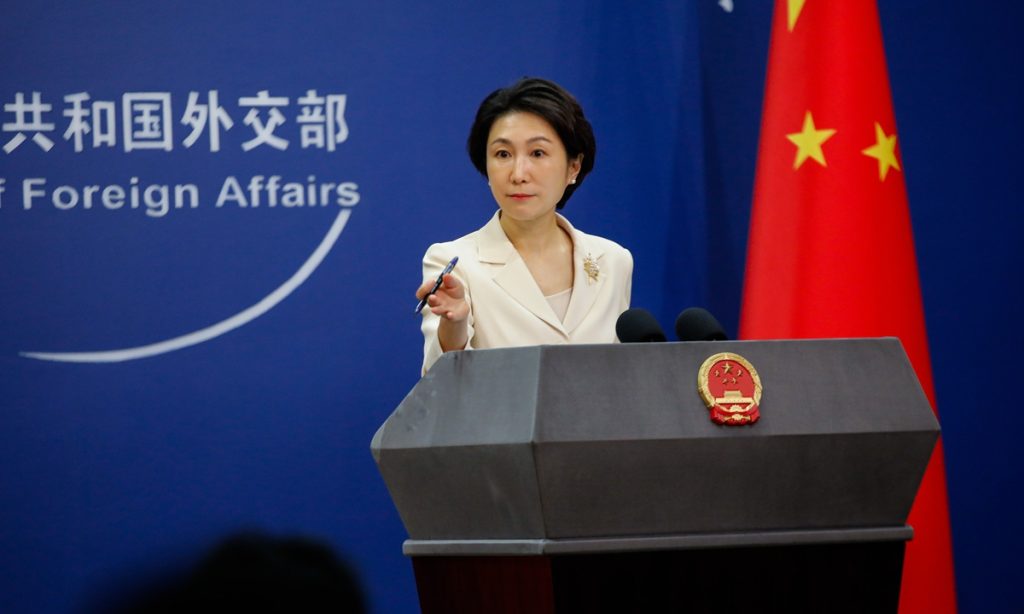
The Five Eyes is the world's largest intelligence-sharing alliance and has long carried out large-scale and systematic espionage activities around the globe. It is therefore highly ironic for such an organization to accuse China of posing a so-called espionage threat, the Chinese Foreign Ministry spokesperson Mao Ning said on Thursday in response to a question about the Five Eyes intelligence alliance issuing a warning on Wednesday alleging that China is actively using online recruitment platforms to recruit spies.

China’s call for revitalizing, strengthening UN wins support

As mounting conflicts, geopolitical divisions and humanitarian crises continue to test the postwar international order, China has reiterated its firm support for the UN Charter and multilateralism at a high-level United Nations Security Council meeting, where the country has also called for revitalizing the UN-centered international system and strengthening global governance mechanisms.

China's consistent emphasis on defending the UN framework has drawn wide support, with Chinese observers noting that the international community is increasingly looking for stability and support for a more just and equitable global governance system.

The stance was reflected during the United Nations Security Council High-Level Meeting themed "Upholding the Purposes and Principles of the UN Charter and Strengthening the UN-centered International System" held Tuesday at UN headquarters in New York.

Chairing the meeting, Chinese Foreign Minister Wang Yi, also a member of the Political Bureau of the Communist Party of China Central Committee, put forward five proposals, calling on the international community to stand united and act together to defend, revitalize and strengthen the UN.

Together with China's previously proposed global governance initiative, Beijing's advocacy for multilateralism and support for the UN-centered system also received backing from figures including UN Secretary-General António Guterres and foreign ministers from multiple countries.

Reinvigorating the UN system

"We are gathered here at a time when the international situation is undergoing the most complex and profound changes since the end of World War II. The dark clouds of war keep gathering and the law of the jungle is resurging. The giant ship of human civilization is sailing into dangerous waters, and world peace and development is at a crossroads," Wang said at the UN Security Council meeting in New York, according to the Chinese Foreign Ministry release posted on its website on Wednesday.

Wang stressed that the challenges confronting the world today test the international community's conviction to safeguard peace, its resolve to uphold justice, and its courage to pursue reform and innovation. "We must stand united and act together to defend, revitalize and strengthen the UN," he said.

Against the backdrop of intensifying global tensions, Wang made five proposals, calling for revitalizing the UN Charter to demonstrate stronger leadership, revitalizing the authority of the Security Council to demonstrate stronger capacity for action, revitalizing global development cooperation to harness stronger mobilization capabilities, revitalizing global governance platforms to foster stronger execution capabilities, and revitalizing the effectiveness of the UN system to cultivate greater vitality.

He also said the root cause of the chaos in today's world is not that the Charter's spirit is outdated, but that the international order and the basic norms governing international relations, both set out in the Charter, are not being effectively upheld and observed.

Certain countries have successively withdrawn from multiple international organizations, raising widespread concerns that international legal norms and the existing international order are facing the risk of fragmentation. Against such a backdrop, China, as a key pillar of multilateralism, has proactively taken up the banner of safeguarding multilateralism and revitalizing the authority of the United Nations, Mao Ruipeng, a Senior Research Fellow of Shanghai Institutes for International Studies, told the Global Times on Wednesday.

This not only reflects the common expectations of the international community, but also demonstrates China's commitment to fulfilling its responsibilities as a major country, Mao Ruipeng added.

Mao Ruipeng said China's five proposals at the United Nations clearly outlined China's position and approach regarding the role of the UN. Reaffirming and strengthening the authority of the Security Council at the current moment, he noted, is aimed at calling on the international community to uphold principles such as multilateralism and non-interference in internal affairs, while improving global governance and resolving disputes through peaceful means and safeguarding regional and global peace and stability.

Wang's remarks come at a time of heightened international turbulence and escalating conflicts worldwide. Speaking at the same meeting, Guterres warned that "we are witnessing a dangerous erosion of respect for international law," adding fundamental principles such as sovereignty, territorial integrity and the prohibition on the use of force being "challenged or ignored." He also cited the highest number of conflicts since the founding of the United Nations.

Guterres' concerns echo ongoing crises across multiple regions. The conflict in the Middle East, which began in February, and the Russia-Ukraine conflict, which erupted in 2022, remain unresolved.

Whether it is the conflict in the Middle East, the Russia-Ukraine conflict, terrorism, climate change or public health crises, all these issues ultimately need to return to the framework of the United Nations and international law for effective resolution, which requires strengthening the UN while opposing power politics, unilateralism and exclusive alliances that treat might as right, Li Haidong, a professor at the China Foreign Affairs University, told the Global Times on Wednesday.

Even as Guterres voiced his concerns at the UN, conflicts and humanitarian crises continued unfolding across the world. According to reports from France 24 and Al Jazeera, Israeli attacks on southern Lebanon on Tuesday killed 31 people and wounded 40 others, while intensified strikes and forced displacement warnings targeted towns and villages in the south and east.

Meanwhile, disease outbreaks and armed conflict are also ravaging parts of Africa. The BBC reported Wednesday that the World Health Organization (WHO) warned Ebola-hit DR Congo faces a "catastrophic collision" of disease and conflict. WHO Director-General Tedros Adhanom Ghebreyesus said eastern DR Congo had become the center of a "catastrophic collision of disease and conflict" amid the Ebola outbreak in Ituri province, noting that WHO "cannot build community trust or isolate the sick while bombs are falling."

Facing such challenges, foreign ministers attending Tuesday's meeting also stressed the need to defend the UN system and peaceful dispute resolution.

Russia's Ambassador Vassily Nebenzia said, "Our duty is to cherish the Charter," while also pointing to what he described as "remilitarization" in certain countries. He said the countries defeated during the World War II are now seeking "plausible pretexts for rewriting its outcomes."

Mohammad Ishaq Dar, Pakistan's minister for foreign affairs, described the UN Charter as the "moral foundation of the international order" and called for peaceful settlement of disputes. "Diplomacy is not weakness," he insisted, noting that "peaceful settlement is not an option of last resort."

Concrete actions

The Chinese foreign minister noted that over the 55 years since the restoration of the lawful seat of the People's Republic of China in the United Nations, China, as a permanent member of the Security Council, has actively participated in and advanced the cause of the UN.

"Amid international turbulence and transformation, China holds its banner high. Amid global development impasse, China empowers and enhances. Amid major public crises, China races to help. When multilateralism runs into headwinds, China steps up to its responsibility," Wang said at Tuesday's meeting.

He noted that China has translated its commitment to multilateralism into concrete action worldwide, including assisting Africa in combating Ebola, promoting peace talks amid frequent global conflicts, and initiating mechanisms such as the International Organization for Mediation and the World Data Organization.

Such contributions, observers noted, are increasingly recognized by the international community. During his meeting with Wang, Guterres expressed his gratitude to China for its consistent commitment to upholding the UN Charter and international law.

The UN chief also noted that China is the most reliable partner for sustainable development and a robust contributor to UN peacekeeping operations, adding that the UN commends the series of global initiatives put forward by China in fields such as security, peace and development, and looks forward to working together to resolve conflicts, to ensure that peace, international law and multilateralism prevail, according to the Xinhua News Agency.

Such recognition is not isolated. During his meeting with Wang, Thai Deputy Prime Minister and Foreign Minister Sihasak Phuangketkeow thanked China for its efforts in mediating the border dispute between Thailand and Cambodia. They added that the world needs rules rather than unilateralism, and stressed the urgent need to jointly safeguard UN's authority.

According to the Chinese Foreign Ministry latest data, the Global Development Initiative put forward by China has mobilized funds amount to over $23 billion, supported over 1,800 cooperation projects, delivered over 10,000 capacity building programs for developing countries, and trained over 200,000 professionals in different fields, giving a strong boost to the development and vitalization of the Global South.

"Over the past 55 years, as the permanent member of the UN Security Council, China has been actively participating in and advancing the cause of the UN. At the new historical starting point, China will continue doing more things for greater good, championing multilateralism and pursuing greater solidarity to build a more just and equitable global governance system and move towards the goal of building a community with a shared future for humanity," Chinese Foreign Ministry spokesperson Mao Ning said at a regular press briefing on Wednesday.

Mao Ruipeng said China has continued to use its major initiative as a platform to advance international development cooperation, which also explains Beijing's emphasis on revitalizing global development cooperation at the UN meeting.

As the primary channel for global governance, the United Nations remains central to such efforts, Mao Ruipeng said, adding that China's call to reinvigorate global governance platforms and enhance the effectiveness of the UN system sends a clear message of support for UN reform, stronger international cooperation and its global governance vision.

US and Iran exchange strikes amid mixed info on peace deal

Citing two US officials and regional source involved in the mediation efforts, US media outlet Axios claimed on Thursday that US and Iranian negotiators have reached an agreement on a 60-day memorandum of understanding to extend the ceasefire, but US President Trump has yet to give his final approval. 

Before the latest development, fresh military frictions between the US and Iran have reportedly flared up again in recent days.

A Chinese analyst observes that the latest outbreak of clashes is rooted in deep-seated grievances and conflicting interests. The ceasefire was inherently precarious, he said.

War or peace

According to a statement carried by Iran's semi-official Tasnim news agency on Thursday, the Islamic Revolutionary Guard Corps (IRGC) said it struck an "American airbase" that it identified as the origin of the US "aggression" but did not say where it was located, per an Al Jazeera report. 

The IRGC also said that any "aggression will not go unanswered," adding that further military actions will face a "more decisive" response, the media outlet reported. 

Before the IRGC attack, citing US officials speaking on the condition of anonymity, the AP reported on Thursday that US Central Command forces shot down four Iranian one-way attack drones that "posed a threat" around the Strait of Hormuz. The US military also struck an Iranian ground control station in Bandar Abbas that was about to launch a fifth drone. 

The US strike, according to Iran's Tasnim news agency, came after the IRGC confronted a US oil tanker trying to transit the Strait of Hormuz, citing military sources. The US Central Command claimed its latest strikes were "measured, purely defensive, and intended to maintain the ceasefire," Axios reported. 

The latest exchange of fire marks the second such skirmish in 48 hours, said Axios. On Monday, US Central Command said that it conducted "self-defense strikes" in southern Iran to protect troops from "threats posed by Iranian forces," while Iran accused the US of committing a "gross violation" of the ceasefire, per the BBC. 

The latest round of clashes stems from deep-seated disputes over core interests and a critical breakdown of mutual trust between the US and Iran, with frictions intensified most acutely over the pressing Strait of Hormuz issue, Liu Zhongmin, a professor at the Middle East Studies Institute of Shanghai International Studies University, told the Global Times on Thursday. 

"They are right now in between this very dangerous zone of war and peace, and it is not in anybody's interest that this war continues," Kaja Kallas, the European Union's foreign policy chief, told media at a meeting of EU foreign ministers in Cyprus on Thursday, Al Jazeera reported. 

Back-and-forth

Hours before the latest round of clashes, US President Donald Trump on Wednesday dismissed a report from Iranian state media saying that Iran and Oman would jointly manage shipping through the Strait of Hormuz as part of a peace deal, Reuters reported. 

Earlier, citing Iran's state-run IRIB TV, several media outlets reported Wednesday that Iran has a draft of an initial, unofficial framework for a memorandum of understanding (MoU) with the US, which demands US military withdrawal and lifting of its naval blockade. 

In return, Iran has committed to restoring commercial shipping through the Strait of Hormuz to pre-war levels within one month and managing ship traffic through the strait with Oman, the reports said, adding military vessels are not included in the agreement.

Similarly, Trump told media on Wednesday at a cabinet meeting that he was not yet satisfied on a deal with Iran, adding that the US was not discussing easing sanctions on it, Reuters reported. 

"Nobody's going to control (the strait)," Trump told media on Wednesday. "It's international waters and Oman will behave just like everybody else or we'll have to blow them up. They understand that, they'll be fine," he said, per Reuters.

On the same day, the US Treasury announced that Iran's Persian Gulf Strait Authority, which was recently set up to manage requests for ships looking to transit the Strait of Hormuz, has been added to its Specially Designated Nationals sanctions list.

Chinese Foreign Minister Wang Yi on Tuesday called for the advancement of negotiations between the US and Iran, after he presided over a high-level open debate of the Security Council, Xinhua reported. 

A longstanding issue cannot be resolved overnight, Wang said. However, every step forward in the negotiations brings more hope for peace, he said, adding that the earlier the conflict ends, the fewer civilian casualties there will be.

Send-off ceremony held for Chinese astronauts of Shenzhou-23 mission

A send-off ceremony for the three Chinese astronauts of the Shenzhou-23 crewed space mission was held Sunday at the Jiuquan Satellite Launch Center in northwest China.

Astronauts Zhu Yangzhu, Zhang Zhiyuan and Li Jiaying, or Lai Ka-ying in Cantonese, set off at 8:18 p.m. (Beijing Time).

The Shenzhou-21 crew has stayed in the orbiting Tiangong space station for more than 200 days and is in good physical and mental condition. They are preparing for the arrival of the Shenzhou-23 crew.

The Shenzhou-23 crewed spaceship is scheduled to be launched at 11:08 p.m. Sunday.

Seventy-Five Years of Pakistan-China Relations: A Partnership Across Generations

Seventy-five years of Pakistan-China relations reveal a truth that to understand a nation as vast and dynamic as China, one must not mistake a single paragraph for the whole. Our partnership has often been viewed through individual milestones: the Karakoram Highway, the restoration of the People's Republic of China's lawful seat at the United Nations, diplomatic ice-breaking between China and the United States, or the construction of China-Pakistan Economic Corridor (CPEC) in recent years. Yet none of these moments alone fully explains the endurance of this relationship. The deeper story lies in something less visible but ultimately more consequential: the gradual construction of strategic trust across generations, different institutions, and changing international orders.
When Pakistan and China established diplomatic relations in 1951, neither country occupied the position in international affairs that it does today. Both were navigating a rapidly changing post-war world and defining their respective paths in an emerging international order. Yet even at that early stage, our leaders recognized that relationships built on mutual respect, sovereign equality, and long-term trust often outlast shifting geopolitical circumstances. Over time, the Pakistan-China relations matured into one of the most resilient and adaptable partnerships in contemporary international relations.

That foundational trust was tested and strengthened in the years ahead. In the early 1970s, Pakistan played a principled role in supporting the restoration of the People's Republic of China's lawful seat at the United Nations, reflecting our shared commitment to sovereign equality and the rightful participation of developing nations in global governance. Around the same time, Pakistan facilitated the diplomatic opening between China and the United States. These moments were historically significant not simply because they altered diplomatic trajectories, but because they revealed the political confidence underpinning Pakistan-China relations.

Soon afterward, engineers and workers from both countries began constructing the Karakoram Highway across some of the world's most unforgiving terrain. What emerged was more than a road connecting two neighbouring countries. The highway became a geopolitical and civilizational statement: that geography needs not to impose isolation, and that connectivity can transform mountains from barriers into bridges.

Over time, this trust expanded into broader economic, political, and institutional cooperation. Whether through close coordination at multilateral forums or the later emergence of construction of the China-Pakistan Economic Corridor, the relationship continued to evolve with changing times while preserving the same principles that shaped it from the outset.

What distinguishes Pakistan-China relations today is not simply their longevity, but their increasing multidimensionality. Today, Pakistan-China cooperation extends across multiple layers: connectivity that creates opportunity, innovation that drives transformation, and institutions that sustain long-term partnership. The CPEC should therefore be understood not merely as a collection of infrastructure projects or energy investments, but as one phase within a longer continuum of strategic cooperation. As the construction of CPEC enters a new stage, the emphasis is increasingly shifting toward industrial modernization, digital connectivity, green development, agricultural innovation, and climate-resilient growth.

During my diplomatic engagements across China, I have witnessed firsthand how deeply this partnership now extends beyond official corridors. Whether visiting renewable energy projects in western China, meeting joint research teams in central laboratories, or speaking with Pakistani alumni leading startups in southern technology hubs, I witness the same pattern repeatedly: the Pakistan-China relationship is becoming progressively more human-centered, innovation-driven, and future-oriented.

Educational cooperation has long occupied a special place in Pakistan-China relations. The Pakistan Embassy College Beijing, established in the 1960s, became China's first international school and remains a quiet but enduring symbol of the trust that has long defined our partnership. Today, that educational connectivity continues through expanding university collaboration in science, engineering, medicine, digital learning, and innovation.

Indeed, the most consequential transformation in Pakistan-China relations may now be taking place not at the level of grand strategy alone, but within societies themselves. Joint research initiatives are adapting agricultural technologies to local developmental conditions, while universities deepen collaboration in engineering, medicine, biotechnology, artificial intelligence, and advanced scientific research. A growing generation of Pakistani researchers, engineers, doctors, and entrepreneurs that received training and exchanged cooperation in China increasingly serves as a living bridge between our societies. Increasingly, the relationship is measured not only in roads, ports, or powers generated, but also in human capital, institutional knowledge, technological capability, and shared problem-solving capacity.

This multidimensional cooperation reflects a shared conviction that developing nations must participate more actively in shaping the rules governing trade, technology, finance, and climate cooperation rather than merely adapting to frameworks designed elsewhere. Through coordination within the Shanghai Cooperation Organization, support for fairer digital governance, and advocacy for reform of international financial institutions, Pakistan and China continue to demonstrate that South-South cooperation need not operate through hierarchical models. Instead, its strength lies in reciprocal modernization, institutionalized dialogue, and long-term strategic thinking.

As Pakistan aligns its development priorities with China's emphasis on high-quality Belt and Road cooperation and new productive forces, the partnership is increasingly entering a knowledge-driven phase centered on technological transfer, industrial upgrading, green transition, scientific collaboration, and sustainable capacity building. In many respects, the future of Pakistan-China relations may be defined as much by research ecosystems, digital networks, and human capital as by physical infrastructure alone.

In an era often defined by fragmentation and short-term competition, Pakistan and China have instead chosen strategic continuity and patient cooperation. Against a global backdrop increasingly characterized by volatility, economic insecurity, and declining institutional trust, the enduring strength of Pakistan-China relations lies not merely in their longevity, but in their ability to evolve without losing strategic trust at their core. As Chinese philosophy reminds us through the concept of 和而不同, harmony without uniformity, that enduring partnerships do not depend on sameness, but on mutual respect and shared purpose. Pakistan and China do not mirror each other; we complement each other. The strength of this relationship lies precisely in its ability to connect distinct historical trajectories through shared developmental purpose.

As we mark the 75th anniversary of diplomatic relations, the next chapter of Pakistan-China relations will increasingly be shaped by students, researchers, entrepreneurs, and institutions working together to address shared challenges and build shared prosperity. From the Karakoram Highway to cooperation in outer space, every era of Pakistan-China relations has expanded the horizon of what the partnership could become. Its enduring significance lies not merely in its history, but in its continuing ability to go beyond itself amid changing times. In an age searching for stable foundations, perhaps the greatest lesson of 75 years of Pakistan-China relations is that strategic trust, patiently built and consistently sustained, remains one of the most valuable assets in state-to-state relationships.

First complete ice core retrieved from summit of Mount Qomolangma as China-Nepal scientific expedition team secures key climate sample

A China-Nepal joint scientific expedition named "Core of the Summit" successfully reached the summit of Mount Qomolangma from the Nepal side on Thursday and completed the first full-depth ice core drilling at the peak of the world's highest mountain and acquired the sample, chinanews.com reported on Friday.

According to information shared with the Global Times by Polar Hub on Friday, members of the joint expedition reached the summit at around 7:30 am on Thursday and conducted scientific sampling work including ice core drilling at an altitude of 8,848.86 meters.

About two hours later, the summit scientific operation concluded, with the expedition completing the first-ever full-depth ice core extraction from the summit.

According to Polar Hub, the team continued to collect ice core and snow core samples across multiple altitude gradients on the way down. The samples will be transported to laboratories under low-temperature preservation conditions for research on climate and environmental changes in the world's highest region, cryosphere evolution, and atmospheric records at extreme altitudes.
Wen Xu, leader of the expedition team, said that conducting ice core drilling at the summit of Mount Qomolangma requires not only completing an extreme mountain climb, but also carrying out continuous scientific operations within a narrow working window under conditions of severe oxygen deprivation and freezing temperatures.

Xu Baiqing, chief scientist of the expedition and deputy director of the Institute of Tibetan Plateau Research with CAS, said the summit of Mount Qomolangma represents the highest geographical point on Earth and remains a major gap in human observation.

The summit ice core and multi-altitude samples obtained during the mission will provide key materials for revealing climate and environmental changes in the world's highest region and for understanding atmospheric circulation and material transport processes at extreme altitudes, according to Xu.

The collected samples are expected to arrive at the south base camp of Mount Qomolangma with the team in the coming days, before being transferred under professional low-temperature preservation conditions for subsequent laboratory analysis, according to chinanews.com.
Information shared from Polar Hub noted that the summit of Mount Qomolangma is an exceptionally unique observation zone for studying global cryosphere changes and high-altitude atmospheric environments. Obtaining a full-depth summit ice core marked a major breakthrough for the expedition, while continued sampling across different altitude gradients during the descent will help establish a complete chain of climate and environmental evidence for high-altitude regions.

The collected samples are expected to help researchers better understand climate and environmental changes in ultra-high-altitude areas, the boundary of the Indian monsoon's influence, the transport pathways of pollutants into high-altitude regions, and differences in climate responses between the northern and southern slopes of Mount Qomolangma.

The mission also marked an important effort by Chinese scientific researchers to participate in global cryosphere research and high-altitude environmental observation, Polar Hub said.

State Council Taiwan Affairs Office responds to Trump’s Taiwan-related remarks of 'not looking to have somebody go independent

When asked how the Chinese mainland interprets the signals sent by the US after US President Donald Trump said in an interview following the China-US summit that he is “not looking to have somebody go independent” regarding the Taiwan question, and whether the Chinese mainland calls on the Democratic Progressive Party (DPP) authorities to resume dialogue on the basis of the 1992 Consensus, Zhu Fenglian, a spokesperson for the State Council Taiwan Affairs Office, said on Wednesday that the US side understands China's position, attaches importance to China's concerns, and, just like the international community, does not stand for or accept Taiwan moving toward “independence.”

Chinese President Xi Jinping said when holding talks with US President Donald Trump that the Taiwan question is the most important issue in China-US relations. If it is handled properly, the bilateral relationship will enjoy overall stability. Otherwise, the two countries will have clashes and even conflicts, putting the entire relationship in great jeopardy. Safeguarding cross-Straits peace and stability is the biggest common denominator between China and the US, Xi said, emphasizing that "Taiwan independence" and cross-Straits peace are as irreconcilable as fire and water, the spokesperson said.

The DPP authorities’ stubborn adherence to the separatist stance of seeking “Taiwan independence” and refusal to recognize the 1992 Consensus embodying the one-China principle are the major destabilizing factor undermining cross-Straits peace and stability, and they will surely suffer bitter consequences and be spurned by history and the people, Zhu said.