China’s new departure tax refund service helps boost sales by over 9 times in 12 months: latest data

Since the implementation of the refund-upon-purchase model for departure tax refund, the number of people enjoying the refund policy rose by 12.96 times year-on-year, while total tax refunds and tax refund sales both expanded by 9.35 times, data from State Taxation Administration showed on Monday.

On April 2025, China announced a nationwide shift from a refund-upon-departure model to a refund-upon-purchase model, enabling foreign visitors to instantly claim value-added tax rebates at tax-free shops across the country. 

The administration said that the measure has been implemented for a full year now, which helped boost inbound consumption. Currently, more than 8,000 tax refund shops across China offer the refund-upon-purchase service -- an increase of over 100 percent in 12 months. 

As the coverage of the refund-upon-purchase service continues to expand, more overseas visitors can get their tax refunds on the spot while shopping. They can use the refunded money for additional purchases, which stimulated consumer demand, the administration said.

During the past year, local tax authorities have actively explored innovative approaches, achieving quality improvements and upgrades in the refund-upon-purchase service. 

For example, Beijing has introduced a city-wide refund-upon-purchase service, breaking spatial limitations. Travelers can shop at any tax refund store in the city and choose the nearest refund point to process their refund. In Southwest China’s Sichuan, a QR code service has been launched. Overseas visitors only need to take a photo and upload their tax refund application form, valid ID documents, and shopping invoices, to complete the refund process and receive the tax refund instantly, the administration said.

“The nationwide rollout of the refund-upon-purchase model for departure tax refund has effectively stimulated inbound consumption. It represents a significant achievement in China’s efforts to optimize business environment, and promote local brands onto the global stage,” Zhang Yi, CEO of iiMedia Research Institute, told the Global Times on Tuesday.

Data from the Ministry of Commerce show that, in 2024, spending by inbound travelers accounted for 0.5 percent of China's GDP, compared to between 1-3 percent in other major economies, indicating significant room for growth, the Xinhua News Agency reported.

Vice Commerce Minister Sheng Qiuping said that China will steadily expand unilateral visa-free access, further optimize tax refund service, and ramp up the development of cities into international consumption centers, according to Xinhua.

Zhang said that the continuous implementation and optimization of the visa-free policy is a key lever for boosting inbound consumption and activating the cultural and tourism industry. “On one hand, it directly drives revenue growth in brick-and-mortar stores. At the same time, it facilitates cross-border business exchanges and continues to unlock the dividends of the opening-up policy,” the expert said.

An official from the State Taxation Administration said that tax authorities will continue to refine the departure tax refund service. They will further expand service scenarios, optimize service procedures, and improve service quality and efficiency, so as to better meet the tax refund needs of overseas travelers, and provide strong support for expanding inbound consumption.

As “China Travel” and “Shopping in China” become mainstream trends, more foreign visitors will experience firsthand China’s rich culture. This will help generate authentic and objective international word-of-mouth, ramping up mutual trust between China and other countries, and help build a positive cycle of cultural and tourism exchanges, Zhang said.

Europe contamination incident is result of intentional tampering, all products sold in China are safe, HiPP China tells GT

German baby food maker HiPP said suspected contamination of its jarred infant food products with rodent poison was detected in some European countries including Czech Republic and Slovakia, prompting retailers in both countries to pull all such products from shelves as a precaution. The company told the Global Times the incident was the result of deliberate tampering and is being treated as a criminal case, adding that all products sold in China remain safe for consumption.

The company said the incident involved deliberate tampering at supermarkets in Austria, the Czech Republic and other locations, and is being treated as a criminal case under police investigation. It stressed that the issue was not related to product quality and affected only a very limited number of jarred baby food products. 

All HiPP products sold through official channels in China are not involved and remain safe for consumption, the company told the Global Times in a statement on Monday.

Retail partners in the Czech Republic and Slovakia have taken precautionary measures by removing HiPP jarred baby food products from shelves, the company said. 

In Austria, HiPP has recalled jarred baby food purchased from SPAR supermarkets, where one deliberately tampered product was identified and recovered as part of the recall, according to the statement.

Austrian police reported toxic substances in a jar of HiPP baby food - specifically a 190-gram jar of carrot and potato puree. The product was recalled from over 1,500 Spar supermarkets, according to Eastern European media NEXTA's report.

Besides, the Austrian Agency for Health and Food Safety warned parents whose babies had consumed the brand's food to consult a doctor if their children showed signs of bleeding, extreme weakness or paleness, according to the BBC News.

Police in the eastern region of Burgenland said the poisoned jar of carrot and potato puree had been reported by a customer and that their baby had fortunately not consumed the food, according to the BBC News.

The jar had apparently been tampered with, police said. Authorities believe at least one more poisoned jar is in circulation and have issued guidance on how to recognize tampered jars, BBC reported.

This incident is unrelated to the quality or production of HiPP Germany products. The deliberate tampering occurred after the products left the factory and constitutes a criminal act, according to the HiPP's statement. 

HiPP also advised consumers to check the integrity of packaging for its products, as well as any infant food, ensuring in particular that the vacuum safety seal on jars has not been compromised, and to avoid consuming any products showing signs of tampering. The company said it is maintaining close and ongoing communication with relevant authorities in the affected countries regarding follow-up actions.

The incident has sparked widespread reaction on social media. On platform X, some users said the incident appeared to be "less a food safety failure and more a targeted criminal act," while others described it as "really alarming," adding that such an incident would likely trigger a full investigation and recalls if needed, and expressing hope that authorities would act swiftly to ensure no one is harmed.

Established in Germany more than 120 years ago, HiPP sells organic infant food products worldwide, according to reports. The company currently operates in nearly 60 countries and regions, offering more than 400 products including infant formula, baby food, personal care items and nutritional products.

Passenger traffic to West Asia routes down, while to central Asia & Europe routes up: CAAC

Due to the turmoil in the Middle East, passenger traffic on West Asia routes has significantly declined, while both passenger volume and load factor on routes from China to Central Asia and Europe have notably increased, the Civil Aviation Administration of China (CAAC) said on Wednesday. 

The remarks were made following the CAAC's release of the performance for the first quarter of this year, which said that the international market continued to grow rapidly, with year-on-year growth rates of passenger and cargo transport volume on international routes reaching 10.0 percent and 17.6 percent, respectively. 

CAAC said in the first quarter, international routes recorded 16.41 billion ton-kilometers, up 17.5 percent year-on-year. The share of international transport in the total reached 38.3 percent, an increase of 2.1 percentage points year-on-year.

In the passenger transport market, the industry has completed a total of 200 million passenger trips. Among them, domestic routes handled 180 million passenger trips, up 6.1 percent year-on-year; international routes handled 20.819 million passenger trips, up 10.0 percent year-on-year.

On Wednesday, China Eastern Airlines launched its Xinjiang branch in Urumqi, aiming to actively explore the development of international air routes from Xinjiang to Central and West Asia.

According to the China Air Transport Association (CATA), since the beginning of this year, the weekly international passenger flight schedule has remained generally flat compared to the same period last year, indicating a stable overall capacity supply, according to the news portal caacnews.com.cn on Monday. 

During the May Day holiday, international passenger flight schedules increased by 5.5 percent year-on-year. Flights on trunk routes and major city connections in Southeast Asia and Oceania remain stable, while reductions on some regional routes are the result of market-based operational adjustments. 

At present, Chinese airlines are increasing capacity deployment in Europe, Central Asia, Africa, Southeast Asia, South Asia, Oceania, and Latin America, with overall capacity meeting demand, said CATA.

In response to public concerns over the recent reduction in international flight schedules, a representative of the CATA noted that the flight cuts are mainly concentrated on niche tourist destinations in Southeast Asia, low-density regional routes, and a few direct regional routes from secondary cities in Oceania. 

This is neither a unilateral industry-wide service reduction nor a large-scale flight suspension, according to CATA. Rather, it represents capacity adjustments made by airlines based on multiple factors under the current international aviation market environment, and falls within the scope of market-oriented operational adjustments by airlines. The main drivers are tight jet fuel supply and weak market demand.

Currently, international jet fuel prices remain high. The average refueling price for Chinese airlines at overseas airports has exceeded 11,000 yuan ($1,612) per ton — more than double the previous level — with prices at some individual airports surpassing 30,000 yuan per ton. The rapid increase in fuel prices has led to a sharp rise in airline costs, making it difficult for some low-cost carriers to sustain regular operations on low-efficiency routes. At the same time, fuel supply at some regional airports is tight, leaving airlines at risk of having no fuel to refill.

On the demand side, it is currently the off-season for tourism in Southeast Asia and Oceania. Load factors on some regional and niche routes remain persistently low, far below the break-even level for profitability. 

Data from some airlines show that on recently canceled international flights to Southeast Asia and Oceania, booking rates were below 30 percent. Preliminary statistics indicate that booking rates for Chinese airlines on Southeast Asian routes are around 50 percent, while those on Oceania routes are about 70 percent, placing significant operational pressure on airlines to continue service, said CATA.

Major Asian airlines have reported surging demand on European routes as travelers shun disrupted Middle Eastern hubs, in a shift analysts suggest could persist for some time even after the Iran conflict ends, according to the Reuters on Monday.

Hong Kong's Cathay Pacific Airways, Singapore Airlines, Korean Air Lines and Australia's Qantas Airways last week disclosed robust performances on European routes in March, even as they grappled with a doubling in the price of jet fuel.

On April 17, Willie Walsh, director general of the International Air Transport Association, stated that some parts of Asia have already experienced flight cancellations due to fuel shortages, and warned that if the situation continues, Europe could face a similar dilemma by the end of May, said Reuters.

Chinese mainland’s development becomes ‘a source of confidence’ for Taiwan residents: KMT chairwoman Cheng shares mainland visit impressions

As for her feelings following her visit to the Chinese mainland, chairwoman of the Chinese Kuomintang (KMT) party Cheng Li-wun said that the Chinese mainland's development has become a source of confidence for residents in Taiwan, not a threat to Taiwan, chinanews.com reported on Friday. Cheng also said that as one family, we should remain confident in peace and must not be incited by external forces, per the report.

Cheng made the remarks on Thursday during her appearance at the livestreaming studio of Taiwan regional internet influencer Chen Chih-han, better known as "Guan Zhang" or "gym boss," where she elaborated on her various impressions from her mainland visit.

During the live session, Cheng shared her feelings, saying that the Chinese mainland's development has become a source of confidence for Taiwan residents, not a threat to Taiwan, as we are all one family, we cannot disown our ancestors, local Taiwan media outlet reported.

Some Chinese mainland netizens and analysts believe that Cheng's remarks were grounded. Just several days ago, the Chinese mainland rolled out a package of 10 policies and measures -- spanning inter-party communication, infrastructure, travel, trade and culture -- aimed at boosting exchanges and cooperation with Taiwan.

In addressing the livelihood of the Taiwan residents, the package includes helping Taiwan's agricultural and fishery products gain access to various mainland trade fairs to expand their sales channels, facilitating registration procedures for qualified Taiwan food manufacturers and the entry of their food products into the mainland market.

During the livestream, Cheng added that what deep-seated grudges or estrangements could possibly justify such hostility? 

Now that both sides of the Straits have achieved much, must we remain at daggers drawn and allow outsiders to exploit the situation to stir up conflicts, Cheng added, according to the report.

Cheng also stated that the Chinese mainland sincerely wishes to avoid war and is pursuing peace, unlike the Democratic Progressive Party (DPP), which creates hatred and confrontation, according to the report.

"We should have confidence in peace and also in Chinese mainland's commitment for peace," she said. 

During the livestream, Cheng also praised the mainland's technological progress. She said that drones on the mainland are used to deliver milk tea, not missiles, China News Service reported on its official WeChat account on Friday.

She also spoke highly of her experience at Tsinghua University High School, hailing its physics and technology textbooks for presenting cutting-edge developments in a vivid and accessible manner, China News Service reported. 

"This is the kind of exchange and mutual learning that should take place across the Taiwan Straits," Cheng said, per the report.

Cheng was quoted by local Taiwan media as saying that should the two sides should seek sincere exchanges and cooperation, "then the dividends of peace will be boundless."

We are willing, on the common political foundation of adhering to the 1992 Consensus and opposing "Taiwan independence," to work together with all political parties, organizations, and individuals in Taiwan island, including the KMT, to promote the peaceful development of cross-Straits relations, seek peace in the Taiwan Straits, bring well-being to our compatriots, and achieve national rejuvenation, Zhu Fenglian, a spokesperson for the State Council Taiwan Affairs Office, said on Wednesday after so-called "Mainland Affairs Council" of the island of Taiwan claimed that the Chinese mainland is "internalizing the cross-Straits question" regarding Cheng's visit.

Chinese, Afghan, Pakistani representatives hold informal meetings in Urumqi; three side believe Urumqi process is substantive: Chinese FM

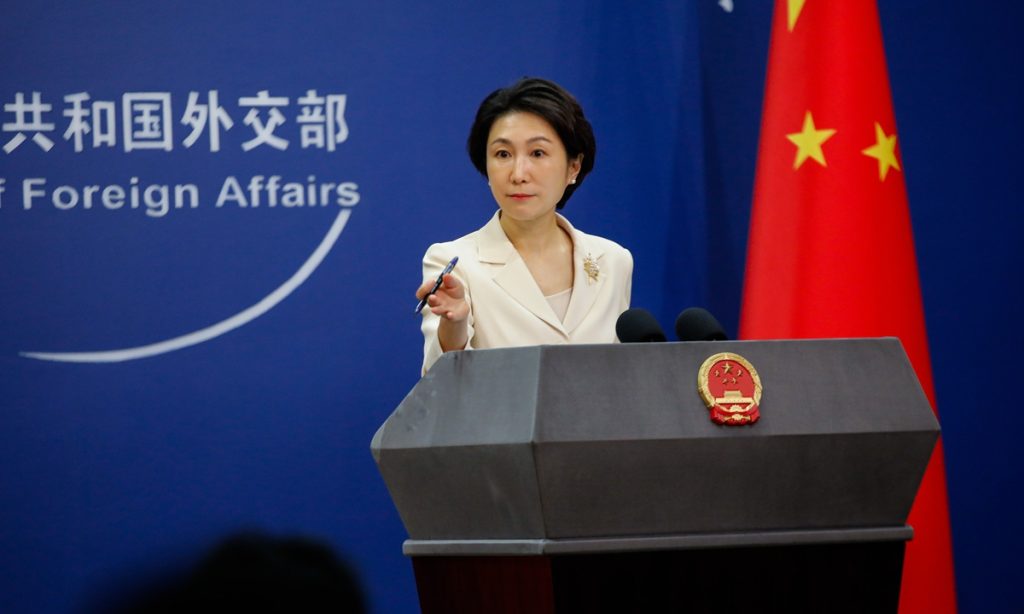
Based on the common understandings reached between Member of the Political Bureau of the CPC Central Committee and Minister of Foreign Affairs Wang Yi and Pakistani Deputy Prime Minister and Foreign Minister Mohammad Ishaq Dar and Afghan Minister of Foreign Affairs Amir Khan Muttaqi, representatives of the three sides held week-long informal talks in Urumqi, Xinjiang from April 1 to 7, Chinese Foreign Ministry spokesperson Mao Ning said on Wednesday.

The cross-departmental delegations of the three sides include representatives from authorities in charge of foreign affairs, defense and security. The discussions were candid, pragmatic and proceeded in a sound atmosphere, which shows that the talks follow an approach oriented towards solving problems, striving for results and taking actions, Mao added.

The Afghan and Pakistani delegations spoke highly of the Global Security Initiative and the Asian security model put forward by President Xi Jinping, in particular his important visions of seeking commonality despite differences, treating each other as equals, and championing dialogue and consultation for peaceful settlement of disputes. The two sides commended and thanked China for the mediation effort and thoughtful arrangement as the host country of the talks. They also expressed appreciation for China's fair and just position and utmost effort, the spokesperson added.

The Afghan and Pakistani sides reiterated that they follow the purposes and spirit of the UN Charter and the Five Principles of Peaceful Coexistence, stay committed to resolving differences as soon as possible, work for the turnaround of Afghanistan-Pakistan relations, and agree to refrain from actions that may escalate or complicate the situation, Mao said.

"China expressed readiness to maintain communication with both sides, provide the platform for dialogue, and continue to play a constructive role for improving and developing Afghanistan-Pakistan relations and enhancing practical trilateral cooperation among the three countries," she added.

According to a statement released on the website of the Chinese Foreign Ministry, the informal meeting was attended by delegations led by Liu Jinsong, director-general of the Department of Asian Affairs of China's Ministry of Foreign Affairs and Yue Xiaoyong, China's Special Envoy for Afghan Affairs, Mohibullah Wasiq, Afghan foreign minister's chief of staff, and Syed Ali Asad Gilani, Additional Secretary at the Foreign Office responsible for Afghanistan and West Asia. 

Intensive bilateral and trilateral meetings were held in seven days. China noted and summed up the talks and common understandings as follows: Afghanistan and Pakistan reiterated that the two countries are Muslim brothers and neighbors, Mao said.

The three sides believed that amid the turbulent and changing international and regional situation, maintaining friendly ties between Afghanistan and Pakistan is of vital importance to peoples in both countries as well as peace and stability in South Asia. The three sides stressed that dialogue and consultation is the viable and effective way to resolve complex international disputes, including the disputes between Afghanistan and Pakistan, according to the spokesperson.

The three sides agreed to discuss a comprehensive plan to resolve issues in the relations between Afghanistan and Pakistan, and identified the core and priority issues. China stressed that terrorism is the core issue affecting Afghanistan-Pakistan relations. The three sides believed that the Urumqi process is substantive, and agreed to maintain communication and dialogue on the process, Mao added.

Afghanistan has said that peace talks with Pakistan being held in China have been "useful," Al Jazeera reported on Tuesday. 

Afghanistan's Foreign Ministry deputy spokesman Zia Ahmad Takal said the country's acting Foreign Minister Amir Khan Muttaqi met China's Ambassador to Afghanistan on Tuesday, and thanked Beijing for arranging and hosting the talks, while also crediting Saudi Arabia, Turkiye, Qatar and the United Arab Emirates for their mediation efforts, Al Jazeera reported. 

The latest talks highlight that China has consistently played a constructive role in promoting dialogue and facilitating peace in conflicts and disputes among neighboring countries, with clearly visible results. This successful case once again demonstrates that point, Zhu Yongbiao, director of the Center for Afghanistan Studies at Lanzhou University, told the Global Times. 

China is open to negotiating bilateral economic and trade pacts with EU: MOFCOM

China is open to negotiating bilateral economic and trade agreements with the EU, a spokesperson for the Ministry of Commerce said on Thursday.

The remarks were made in response to a media inquiry over reports that some European leaders have raised the possibility of reaching a future China-EU trade agreement, and how MOFCOM assesses the current direction of China-EU economic and trade relations and what conditions China hopes the EU will meet before pursuing a new trade agreement.

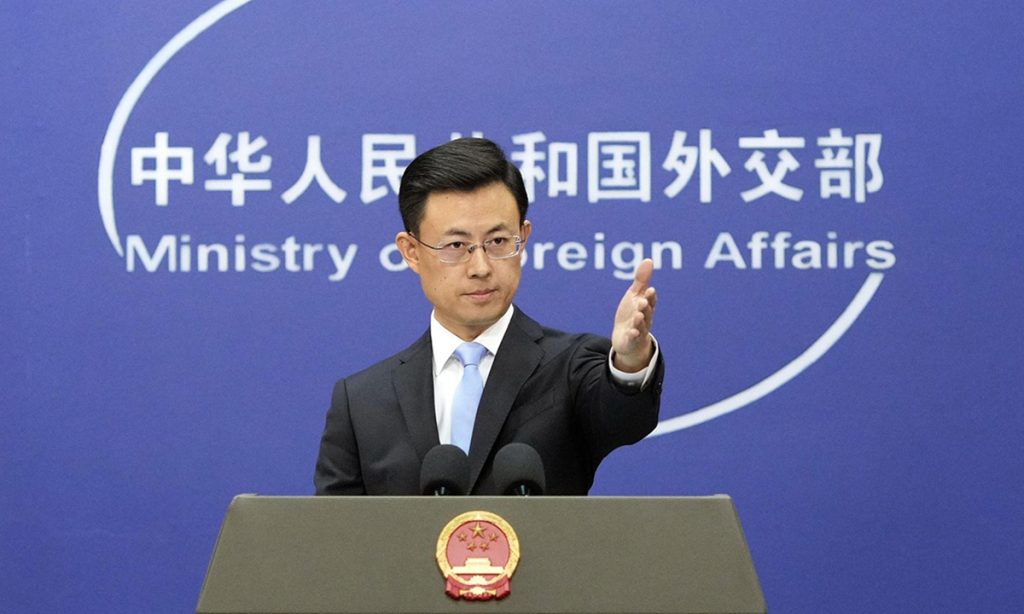
China and the EU are important economic and trade partners, ministry spokesperson He Yadong told a press briefing. For many years, China-EU economic and trade cooperation has maintained a solid foundation and strong growth momentum. The deep integration of production and supply chains has formed a virtuous cycle of complementary advantages and mutual benefit, He said.

China has always maintained an open attitude toward negotiating bilateral economic and trade arrangements with the EU and welcomes relevant proposals from European leaders. However, in recent years, the EU has used various economic and trade tools to investigate and restrict Chinese companies.

Recently, the EU has also introduced proposed revisions to the EU Cybersecurity Act (CSA2) and the Industrial Accelerator Act, which have seriously affected the confidence and expectations of Chinese companies regarding cooperation, He said.

"We hope that the EU will listen more to the voices of member states and European industry, abandon protectionist practices, work together with China, replace barriers with open cooperation, properly handle frictions and differences through dialogue and consultation, and jointly promote the sound and positive development of China-EU economic and trade relations," He said.

China's stellar economic performance in Q1 is bolstered by strong drivers

Even though March data is not yet fully available, the data from January and February shows that China's economy is on track for a strong start in the first quarter. The economy performed on steady ground in the past three months, supported by multiple drivers including exports, investment, and consumption.

Policy measures are taking effect and the overall trend points to stable and improving growth this year. Even with increased external shocks, the economy is expected to maintain stable growth in 2026 as new drivers, such as high-tech manufacturing and modern services, continue to gain momentum.

Exports remained an important driver. In January and February, exports in yuan terms rose 19.2 percent year-on-year. Demand from emerging markets, including Africa and Latin America, became more noticeable. Trade with Belt and Road Initiative partner countries rose by 20 percent year-on-year. Private companies also did well, with trade growth of more than 20 percent year-on-year.
China's cross-border e-commerce and strong supply chains have helped exporters. And, investment picked up, too. In January and February, broad infrastructure investment rose by 11.4 percent year-on-year, with major projects from the 15th Five-Year Plan (2026-30) being advanced ahead of schedule, becoming a key engine of investment. This helped stabilize market expectations and provided some protection against external uncertainties.

Consumer spending has been steadily recovering with three key features emerging: consumption expanding into lower-tier markets, a broad recovery in services consumption, and strong support from the trade-in programs.

Retail sales grew 2.8 percent in the first two months, faster than in December. Retail sales of consumer goods in rural areas rose by 3.2 percent, with rural markets emerging as a new driver of consumption. Services have been recovering more quickly. Services retail sales expanded by 5.6 percent during the same period.

Trade-in programs that encourage replacing old goods helped boost sales of home appliances. Sales of high-energy-efficiency household appliances continued the rapid growth seen in 2025, with year-on-year increases exceeding double digits.

Industrial production rose in tandem, new economic drivers continued to strengthen, and investment in high-tech industries and high-end services showed strong growth. Equipment manufacturing and high-tech industries have been growing faster than overall industry.

The value-added of high-tech manufacturing enterprises above designated size rose by 13.1 percent year-on-year. Meanwhile, the digital and intelligent transformation of industry has been progressing steadily, and green products, led by new-energy vehicles, have seen strong growth.

In January and February, the services production index rose 5.2 percent year-on-year, slightly faster than in December. In February, the services business activity index reached 49.7, up 0.2 points from the previous month, while the activity expectations index stood at 55.8.

Sectors such as accommodation, catering, culture and sports, and entertainment all recorded business activity indices above 60, indicating high momentum.

Growth in artificial intelligence notably boosted demand for information services. In the first two months, the production index for information transmission, software, and IT services rose by 10.1 percent year-on-year, continuing the sector's strong growth over the past two years.

Will the strong growth momentum continue in the next quarters?

On one hand, the overall logic of China's economic operation has not changed, and the rebound in infrastructure investment will help sustain a generally stable and positive growth trend for 2026, following the pattern seen in 2025.

On the other hand, there are market concerns that global oil price volatility could disrupt supply and shipping chains. Such shocks are primarily input cost pressures, which would affect mid- and downstream companies but would not alter the underlying dynamics of China's economy.

The country's complete industrial and supply system provides more options for exports. Calculations show that even if international oil prices remain in the $100-140 per barrel range throughout the year, the overall impact on China's economy will be manageable. On this basis, the strong start in the first quarter is expected to be sustained, and China's economy is likely to maintain stable growth throughout the year.

KMT chairperson Cheng continues mainland visit in Shanghai, explores smart economy and urban devt

Cheng Li-wun, chairwoman of the Chinese Kuomintang (KMT), continued her mainland visit in Shanghai on Thursday, leading a KMT delegation on a tour offering a firsthand look at the mainland's smart economy and urban development — from visiting Yangshan Port to boarding a display model of the C919 aircraft. 

This was followed by their first stop after arriving in Shanghai from Nanjing by high-speed train on Wednesday afternoon, where they visited Meituan's Shanghai headquarters and experienced drone-based delivery services that offered them a glimpse into the mainland's rapidly developing smart economy.

On Thursday morning, Cheng and her delegation toured Yangshan Port and the Shanghai Aircraft Design and Research Institute under the Commercial Aircraft Corporation of China, Ltd., manufacturer of domestically developed aircraft including the C919 passenger jet, according to the Xinhua News Agency.

Speaking to reporters, Cheng commended Shanghai's prosperity and beauty, while recalling the city's wartime history and transformation. "Peace is the most powerful force," she said. "Given enough time, peace can make anything possible." She urged people on both sides of the Taiwan Straits to remain committed to peaceful development, according to Xinhua. 

In a Facebook post on Thursday, Cheng shared her thoughts on her visit to Shanghai, saying that "Before I left, my family and friends in Taiwan would always say, jokingly, that they were waiting for me to bring gifts back. I sincerely hopes that, if possible, the gift I bring to all my family and friends in Taiwan is peace. Because peace makes everything possible. It allows everything everyone hopes for to actually happen."

The delegation departed Shanghai for Beijing on Thursday afternoon, according to Xinhua. 

Cheng wrote in a Facebook post on Thursday that while on a flight from Shanghai to Beijing with Xiamen Airlines, she met five flight attendants from Taiwan region and was delighted to take a group photo with them. The attendants came from Banqiao, Taichung, Kaohsiung, Hualien, and Hsinchu.

Because Xiamen Airlines had previously recruited flight attendants from the island, Cheng said she felt fortunate to have met them in the air. 

According to an itinerary released by Taiwan regional media outlet the United Daily News, the delegation is scheduled to meet with enterprises from both the mainland and Taiwan region on April 11 in Beijing before returning to Taiwan region on Sunday.

Taiwan regional media closely followed the third day of Cheng's mainland visit, with many outlets reporting on her itinerary. For example, "China Times" on Thursday gave extensive coverage to Cheng's trip to Yangshan Port, noting that according to the 2025 global port rankings released by multiple shipping institutions, mainland ports accounted for six of the world's top 10 ports, with the Port of Shanghai ranking first.

Lin Wenhao, a Taiwan youth participating in rural revitalization projects in Putian, Fujian Province, and in the operation of a Taiwan-funded cultural tourism company in Xiamen, told the Global Times that he and some entrepreneurs see such cross-Straits interactions as helping bring greater certainty to the future, giving Taiwan businesspeople and young people more confidence to make medium- and long-term plans for development.

Lin also said he hopes for a further recovery in personnel exchanges, including more convenient flight routes and services. 

He added that he is especially concerned about opportunities for Taiwan youth to intern, work and start businesses on the mainland. "These are real, practical scenarios that can truly enhance mutual understanding," he said.

Latest US human rights report scales back criticism on some allies while ramping up attack on perceived foes: media

The US State Department on Tuesday released an annual government report on global human rights abuses, which significantly reduced criticism of some US allies such as Israel while escalating disapproval of perceived foes, BBC reported. 

The latest State Department report on China is similar to last year's version, which smeared the human rights conditions in regions including Xinjiang and Hong Kong. In response, the Commissioner's Office of the China's Foreign Ministry in the Hong Kong SAR expressed strong dissatisfaction and opposition on Wednesday, noting that the report disregarded facts and deliberately smeared the human rights and rule of law situation in the SAR.

The report covers the 2024 calendar year, before the Trump administration took office, CNN reported on Tuesday. CNN cited sources as saying that the report was largely completed before US President Donald Trump began his second term. However, it underwent significant revisions in the subsequent months.

The report saw notable changes and other key issues omitted compared with the report released in April 2024, according to media reports. It significantly reduced criticism of some US allies such as Israel and El Salvador while escalating disapproval of perceived foes such as Brazil and South Africa, per the BBC.

The report's section on Israel is much shorter than last year's edition and contains no mention of the severe humanitarian crisis or death toll in Gaza, as the death toll rose to some 61,000 people, Al Jazeera reported. 

According to CNN, there is also no mention of the criminal trial of Israeli Prime Minister Benjamin Netanyahu on charges of bribetaking, fraud and breach of trust, which were ongoing at the time.

However, for traditionally allied European countries, the latest report alleged a deteriorating human rights situation in 2024, noting that "significant human rights issues included credible reports of serious restrictions on freedom of expression." 

Washington has lambasted European nations with allegations of free speech backsliding. In February at the Munich Security Conference, US Vice-President JD Vance launched a scalding attack on European countries, spending the majority of his speech accusing European governments of retreating from their values, and ignoring voter concerns on migration and free speech, the BBC reported.

Not all of the reports were drastically changed from last year, CNN reported, citing the section on China, which is very similar to the previous year's report, accusing the human rights violations in regions including Xinjiang and Hong Kong. 

A spokesperson for the Commissioner's Office of China's Foreign Ministry in the Hong Kong Special Administrative Region responded to the report on Wednesday, noting that despite its own egregious human rights record, the US fabricated false claims of "deteriorating human rights conditions in Hong Kong," recycled cases of secessionists in Hong Kong to lent them support. This fully exposes the US politicizing and instrumentalizing human rights issues in a despicable attempt to contain China's development by exploiting Hong Kong.

A Chinese observer noted that under the current US government, human rights issues are no longer a foreign policy priority. "They know they aren't exactly a model in that field - with countless human rights issues of their own," Lü Xiang, a research fellow at the Chinese Academy of Social Sciences, told the Global Times on Wednesday.

"Yet, some in the State Department still use it as a tool to smear other countries. They churn out these reports out of habit, recycling baseless claims with no evidence; they still wield human rights as a stick when it suits them to contain China, even though its impact is as feeble as a matchstick," Lü said.

China's progress in social development and human rights conditions, especially in ethnic minority regions, is undeniable and cannot be erased by any such report, the expert stressed.

EU leaders arrive in Beijing for China-EU Summit

Top European Union (EU) officials Ursula von der Leyen and Antonio Costa are reportedly arrived in Beijing early Thursday for the 25th China-EU Summit. 
 
In a post on X, European Commission President Ursula von der Leyen wrote that "Touch down in Beijing, as we mark 50 years of ties between Europe and China. This Summit is the opportunity to both advance and rebalance our relationship. I'm convinced there can be a mutually beneficial cooperation. One that can define the next 50 years of our relations." 
 
As agreed between China and the EU, President of the European Council Antonio Costa and von der Leyen will visit China on Thursday. Chinese President Xi Jinping will meet with them, a Chinese foreign ministry spokesperson announced on Monday in Beijing, according to the Xinhua News Agency.