Discarded hard drives could become ‘hidden bombs’ for data leaks, strict disposal rules required for classified drives: MSS

Discarded hard drives could become “hidden bombs” for data leaks, China’s Ministry of State Security (MSS) warned on Thursday, after disclosing a case involving the resale of “new” drives that still carried improperly erased internal data. The agency also stressed that idle hard drives containing classified information must never be discarded or resold randomly, according to a notice published on the ministry’s official WeChat account.

With the rapid advancement of digital governance and office informatization, hard drives, as core data storage devices, are being replaced and upgraded more frequently. Many people mistakenly believe that deleting files or formatting a hard drive is enough to erase data, but that is not the case, the notice said.

However, ordinary deletion only removes data indexes, while the original information still remains on the disk or chip and can be easily recovered through professional recovery tools.

The MSS warned that some illegal vendors seeking high profits often perform only superficial processing on recycled second-hand hard drives before reselling them as new products. Residual sensitive information, malware, and viruses stored on such drives could pose major security risks, it noted.
In the case disclosed by the MSS, a certain organization reported to state security authorities that it had purchased a batch of “new” hard drives. 

During subsequent security inspections, the organization discovered that the drives still contained large amounts of residual data, including internal documents from Party and government organs, universities, banks and other institutions.

Subsequent investigations found that an employee at another organization had violated confidentiality regulations by simply deleting data from internal hard drives before selling them as scrap. Relevant personnel were ultimately held accountable in accordance with regulations and disciplinary rules.

The MSS cautioned that such cases are not isolated incidents, warning if sensitive information stored on refurbished hard drives falls into the hands of criminals or overseas espionage agencies, it could endanger individuals, organizations and even national security.

The notice also provided guidance on the safe procurement, use and disposal of hard drives. It advised consumers and organizations to purchase storage devices through official channels of reputable brands, carefully verify product certifications and anti-counterfeit labels, and conduct professional security inspections before putting hard drives into use to detect residual data or malicious programs.

For ordinary hard drives, the ministry said properly processed devices may be traded on second-hand platforms or recycled through official collection services. However, idle hard drives containing classified information must strictly follow regulations governing the destruction of confidential carriers. Such devices should be handed over to qualified professional institutions for complete data removal and physically destroyed through methods such as drilling, crushing or degaussing to ensure the information cannot be restored.

“The proper disposal of idle hard drives is a key line of defense in safeguarding data security,” the notice stated. “Through the joint efforts of all sectors, every discarded hard drive can safely complete its mission.”

China maintains communication at various levels with relevant parties, including Israel, on Middle East situation: Chinese FM

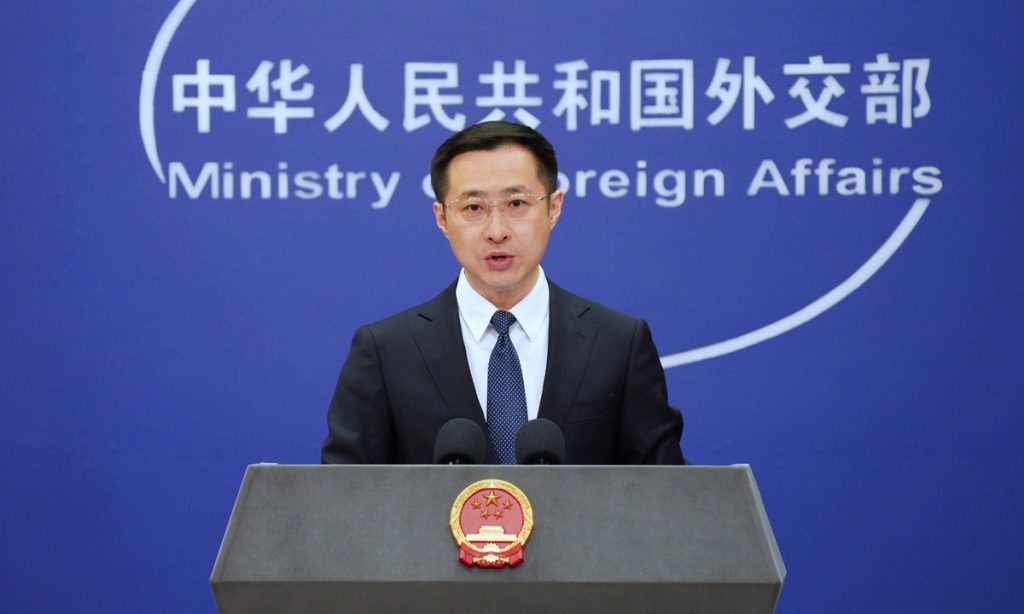
The current situation in the Middle East is at a critical stage of transition between war and peace. China maintains communication and exchanges at various levels with relevant parties, including Israel, covering high-level interactions as mentioned, Chinese Foreign Ministry spokesperson Lin Jian said on Friday.

Lin made the remarks at a regular press conference on Friday, when asked by a reporter from foreign media to comment that since the outbreak of the US-Israel military operation against Iran, China has maintained close communication with Iran, the US, and other relevant countries, and that since Iranian Foreign Minister Seyed Abbas Araghchi paid a visit to China recently, whether China has had high-level communication and exchanges with Israel.

China supports all parties in resolving differences and disputes through political and diplomatic means, achieving a comprehensive and lasting ceasefire, and safeguarding peace and stability in the Middle East and the Gulf region, Lin told the press conference. 

China is willing to act in accordance with the spirit of the four-point proposal on promoting peace and stability in the Middle East put forward by the Chinese leader, and work together with the international community to continue playing an active and constructive role in this regard, Lin said.

As Mainland pushes Xiamen-Kinmen Bridge, Kinmen residents call on DPP authorities to prioritize Cross-Straits exchanges

As the Chinese mainland pushes forward the construction of the Xiamen-Kinmen Bridge, with the Xiamen section on track to complete its main offshore structure by the end of 2026, the Kinmen side remains largely untouched, underscoring a widening gap in progress between the two ends of the project, Taiwan regional media reported on Thursday. 

The bridge was also mentioned in the latest 10 measures unveiled to deepen cross-Straits integration and exchanges with the island. While many Kinmen residents have called for the project to proceed, saying that it would improve transport convenience and boost tourism, the Democratic Progressive Party (DPP) authorities on the Taiwan island continued to highlight so-called security risks, hampering progress on the Kinmen side.

Taiwan regional media outlet United Daily News reported on Thursday that the Kinmen County Council had visited the planned Kinmen-side site of the Xiamen-Kinmen Bridge near Wulong Mountain in Jinsha township to assess the terrain, possible connection points and the area's development potential.

The report cited Hung Yun-tien, speaker of the Kinmen County Council, as saying that the proposed bridge would have a significant bearing on Kinmen's long-term development, with potential benefits for transport, industrial growth and people's livelihoods. He said that before any cross-Straits consensus is reached, local authorities should first coordinate internal views and build broader public consensus, laying the groundwork for future communication. Meanwhile, County Councilor Tung Sen-pao said the bridge issue cannot be resolved simply because one side wants to build it. 

"This is not a technical issue or a budget issue, but a cross-Straits political issue," he said.

The Xiamen section of the project, which is about 19.6 kilometers in length, runs from Xiamen island to Xiang'an International Airport and includes a reserved interface for a future extension to Kinmen, according to UDN.

A 2023 policy document issued by the State Council called for exploring joint infrastructure development between Xiamen and Kinmen and speeding up efforts toward electricity links, gas supply and a bridge connection. Construction of the Xiamen section of the Xiamen-Kinmen Bridge began in October 2023, while the planned 4.5-kilometer-long Dadan Island-to-Kinmen section is designed as a six-lane expressway with a speed limit of 100 kilometers per hour, according to a release from the website of the Taiwan Affairs Office of the State Council. 

Also, among the 10 policy measures unveiled on Sunday by the Taiwan Work Office of the Communist Party of China Central Committee following KMT Chairwoman Cheng Li-wun's mainland visit, authorities said they would promote water, electricity and gas links between Fujian's coastal areas and Kinmen and Matsu, and advance sea-crossing bridge projects when conditions permit, according to the Xinhua News Agency. 

Constructing the bridge has long been a common call and urgent desire shared by residents in Kinmen. For example, a Kinmen Daily editorial published in November 2025 said that for many Kinmen residents, crossing the sea to Xiamen for study, work, investment and property purchases has become a normal part of daily life. It added that many people in Fujian on the mainland have ancestral roots in Kinmen, while many Kinmen compatriots from Taiwan live and build their careers on the mainland. 

"Their family ties have long stretched across the Straits. For them, the Xiamen-Kinmen Bridge would offer an easier road home," it said.

However, the DPP authorities have continued to hype so-called security risks and claimed there is no plan for the project. Along with the recent package of measures to enhance connectivity with Kinmen, including proposals for shared transportation links, they have portrayed the project as part of the mainland's united front efforts. 

Taiwan regional media FTV News cited Chiu Chui-cheng, head of Taiwan's "mainland affairs council," as saying that these issues concern "national security" and public well-being, and must therefore be studied and handled by the authorities rather than bypassing the government.

DPP authorities should face up to the interests and demands of Kinmen residents, stop political calculation, and support the early completion and operation of the Xiamen-Kinmen bridge, Peng Qing'en, a spokesperson for the State Council Taiwan Affairs Office, told a press conference in November, 2025. 

Taiwan regional lawmaker Chen Yu-jen said in an exclusive interview with CCTV  in March that proposals for water, electricity, gas and transport links should be viewed as livelihood issues, given that Kinmen's proximity to the mainland makes such cooperation a positive step for economic and social development. She criticized the DPP authorities for seeking to cut Taiwan off from the mainland, stoking public fear and reducing cross-Straits exchanges in order to reinforce their "resist China, protect Taiwan" narrative.

A Kinmen resident surnamed Yu told the Global Times that the bridge project would make life more convenient for local residents by improving land connectivity. She also expressed expectations for more mainland tourists to support the local tourism industry. She said the Taiwan authorities should take residents' livelihoods into consideration and pursue policies that expand, rather than restrict, cross-Straits exchanges.

Lin Wenhao, who grew up in Kaohsiung, studied in Kinmen and now works in Fujian on rural revitalization projects, witnessed the west main tower of the Xiamen-Kinmen Bridge completed on December 7, 2025.

"Transport was always one of the issues we talked about most when I was studying in Kinmen," Lin told the Global Times. Now traveling frequently between Kinmen and Xiamen for work and business, he said his biggest concern is the risk of transport disruptions or island closures.

"For the Taiwan authorities, the issue is about national security and strategic risk. But for Kinmen, it is about livelihoods, development and everyday needs," he said.

Lin added that Kinmen, Xiamen and Quanzhou are naturally positioned for deeper integration with the mainland, and that real connectivity would also bring a stronger boost to Kinmen's long-term development. 

GT Voice: China’s patent boom to generate greater dividends via global co-op

World Intellectual Property Day fell on Sunday, but for China, it was more than an annual event. The nation is undergoing an important shift, moving from being a major importer to an important creator of intellectual properties. The change reflects the country's growing technological strength and offers new perspectives on the manufacturing sector and expanding international market presence.

Intellectual property and technological innovation are closely intertwined. According to a report run by the People's Daily on Sunday, as of the end of March, China had registered 5.53 million valid invention patents, maintaining its position as the world's leading filer of patents for consecutive years. In 2025, the number of high-value invention patents in China reached 2.29 million, with more than 70 percent of them stemming from strategic emerging industries.

The growth in invention patents has played a role in the continued evolution of China's manufacturing sector, which can be seen across several dimensions. 

First, the increase in patents has provided concrete technological support to the manufacturing industry. As the volume of patents rises, the technological capacity of Chinese manufactured products rises too, positioning the sector to engage more actively in global innovation.

Second, as the technological sophistication of Chinese products advances, so does the breadth of Chinese companies' global market expansion. No longer limited to exporting goods, Chinese companies are increasingly embedding themselves in the local supply chains, bringing investment and services such as consulting, after-sales support, and other integrated solutions. The shift signals a deeper engagement with local markets, where Chinese companies are not only contributing capital, but also creating local jobs and stimulating economic growth.

Third, the continued inflow of foreign capital into China's high-tech sectors, including the establishment of research and development centers, indicates that foreign companies are increasingly engaging with and benefiting from China's innovation ecosystem. The presence of global companies in China's R&D landscape highlights the active involvement of foreign investors, driven by their growing demand for Chinese technology.

Together, the developments form part of the ongoing evolution of global supply chains, with innovations serving as the primary driving force. The transition offers substantial benefits to the broader international industrial ecosystem. One driver of this process is technological progress, in contrast to the Western claims that mistakenly focus on the so-called overcapacity. In reality, it is China's technological advancements - not capacity growth - that are propelling the internationalization of its manufacturing sector.

The pace of technological advancement worldwide is accelerating, and simple capacity replication no longer provides a competitive advantage now. Chinese companies are keenly aware of this change. Within China, a competitive market environment has been developed, with intense competition across industries. To succeed, the companies must prioritize innovation and secure patents. 

This competitive pressure, combined with the push for technological progress, has been a driving force behind the growth and internationalization of China's manufacturing sector.

As a major participant in global supply chains, China's growth in invention patents plays a constructive role in the international economy. The increasing internationalization of Chinese manufacturing brings both investment and new momentum to global industrial networks. This shift generates benefits for local economies, with job creation and increased economic activity providing clear advantages for the communities. In this context, protecting the intellectual property and legal rights of Chinese companies is equally important.

Despite some foreign media outlets continuing to frame Chinese manufacturing in their lens of overcapacity, such narratives are increasingly at odds with the reality of China's technological advancements. Rather than simply expanding production, Chinese enterprises are focused on continuous innovation, leveraging technological progress to foster mutually beneficial cooperation with global supply chains.

According to the People's Daily, currently, China holds 61 percent of global artificial intelligence patents and two-thirds of patents related to robotics. In many emerging technologies, China is making significant progress. Investments in these sectors present opportunities for the global economy, particularly for the developing countries where technological progress can drive sustainable growth.

A clearer view of China's expanding patent base, its impact on industrial efficiency, and the resulting opportunities for global cooperation is essential to accurately evaluating its role in international supply chains. Focusing on these developments is set to offer a more balanced perspective on China's engagement with the global economy.

China’s new departure tax refund service helps boost sales by over 9 times in 12 months: latest data

Since the implementation of the refund-upon-purchase model for departure tax refund, the number of people enjoying the refund policy rose by 12.96 times year-on-year, while total tax refunds and tax refund sales both expanded by 9.35 times, data from State Taxation Administration showed on Monday.

On April 2025, China announced a nationwide shift from a refund-upon-departure model to a refund-upon-purchase model, enabling foreign visitors to instantly claim value-added tax rebates at tax-free shops across the country. 

The administration said that the measure has been implemented for a full year now, which helped boost inbound consumption. Currently, more than 8,000 tax refund shops across China offer the refund-upon-purchase service -- an increase of over 100 percent in 12 months. 

As the coverage of the refund-upon-purchase service continues to expand, more overseas visitors can get their tax refunds on the spot while shopping. They can use the refunded money for additional purchases, which stimulated consumer demand, the administration said.

During the past year, local tax authorities have actively explored innovative approaches, achieving quality improvements and upgrades in the refund-upon-purchase service. 

For example, Beijing has introduced a city-wide refund-upon-purchase service, breaking spatial limitations. Travelers can shop at any tax refund store in the city and choose the nearest refund point to process their refund. In Southwest China’s Sichuan, a QR code service has been launched. Overseas visitors only need to take a photo and upload their tax refund application form, valid ID documents, and shopping invoices, to complete the refund process and receive the tax refund instantly, the administration said.

“The nationwide rollout of the refund-upon-purchase model for departure tax refund has effectively stimulated inbound consumption. It represents a significant achievement in China’s efforts to optimize business environment, and promote local brands onto the global stage,” Zhang Yi, CEO of iiMedia Research Institute, told the Global Times on Tuesday.

Data from the Ministry of Commerce show that, in 2024, spending by inbound travelers accounted for 0.5 percent of China's GDP, compared to between 1-3 percent in other major economies, indicating significant room for growth, the Xinhua News Agency reported.

Vice Commerce Minister Sheng Qiuping said that China will steadily expand unilateral visa-free access, further optimize tax refund service, and ramp up the development of cities into international consumption centers, according to Xinhua.

Zhang said that the continuous implementation and optimization of the visa-free policy is a key lever for boosting inbound consumption and activating the cultural and tourism industry. “On one hand, it directly drives revenue growth in brick-and-mortar stores. At the same time, it facilitates cross-border business exchanges and continues to unlock the dividends of the opening-up policy,” the expert said.

An official from the State Taxation Administration said that tax authorities will continue to refine the departure tax refund service. They will further expand service scenarios, optimize service procedures, and improve service quality and efficiency, so as to better meet the tax refund needs of overseas travelers, and provide strong support for expanding inbound consumption.

As “China Travel” and “Shopping in China” become mainstream trends, more foreign visitors will experience firsthand China’s rich culture. This will help generate authentic and objective international word-of-mouth, ramping up mutual trust between China and other countries, and help build a positive cycle of cultural and tourism exchanges, Zhang said.

Europe contamination incident is result of intentional tampering, all products sold in China are safe, HiPP China tells GT

German baby food maker HiPP said suspected contamination of its jarred infant food products with rodent poison was detected in some European countries including Czech Republic and Slovakia, prompting retailers in both countries to pull all such products from shelves as a precaution. The company told the Global Times the incident was the result of deliberate tampering and is being treated as a criminal case, adding that all products sold in China remain safe for consumption.

The company said the incident involved deliberate tampering at supermarkets in Austria, the Czech Republic and other locations, and is being treated as a criminal case under police investigation. It stressed that the issue was not related to product quality and affected only a very limited number of jarred baby food products. 

All HiPP products sold through official channels in China are not involved and remain safe for consumption, the company told the Global Times in a statement on Monday.

Retail partners in the Czech Republic and Slovakia have taken precautionary measures by removing HiPP jarred baby food products from shelves, the company said. 

In Austria, HiPP has recalled jarred baby food purchased from SPAR supermarkets, where one deliberately tampered product was identified and recovered as part of the recall, according to the statement.

Austrian police reported toxic substances in a jar of HiPP baby food - specifically a 190-gram jar of carrot and potato puree. The product was recalled from over 1,500 Spar supermarkets, according to Eastern European media NEXTA's report.

Besides, the Austrian Agency for Health and Food Safety warned parents whose babies had consumed the brand's food to consult a doctor if their children showed signs of bleeding, extreme weakness or paleness, according to the BBC News.

Police in the eastern region of Burgenland said the poisoned jar of carrot and potato puree had been reported by a customer and that their baby had fortunately not consumed the food, according to the BBC News.

The jar had apparently been tampered with, police said. Authorities believe at least one more poisoned jar is in circulation and have issued guidance on how to recognize tampered jars, BBC reported.

This incident is unrelated to the quality or production of HiPP Germany products. The deliberate tampering occurred after the products left the factory and constitutes a criminal act, according to the HiPP's statement. 

HiPP also advised consumers to check the integrity of packaging for its products, as well as any infant food, ensuring in particular that the vacuum safety seal on jars has not been compromised, and to avoid consuming any products showing signs of tampering. The company said it is maintaining close and ongoing communication with relevant authorities in the affected countries regarding follow-up actions.

The incident has sparked widespread reaction on social media. On platform X, some users said the incident appeared to be "less a food safety failure and more a targeted criminal act," while others described it as "really alarming," adding that such an incident would likely trigger a full investigation and recalls if needed, and expressing hope that authorities would act swiftly to ensure no one is harmed.

Established in Germany more than 120 years ago, HiPP sells organic infant food products worldwide, according to reports. The company currently operates in nearly 60 countries and regions, offering more than 400 products including infant formula, baby food, personal care items and nutritional products.

Passenger traffic to West Asia routes down, while to central Asia & Europe routes up: CAAC

Due to the turmoil in the Middle East, passenger traffic on West Asia routes has significantly declined, while both passenger volume and load factor on routes from China to Central Asia and Europe have notably increased, the Civil Aviation Administration of China (CAAC) said on Wednesday. 

The remarks were made following the CAAC's release of the performance for the first quarter of this year, which said that the international market continued to grow rapidly, with year-on-year growth rates of passenger and cargo transport volume on international routes reaching 10.0 percent and 17.6 percent, respectively. 

CAAC said in the first quarter, international routes recorded 16.41 billion ton-kilometers, up 17.5 percent year-on-year. The share of international transport in the total reached 38.3 percent, an increase of 2.1 percentage points year-on-year.

In the passenger transport market, the industry has completed a total of 200 million passenger trips. Among them, domestic routes handled 180 million passenger trips, up 6.1 percent year-on-year; international routes handled 20.819 million passenger trips, up 10.0 percent year-on-year.

On Wednesday, China Eastern Airlines launched its Xinjiang branch in Urumqi, aiming to actively explore the development of international air routes from Xinjiang to Central and West Asia.

According to the China Air Transport Association (CATA), since the beginning of this year, the weekly international passenger flight schedule has remained generally flat compared to the same period last year, indicating a stable overall capacity supply, according to the news portal caacnews.com.cn on Monday. 

During the May Day holiday, international passenger flight schedules increased by 5.5 percent year-on-year. Flights on trunk routes and major city connections in Southeast Asia and Oceania remain stable, while reductions on some regional routes are the result of market-based operational adjustments. 

At present, Chinese airlines are increasing capacity deployment in Europe, Central Asia, Africa, Southeast Asia, South Asia, Oceania, and Latin America, with overall capacity meeting demand, said CATA.

In response to public concerns over the recent reduction in international flight schedules, a representative of the CATA noted that the flight cuts are mainly concentrated on niche tourist destinations in Southeast Asia, low-density regional routes, and a few direct regional routes from secondary cities in Oceania. 

This is neither a unilateral industry-wide service reduction nor a large-scale flight suspension, according to CATA. Rather, it represents capacity adjustments made by airlines based on multiple factors under the current international aviation market environment, and falls within the scope of market-oriented operational adjustments by airlines. The main drivers are tight jet fuel supply and weak market demand.

Currently, international jet fuel prices remain high. The average refueling price for Chinese airlines at overseas airports has exceeded 11,000 yuan ($1,612) per ton — more than double the previous level — with prices at some individual airports surpassing 30,000 yuan per ton. The rapid increase in fuel prices has led to a sharp rise in airline costs, making it difficult for some low-cost carriers to sustain regular operations on low-efficiency routes. At the same time, fuel supply at some regional airports is tight, leaving airlines at risk of having no fuel to refill.

On the demand side, it is currently the off-season for tourism in Southeast Asia and Oceania. Load factors on some regional and niche routes remain persistently low, far below the break-even level for profitability. 

Data from some airlines show that on recently canceled international flights to Southeast Asia and Oceania, booking rates were below 30 percent. Preliminary statistics indicate that booking rates for Chinese airlines on Southeast Asian routes are around 50 percent, while those on Oceania routes are about 70 percent, placing significant operational pressure on airlines to continue service, said CATA.

Major Asian airlines have reported surging demand on European routes as travelers shun disrupted Middle Eastern hubs, in a shift analysts suggest could persist for some time even after the Iran conflict ends, according to the Reuters on Monday.

Hong Kong's Cathay Pacific Airways, Singapore Airlines, Korean Air Lines and Australia's Qantas Airways last week disclosed robust performances on European routes in March, even as they grappled with a doubling in the price of jet fuel.

On April 17, Willie Walsh, director general of the International Air Transport Association, stated that some parts of Asia have already experienced flight cancellations due to fuel shortages, and warned that if the situation continues, Europe could face a similar dilemma by the end of May, said Reuters.

Chinese mainland’s development becomes ‘a source of confidence’ for Taiwan residents: KMT chairwoman Cheng shares mainland visit impressions

As for her feelings following her visit to the Chinese mainland, chairwoman of the Chinese Kuomintang (KMT) party Cheng Li-wun said that the Chinese mainland's development has become a source of confidence for residents in Taiwan, not a threat to Taiwan, chinanews.com reported on Friday. Cheng also said that as one family, we should remain confident in peace and must not be incited by external forces, per the report.

Cheng made the remarks on Thursday during her appearance at the livestreaming studio of Taiwan regional internet influencer Chen Chih-han, better known as "Guan Zhang" or "gym boss," where she elaborated on her various impressions from her mainland visit.

During the live session, Cheng shared her feelings, saying that the Chinese mainland's development has become a source of confidence for Taiwan residents, not a threat to Taiwan, as we are all one family, we cannot disown our ancestors, local Taiwan media outlet reported.

Some Chinese mainland netizens and analysts believe that Cheng's remarks were grounded. Just several days ago, the Chinese mainland rolled out a package of 10 policies and measures -- spanning inter-party communication, infrastructure, travel, trade and culture -- aimed at boosting exchanges and cooperation with Taiwan.

In addressing the livelihood of the Taiwan residents, the package includes helping Taiwan's agricultural and fishery products gain access to various mainland trade fairs to expand their sales channels, facilitating registration procedures for qualified Taiwan food manufacturers and the entry of their food products into the mainland market.

During the livestream, Cheng added that what deep-seated grudges or estrangements could possibly justify such hostility? 

Now that both sides of the Straits have achieved much, must we remain at daggers drawn and allow outsiders to exploit the situation to stir up conflicts, Cheng added, according to the report.

Cheng also stated that the Chinese mainland sincerely wishes to avoid war and is pursuing peace, unlike the Democratic Progressive Party (DPP), which creates hatred and confrontation, according to the report.

"We should have confidence in peace and also in Chinese mainland's commitment for peace," she said. 

During the livestream, Cheng also praised the mainland's technological progress. She said that drones on the mainland are used to deliver milk tea, not missiles, China News Service reported on its official WeChat account on Friday.

She also spoke highly of her experience at Tsinghua University High School, hailing its physics and technology textbooks for presenting cutting-edge developments in a vivid and accessible manner, China News Service reported. 

"This is the kind of exchange and mutual learning that should take place across the Taiwan Straits," Cheng said, per the report.

Cheng was quoted by local Taiwan media as saying that should the two sides should seek sincere exchanges and cooperation, "then the dividends of peace will be boundless."

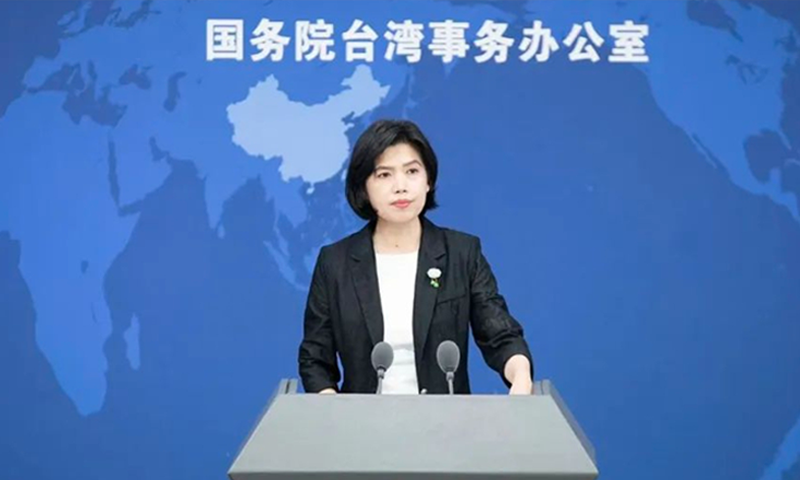
We are willing, on the common political foundation of adhering to the 1992 Consensus and opposing "Taiwan independence," to work together with all political parties, organizations, and individuals in Taiwan island, including the KMT, to promote the peaceful development of cross-Straits relations, seek peace in the Taiwan Straits, bring well-being to our compatriots, and achieve national rejuvenation, Zhu Fenglian, a spokesperson for the State Council Taiwan Affairs Office, said on Wednesday after so-called "Mainland Affairs Council" of the island of Taiwan claimed that the Chinese mainland is "internalizing the cross-Straits question" regarding Cheng's visit.

Chinese, Afghan, Pakistani representatives hold informal meetings in Urumqi; three side believe Urumqi process is substantive: Chinese FM

Based on the common understandings reached between Member of the Political Bureau of the CPC Central Committee and Minister of Foreign Affairs Wang Yi and Pakistani Deputy Prime Minister and Foreign Minister Mohammad Ishaq Dar and Afghan Minister of Foreign Affairs Amir Khan Muttaqi, representatives of the three sides held week-long informal talks in Urumqi, Xinjiang from April 1 to 7, Chinese Foreign Ministry spokesperson Mao Ning said on Wednesday.

The cross-departmental delegations of the three sides include representatives from authorities in charge of foreign affairs, defense and security. The discussions were candid, pragmatic and proceeded in a sound atmosphere, which shows that the talks follow an approach oriented towards solving problems, striving for results and taking actions, Mao added.

The Afghan and Pakistani delegations spoke highly of the Global Security Initiative and the Asian security model put forward by President Xi Jinping, in particular his important visions of seeking commonality despite differences, treating each other as equals, and championing dialogue and consultation for peaceful settlement of disputes. The two sides commended and thanked China for the mediation effort and thoughtful arrangement as the host country of the talks. They also expressed appreciation for China's fair and just position and utmost effort, the spokesperson added.

The Afghan and Pakistani sides reiterated that they follow the purposes and spirit of the UN Charter and the Five Principles of Peaceful Coexistence, stay committed to resolving differences as soon as possible, work for the turnaround of Afghanistan-Pakistan relations, and agree to refrain from actions that may escalate or complicate the situation, Mao said.

"China expressed readiness to maintain communication with both sides, provide the platform for dialogue, and continue to play a constructive role for improving and developing Afghanistan-Pakistan relations and enhancing practical trilateral cooperation among the three countries," she added.

According to a statement released on the website of the Chinese Foreign Ministry, the informal meeting was attended by delegations led by Liu Jinsong, director-general of the Department of Asian Affairs of China's Ministry of Foreign Affairs and Yue Xiaoyong, China's Special Envoy for Afghan Affairs, Mohibullah Wasiq, Afghan foreign minister's chief of staff, and Syed Ali Asad Gilani, Additional Secretary at the Foreign Office responsible for Afghanistan and West Asia. 

Intensive bilateral and trilateral meetings were held in seven days. China noted and summed up the talks and common understandings as follows: Afghanistan and Pakistan reiterated that the two countries are Muslim brothers and neighbors, Mao said.

The three sides believed that amid the turbulent and changing international and regional situation, maintaining friendly ties between Afghanistan and Pakistan is of vital importance to peoples in both countries as well as peace and stability in South Asia. The three sides stressed that dialogue and consultation is the viable and effective way to resolve complex international disputes, including the disputes between Afghanistan and Pakistan, according to the spokesperson.

The three sides agreed to discuss a comprehensive plan to resolve issues in the relations between Afghanistan and Pakistan, and identified the core and priority issues. China stressed that terrorism is the core issue affecting Afghanistan-Pakistan relations. The three sides believed that the Urumqi process is substantive, and agreed to maintain communication and dialogue on the process, Mao added.

Afghanistan has said that peace talks with Pakistan being held in China have been "useful," Al Jazeera reported on Tuesday. 

Afghanistan's Foreign Ministry deputy spokesman Zia Ahmad Takal said the country's acting Foreign Minister Amir Khan Muttaqi met China's Ambassador to Afghanistan on Tuesday, and thanked Beijing for arranging and hosting the talks, while also crediting Saudi Arabia, Turkiye, Qatar and the United Arab Emirates for their mediation efforts, Al Jazeera reported. 

The latest talks highlight that China has consistently played a constructive role in promoting dialogue and facilitating peace in conflicts and disputes among neighboring countries, with clearly visible results. This successful case once again demonstrates that point, Zhu Yongbiao, director of the Center for Afghanistan Studies at Lanzhou University, told the Global Times. 

China is open to negotiating bilateral economic and trade pacts with EU: MOFCOM

China is open to negotiating bilateral economic and trade agreements with the EU, a spokesperson for the Ministry of Commerce said on Thursday.

The remarks were made in response to a media inquiry over reports that some European leaders have raised the possibility of reaching a future China-EU trade agreement, and how MOFCOM assesses the current direction of China-EU economic and trade relations and what conditions China hopes the EU will meet before pursuing a new trade agreement.

China and the EU are important economic and trade partners, ministry spokesperson He Yadong told a press briefing. For many years, China-EU economic and trade cooperation has maintained a solid foundation and strong growth momentum. The deep integration of production and supply chains has formed a virtuous cycle of complementary advantages and mutual benefit, He said.

China has always maintained an open attitude toward negotiating bilateral economic and trade arrangements with the EU and welcomes relevant proposals from European leaders. However, in recent years, the EU has used various economic and trade tools to investigate and restrict Chinese companies.

Recently, the EU has also introduced proposed revisions to the EU Cybersecurity Act (CSA2) and the Industrial Accelerator Act, which have seriously affected the confidence and expectations of Chinese companies regarding cooperation, He said.

"We hope that the EU will listen more to the voices of member states and European industry, abandon protectionist practices, work together with China, replace barriers with open cooperation, properly handle frictions and differences through dialogue and consultation, and jointly promote the sound and positive development of China-EU economic and trade relations," He said.