Chinese, Afghan, Pakistani representatives hold informal meetings in Urumqi; three side believe Urumqi process is substantive: Chinese FM
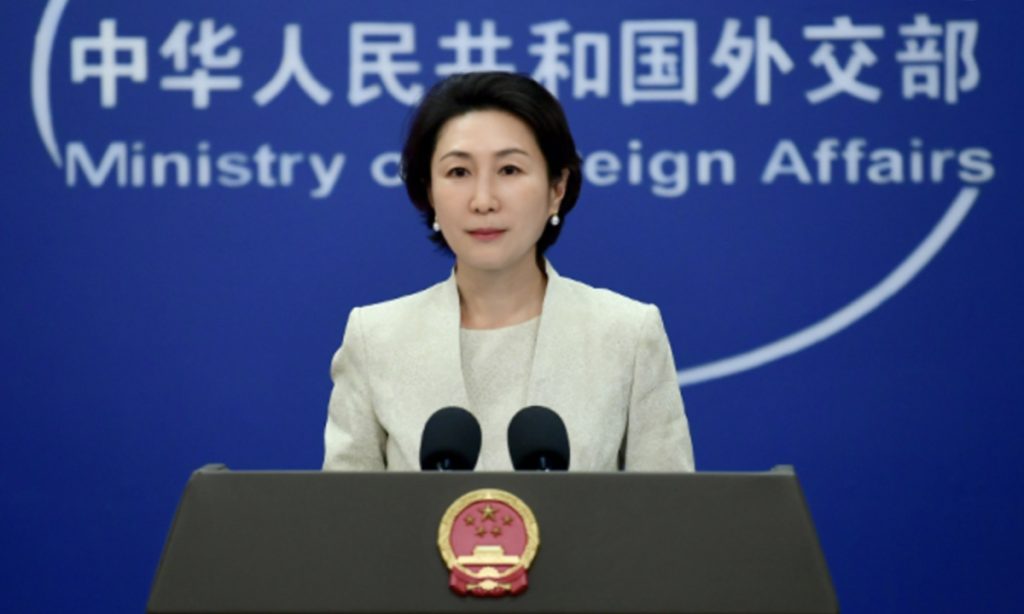
Based on the common understandings reached between Member of the Political Bureau of the CPC Central Committee and Minister of Foreign Affairs Wang Yi and Pakistani Deputy Prime Minister and Foreign Minister Mohammad Ishaq Dar and Afghan Minister of Foreign Affairs Amir Khan Muttaqi, representatives of the three sides held week-long informal talks in Urumqi, Xinjiang from April 1 to 7, Chinese Foreign Ministry spokesperson Mao Ning said on Wednesday.
The cross-departmental delegations of the three sides include representatives from authorities in charge of foreign affairs, defense and security. The discussions were candid, pragmatic and proceeded in a sound atmosphere, which shows that the talks follow an approach oriented towards solving problems, striving for results and taking actions, Mao added.
The Afghan and Pakistani delegations spoke highly of the Global Security Initiative and the Asian security model put forward by President Xi Jinping, in particular his important visions of seeking commonality despite differences, treating each other as equals, and championing dialogue and consultation for peaceful settlement of disputes. The two sides commended and thanked China for the mediation effort and thoughtful arrangement as the host country of the talks. They also expressed appreciation for China's fair and just position and utmost effort, the spokesperson added.
The Afghan and Pakistani sides reiterated that they follow the purposes and spirit of the UN Charter and the Five Principles of Peaceful Coexistence, stay committed to resolving differences as soon as possible, work for the turnaround of Afghanistan-Pakistan relations, and agree to refrain from actions that may escalate or complicate the situation, Mao said.
"China expressed readiness to maintain communication with both sides, provide the platform for dialogue, and continue to play a constructive role for improving and developing Afghanistan-Pakistan relations and enhancing practical trilateral cooperation among the three countries," she added.
According to a statement released on the website of the Chinese Foreign Ministry, the informal meeting was attended by delegations led by Liu Jinsong, director-general of the Department of Asian Affairs of China's Ministry of Foreign Affairs and Yue Xiaoyong, China's Special Envoy for Afghan Affairs, Mohibullah Wasiq, Afghan foreign minister's chief of staff, and Syed Ali Asad Gilani, Additional Secretary at the Foreign Office responsible for Afghanistan and West Asia.
Intensive bilateral and trilateral meetings were held in seven days. China noted and summed up the talks and common understandings as follows: Afghanistan and Pakistan reiterated that the two countries are Muslim brothers and neighbors, Mao said.
The three sides believed that amid the turbulent and changing international and regional situation, maintaining friendly ties between Afghanistan and Pakistan is of vital importance to peoples in both countries as well as peace and stability in South Asia. The three sides stressed that dialogue and consultation is the viable and effective way to resolve complex international disputes, including the disputes between Afghanistan and Pakistan, according to the spokesperson.
The three sides agreed to discuss a comprehensive plan to resolve issues in the relations between Afghanistan and Pakistan, and identified the core and priority issues. China stressed that terrorism is the core issue affecting Afghanistan-Pakistan relations. The three sides believed that the Urumqi process is substantive, and agreed to maintain communication and dialogue on the process, Mao added.
Afghanistan has said that peace talks with Pakistan being held in China have been "useful," Al Jazeera reported on Tuesday.
Afghanistan's Foreign Ministry deputy spokesman Zia Ahmad Takal said the country's acting Foreign Minister Amir Khan Muttaqi met China's Ambassador to Afghanistan on Tuesday, and thanked Beijing for arranging and hosting the talks, while also crediting Saudi Arabia, Turkiye, Qatar and the United Arab Emirates for their mediation efforts, Al Jazeera reported.
The latest talks highlight that China has consistently played a constructive role in promoting dialogue and facilitating peace in conflicts and disputes among neighboring countries, with clearly visible results. This successful case once again demonstrates that point, Zhu Yongbiao, director of the Center for Afghanistan Studies at Lanzhou University, told the Global Times.