Seventy-Five Years of Pakistan-China Relations: A Partnership Across Generations

Seventy-five years of Pakistan-China relations reveal a truth that to understand a nation as vast and dynamic as China, one must not mistake a single paragraph for the whole. Our partnership has often been viewed through individual milestones: the Karakoram Highway, the restoration of the People's Republic of China's lawful seat at the United Nations, diplomatic ice-breaking between China and the United States, or the construction of China-Pakistan Economic Corridor (CPEC) in recent years. Yet none of these moments alone fully explains the endurance of this relationship. The deeper story lies in something less visible but ultimately more consequential: the gradual construction of strategic trust across generations, different institutions, and changing international orders.
When Pakistan and China established diplomatic relations in 1951, neither country occupied the position in international affairs that it does today. Both were navigating a rapidly changing post-war world and defining their respective paths in an emerging international order. Yet even at that early stage, our leaders recognized that relationships built on mutual respect, sovereign equality, and long-term trust often outlast shifting geopolitical circumstances. Over time, the Pakistan-China relations matured into one of the most resilient and adaptable partnerships in contemporary international relations.

That foundational trust was tested and strengthened in the years ahead. In the early 1970s, Pakistan played a principled role in supporting the restoration of the People's Republic of China's lawful seat at the United Nations, reflecting our shared commitment to sovereign equality and the rightful participation of developing nations in global governance. Around the same time, Pakistan facilitated the diplomatic opening between China and the United States. These moments were historically significant not simply because they altered diplomatic trajectories, but because they revealed the political confidence underpinning Pakistan-China relations.

Soon afterward, engineers and workers from both countries began constructing the Karakoram Highway across some of the world's most unforgiving terrain. What emerged was more than a road connecting two neighbouring countries. The highway became a geopolitical and civilizational statement: that geography needs not to impose isolation, and that connectivity can transform mountains from barriers into bridges.

Over time, this trust expanded into broader economic, political, and institutional cooperation. Whether through close coordination at multilateral forums or the later emergence of construction of the China-Pakistan Economic Corridor, the relationship continued to evolve with changing times while preserving the same principles that shaped it from the outset.

What distinguishes Pakistan-China relations today is not simply their longevity, but their increasing multidimensionality. Today, Pakistan-China cooperation extends across multiple layers: connectivity that creates opportunity, innovation that drives transformation, and institutions that sustain long-term partnership. The CPEC should therefore be understood not merely as a collection of infrastructure projects or energy investments, but as one phase within a longer continuum of strategic cooperation. As the construction of CPEC enters a new stage, the emphasis is increasingly shifting toward industrial modernization, digital connectivity, green development, agricultural innovation, and climate-resilient growth.

During my diplomatic engagements across China, I have witnessed firsthand how deeply this partnership now extends beyond official corridors. Whether visiting renewable energy projects in western China, meeting joint research teams in central laboratories, or speaking with Pakistani alumni leading startups in southern technology hubs, I witness the same pattern repeatedly: the Pakistan-China relationship is becoming progressively more human-centered, innovation-driven, and future-oriented.

Educational cooperation has long occupied a special place in Pakistan-China relations. The Pakistan Embassy College Beijing, established in the 1960s, became China's first international school and remains a quiet but enduring symbol of the trust that has long defined our partnership. Today, that educational connectivity continues through expanding university collaboration in science, engineering, medicine, digital learning, and innovation.

Indeed, the most consequential transformation in Pakistan-China relations may now be taking place not at the level of grand strategy alone, but within societies themselves. Joint research initiatives are adapting agricultural technologies to local developmental conditions, while universities deepen collaboration in engineering, medicine, biotechnology, artificial intelligence, and advanced scientific research. A growing generation of Pakistani researchers, engineers, doctors, and entrepreneurs that received training and exchanged cooperation in China increasingly serves as a living bridge between our societies. Increasingly, the relationship is measured not only in roads, ports, or powers generated, but also in human capital, institutional knowledge, technological capability, and shared problem-solving capacity.

This multidimensional cooperation reflects a shared conviction that developing nations must participate more actively in shaping the rules governing trade, technology, finance, and climate cooperation rather than merely adapting to frameworks designed elsewhere. Through coordination within the Shanghai Cooperation Organization, support for fairer digital governance, and advocacy for reform of international financial institutions, Pakistan and China continue to demonstrate that South-South cooperation need not operate through hierarchical models. Instead, its strength lies in reciprocal modernization, institutionalized dialogue, and long-term strategic thinking.

As Pakistan aligns its development priorities with China's emphasis on high-quality Belt and Road cooperation and new productive forces, the partnership is increasingly entering a knowledge-driven phase centered on technological transfer, industrial upgrading, green transition, scientific collaboration, and sustainable capacity building. In many respects, the future of Pakistan-China relations may be defined as much by research ecosystems, digital networks, and human capital as by physical infrastructure alone.

In an era often defined by fragmentation and short-term competition, Pakistan and China have instead chosen strategic continuity and patient cooperation. Against a global backdrop increasingly characterized by volatility, economic insecurity, and declining institutional trust, the enduring strength of Pakistan-China relations lies not merely in their longevity, but in their ability to evolve without losing strategic trust at their core. As Chinese philosophy reminds us through the concept of 和而不同, harmony without uniformity, that enduring partnerships do not depend on sameness, but on mutual respect and shared purpose. Pakistan and China do not mirror each other; we complement each other. The strength of this relationship lies precisely in its ability to connect distinct historical trajectories through shared developmental purpose.

As we mark the 75th anniversary of diplomatic relations, the next chapter of Pakistan-China relations will increasingly be shaped by students, researchers, entrepreneurs, and institutions working together to address shared challenges and build shared prosperity. From the Karakoram Highway to cooperation in outer space, every era of Pakistan-China relations has expanded the horizon of what the partnership could become. Its enduring significance lies not merely in its history, but in its continuing ability to go beyond itself amid changing times. In an age searching for stable foundations, perhaps the greatest lesson of 75 years of Pakistan-China relations is that strategic trust, patiently built and consistently sustained, remains one of the most valuable assets in state-to-state relationships.

First complete ice core retrieved from summit of Mount Qomolangma as China-Nepal scientific expedition team secures key climate sample

A China-Nepal joint scientific expedition named "Core of the Summit" successfully reached the summit of Mount Qomolangma from the Nepal side on Thursday and completed the first full-depth ice core drilling at the peak of the world's highest mountain and acquired the sample, chinanews.com reported on Friday.

According to information shared with the Global Times by Polar Hub on Friday, members of the joint expedition reached the summit at around 7:30 am on Thursday and conducted scientific sampling work including ice core drilling at an altitude of 8,848.86 meters.

About two hours later, the summit scientific operation concluded, with the expedition completing the first-ever full-depth ice core extraction from the summit.

According to Polar Hub, the team continued to collect ice core and snow core samples across multiple altitude gradients on the way down. The samples will be transported to laboratories under low-temperature preservation conditions for research on climate and environmental changes in the world's highest region, cryosphere evolution, and atmospheric records at extreme altitudes.
Wen Xu, leader of the expedition team, said that conducting ice core drilling at the summit of Mount Qomolangma requires not only completing an extreme mountain climb, but also carrying out continuous scientific operations within a narrow working window under conditions of severe oxygen deprivation and freezing temperatures.

Xu Baiqing, chief scientist of the expedition and deputy director of the Institute of Tibetan Plateau Research with CAS, said the summit of Mount Qomolangma represents the highest geographical point on Earth and remains a major gap in human observation.

The summit ice core and multi-altitude samples obtained during the mission will provide key materials for revealing climate and environmental changes in the world's highest region and for understanding atmospheric circulation and material transport processes at extreme altitudes, according to Xu.

The collected samples are expected to arrive at the south base camp of Mount Qomolangma with the team in the coming days, before being transferred under professional low-temperature preservation conditions for subsequent laboratory analysis, according to chinanews.com.
Information shared from Polar Hub noted that the summit of Mount Qomolangma is an exceptionally unique observation zone for studying global cryosphere changes and high-altitude atmospheric environments. Obtaining a full-depth summit ice core marked a major breakthrough for the expedition, while continued sampling across different altitude gradients during the descent will help establish a complete chain of climate and environmental evidence for high-altitude regions.

The collected samples are expected to help researchers better understand climate and environmental changes in ultra-high-altitude areas, the boundary of the Indian monsoon's influence, the transport pathways of pollutants into high-altitude regions, and differences in climate responses between the northern and southern slopes of Mount Qomolangma.

The mission also marked an important effort by Chinese scientific researchers to participate in global cryosphere research and high-altitude environmental observation, Polar Hub said.

State Council Taiwan Affairs Office responds to Trump’s Taiwan-related remarks of 'not looking to have somebody go independent

When asked how the Chinese mainland interprets the signals sent by the US after US President Donald Trump said in an interview following the China-US summit that he is “not looking to have somebody go independent” regarding the Taiwan question, and whether the Chinese mainland calls on the Democratic Progressive Party (DPP) authorities to resume dialogue on the basis of the 1992 Consensus, Zhu Fenglian, a spokesperson for the State Council Taiwan Affairs Office, said on Wednesday that the US side understands China's position, attaches importance to China's concerns, and, just like the international community, does not stand for or accept Taiwan moving toward “independence.”

Chinese President Xi Jinping said when holding talks with US President Donald Trump that the Taiwan question is the most important issue in China-US relations. If it is handled properly, the bilateral relationship will enjoy overall stability. Otherwise, the two countries will have clashes and even conflicts, putting the entire relationship in great jeopardy. Safeguarding cross-Straits peace and stability is the biggest common denominator between China and the US, Xi said, emphasizing that "Taiwan independence" and cross-Straits peace are as irreconcilable as fire and water, the spokesperson said.

The DPP authorities’ stubborn adherence to the separatist stance of seeking “Taiwan independence” and refusal to recognize the 1992 Consensus embodying the one-China principle are the major destabilizing factor undermining cross-Straits peace and stability, and they will surely suffer bitter consequences and be spurned by history and the people, Zhu said.

China-Central Asia forum focuses on promoting human rights progress through high-quality development

The fourth China-Central Asia Human Rights Development Forum was held here Thursday, focusing on jointly promoting human rights progress through high-quality development.

The forum brought together experts, scholars, and representatives from government agencies from China and Central Asian countries.

In his address, Vice President of the China Foundation for Human Rights Development Li Hongkui said that China and Central Asian countries should firmly adhere to the principles of promoting development through cooperation and promoting human rights through development.

He emphasized the importance of deeply aligning the Belt and Road Initiative with the national development strategies of Central Asian countries to foster high-quality cooperation, which will lay a solid foundation for the development of human rights.

Akmal Saidov, director of the National Center for Human Rights of the Republic of Uzbekistan, said the topic of human rights is a vital theme for exchanges and mutual learning between Central Asian countries and China, adding that strengthening regional cooperation can provide practical solutions to human rights challenges.

Chinese Ambassador to Uzbekistan Yu Jun highlighted the dynamic growth of the China-Central Asia cooperation mechanism. He said China is ready to work with all parties to build a closer China-Central Asia community with a shared future, thereby contributing to global human rights progress.

The forum was initiated in 2023 by the China Foundation for Human Rights Development.

China hopes U.S. will take concrete actions to safeguard peace, stability across Taiwan Strait: top diplomat

China hopes the United States will take "concrete actions" to safeguard peace and stability across the Taiwan Strait, China's top diplomat Wang Yi said on Friday.

Wang made the remarks when briefing the press on the meeting between Chinese President Xi Jinping and U.S. President Donald Trump in Beijing.

Stressing that the Taiwan question is China's internal affair, Wang said the Chinese side hopes the U.S. side will adhere to the one-China principle and the three China-U.S. joint communiques, and fulfill its due international obligations.

The Taiwan question is the most important issue in China-U.S. relations, Wang said. "China hopes the U.S. side will, through concrete actions, safeguard the steady development of China-U.S. relations and peace and stability across the Taiwan Strait."

Safeguarding cross-Strait peace and stability is the biggest common denominator between China and the United States, Wang said.

"During the meeting, we felt that the U.S. side understands China's position, attaches importance to China's concerns, and, just like the international community, does not stand for or accept Taiwan moving toward independence," he added.

Discarded hard drives could become ‘hidden bombs’ for data leaks, strict disposal rules required for classified drives: MSS

Discarded hard drives could become “hidden bombs” for data leaks, China’s Ministry of State Security (MSS) warned on Thursday, after disclosing a case involving the resale of “new” drives that still carried improperly erased internal data. The agency also stressed that idle hard drives containing classified information must never be discarded or resold randomly, according to a notice published on the ministry’s official WeChat account.

With the rapid advancement of digital governance and office informatization, hard drives, as core data storage devices, are being replaced and upgraded more frequently. Many people mistakenly believe that deleting files or formatting a hard drive is enough to erase data, but that is not the case, the notice said.

However, ordinary deletion only removes data indexes, while the original information still remains on the disk or chip and can be easily recovered through professional recovery tools.

The MSS warned that some illegal vendors seeking high profits often perform only superficial processing on recycled second-hand hard drives before reselling them as new products. Residual sensitive information, malware, and viruses stored on such drives could pose major security risks, it noted.
In the case disclosed by the MSS, a certain organization reported to state security authorities that it had purchased a batch of “new” hard drives. 

During subsequent security inspections, the organization discovered that the drives still contained large amounts of residual data, including internal documents from Party and government organs, universities, banks and other institutions.

Subsequent investigations found that an employee at another organization had violated confidentiality regulations by simply deleting data from internal hard drives before selling them as scrap. Relevant personnel were ultimately held accountable in accordance with regulations and disciplinary rules.

The MSS cautioned that such cases are not isolated incidents, warning if sensitive information stored on refurbished hard drives falls into the hands of criminals or overseas espionage agencies, it could endanger individuals, organizations and even national security.

The notice also provided guidance on the safe procurement, use and disposal of hard drives. It advised consumers and organizations to purchase storage devices through official channels of reputable brands, carefully verify product certifications and anti-counterfeit labels, and conduct professional security inspections before putting hard drives into use to detect residual data or malicious programs.

For ordinary hard drives, the ministry said properly processed devices may be traded on second-hand platforms or recycled through official collection services. However, idle hard drives containing classified information must strictly follow regulations governing the destruction of confidential carriers. Such devices should be handed over to qualified professional institutions for complete data removal and physically destroyed through methods such as drilling, crushing or degaussing to ensure the information cannot be restored.

“The proper disposal of idle hard drives is a key line of defense in safeguarding data security,” the notice stated. “Through the joint efforts of all sectors, every discarded hard drive can safely complete its mission.”

China maintains communication at various levels with relevant parties, including Israel, on Middle East situation: Chinese FM

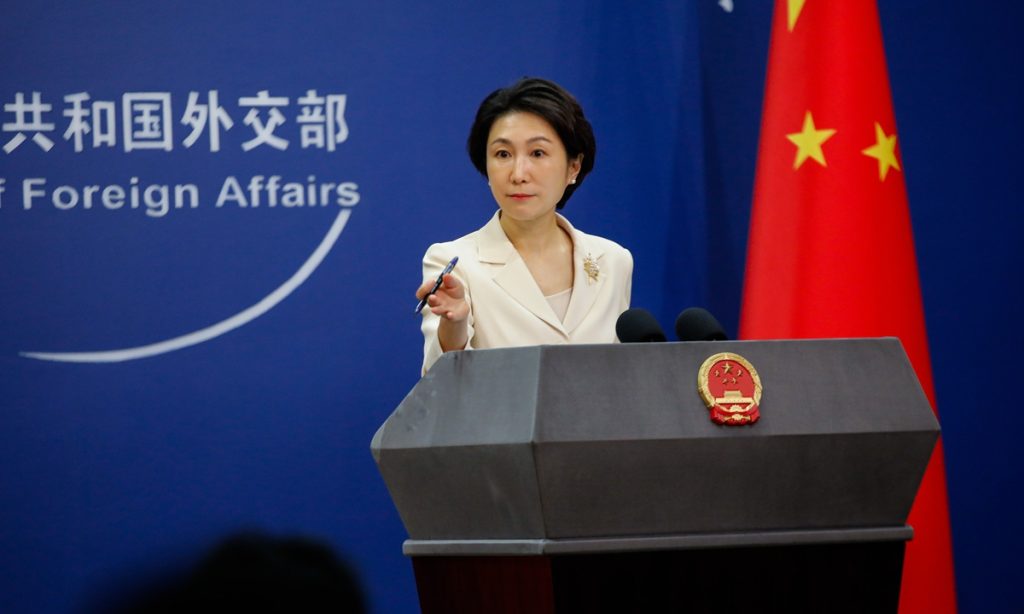
The current situation in the Middle East is at a critical stage of transition between war and peace. China maintains communication and exchanges at various levels with relevant parties, including Israel, covering high-level interactions as mentioned, Chinese Foreign Ministry spokesperson Lin Jian said on Friday.

Lin made the remarks at a regular press conference on Friday, when asked by a reporter from foreign media to comment that since the outbreak of the US-Israel military operation against Iran, China has maintained close communication with Iran, the US, and other relevant countries, and that since Iranian Foreign Minister Seyed Abbas Araghchi paid a visit to China recently, whether China has had high-level communication and exchanges with Israel.

China supports all parties in resolving differences and disputes through political and diplomatic means, achieving a comprehensive and lasting ceasefire, and safeguarding peace and stability in the Middle East and the Gulf region, Lin told the press conference. 

China is willing to act in accordance with the spirit of the four-point proposal on promoting peace and stability in the Middle East put forward by the Chinese leader, and work together with the international community to continue playing an active and constructive role in this regard, Lin said.

As Mainland pushes Xiamen-Kinmen Bridge, Kinmen residents call on DPP authorities to prioritize Cross-Straits exchanges

As the Chinese mainland pushes forward the construction of the Xiamen-Kinmen Bridge, with the Xiamen section on track to complete its main offshore structure by the end of 2026, the Kinmen side remains largely untouched, underscoring a widening gap in progress between the two ends of the project, Taiwan regional media reported on Thursday. 

The bridge was also mentioned in the latest 10 measures unveiled to deepen cross-Straits integration and exchanges with the island. While many Kinmen residents have called for the project to proceed, saying that it would improve transport convenience and boost tourism, the Democratic Progressive Party (DPP) authorities on the Taiwan island continued to highlight so-called security risks, hampering progress on the Kinmen side.

Taiwan regional media outlet United Daily News reported on Thursday that the Kinmen County Council had visited the planned Kinmen-side site of the Xiamen-Kinmen Bridge near Wulong Mountain in Jinsha township to assess the terrain, possible connection points and the area's development potential.

The report cited Hung Yun-tien, speaker of the Kinmen County Council, as saying that the proposed bridge would have a significant bearing on Kinmen's long-term development, with potential benefits for transport, industrial growth and people's livelihoods. He said that before any cross-Straits consensus is reached, local authorities should first coordinate internal views and build broader public consensus, laying the groundwork for future communication. Meanwhile, County Councilor Tung Sen-pao said the bridge issue cannot be resolved simply because one side wants to build it. 

"This is not a technical issue or a budget issue, but a cross-Straits political issue," he said.

The Xiamen section of the project, which is about 19.6 kilometers in length, runs from Xiamen island to Xiang'an International Airport and includes a reserved interface for a future extension to Kinmen, according to UDN.

A 2023 policy document issued by the State Council called for exploring joint infrastructure development between Xiamen and Kinmen and speeding up efforts toward electricity links, gas supply and a bridge connection. Construction of the Xiamen section of the Xiamen-Kinmen Bridge began in October 2023, while the planned 4.5-kilometer-long Dadan Island-to-Kinmen section is designed as a six-lane expressway with a speed limit of 100 kilometers per hour, according to a release from the website of the Taiwan Affairs Office of the State Council. 

Also, among the 10 policy measures unveiled on Sunday by the Taiwan Work Office of the Communist Party of China Central Committee following KMT Chairwoman Cheng Li-wun's mainland visit, authorities said they would promote water, electricity and gas links between Fujian's coastal areas and Kinmen and Matsu, and advance sea-crossing bridge projects when conditions permit, according to the Xinhua News Agency. 

Constructing the bridge has long been a common call and urgent desire shared by residents in Kinmen. For example, a Kinmen Daily editorial published in November 2025 said that for many Kinmen residents, crossing the sea to Xiamen for study, work, investment and property purchases has become a normal part of daily life. It added that many people in Fujian on the mainland have ancestral roots in Kinmen, while many Kinmen compatriots from Taiwan live and build their careers on the mainland. 

"Their family ties have long stretched across the Straits. For them, the Xiamen-Kinmen Bridge would offer an easier road home," it said.

However, the DPP authorities have continued to hype so-called security risks and claimed there is no plan for the project. Along with the recent package of measures to enhance connectivity with Kinmen, including proposals for shared transportation links, they have portrayed the project as part of the mainland's united front efforts. 

Taiwan regional media FTV News cited Chiu Chui-cheng, head of Taiwan's "mainland affairs council," as saying that these issues concern "national security" and public well-being, and must therefore be studied and handled by the authorities rather than bypassing the government.

DPP authorities should face up to the interests and demands of Kinmen residents, stop political calculation, and support the early completion and operation of the Xiamen-Kinmen bridge, Peng Qing'en, a spokesperson for the State Council Taiwan Affairs Office, told a press conference in November, 2025. 

Taiwan regional lawmaker Chen Yu-jen said in an exclusive interview with CCTV  in March that proposals for water, electricity, gas and transport links should be viewed as livelihood issues, given that Kinmen's proximity to the mainland makes such cooperation a positive step for economic and social development. She criticized the DPP authorities for seeking to cut Taiwan off from the mainland, stoking public fear and reducing cross-Straits exchanges in order to reinforce their "resist China, protect Taiwan" narrative.

A Kinmen resident surnamed Yu told the Global Times that the bridge project would make life more convenient for local residents by improving land connectivity. She also expressed expectations for more mainland tourists to support the local tourism industry. She said the Taiwan authorities should take residents' livelihoods into consideration and pursue policies that expand, rather than restrict, cross-Straits exchanges.

Lin Wenhao, who grew up in Kaohsiung, studied in Kinmen and now works in Fujian on rural revitalization projects, witnessed the west main tower of the Xiamen-Kinmen Bridge completed on December 7, 2025.

"Transport was always one of the issues we talked about most when I was studying in Kinmen," Lin told the Global Times. Now traveling frequently between Kinmen and Xiamen for work and business, he said his biggest concern is the risk of transport disruptions or island closures.

"For the Taiwan authorities, the issue is about national security and strategic risk. But for Kinmen, it is about livelihoods, development and everyday needs," he said.

Lin added that Kinmen, Xiamen and Quanzhou are naturally positioned for deeper integration with the mainland, and that real connectivity would also bring a stronger boost to Kinmen's long-term development. 

GT Voice: China’s patent boom to generate greater dividends via global co-op

World Intellectual Property Day fell on Sunday, but for China, it was more than an annual event. The nation is undergoing an important shift, moving from being a major importer to an important creator of intellectual properties. The change reflects the country's growing technological strength and offers new perspectives on the manufacturing sector and expanding international market presence.

Intellectual property and technological innovation are closely intertwined. According to a report run by the People's Daily on Sunday, as of the end of March, China had registered 5.53 million valid invention patents, maintaining its position as the world's leading filer of patents for consecutive years. In 2025, the number of high-value invention patents in China reached 2.29 million, with more than 70 percent of them stemming from strategic emerging industries.

The growth in invention patents has played a role in the continued evolution of China's manufacturing sector, which can be seen across several dimensions. 

First, the increase in patents has provided concrete technological support to the manufacturing industry. As the volume of patents rises, the technological capacity of Chinese manufactured products rises too, positioning the sector to engage more actively in global innovation.

Second, as the technological sophistication of Chinese products advances, so does the breadth of Chinese companies' global market expansion. No longer limited to exporting goods, Chinese companies are increasingly embedding themselves in the local supply chains, bringing investment and services such as consulting, after-sales support, and other integrated solutions. The shift signals a deeper engagement with local markets, where Chinese companies are not only contributing capital, but also creating local jobs and stimulating economic growth.

Third, the continued inflow of foreign capital into China's high-tech sectors, including the establishment of research and development centers, indicates that foreign companies are increasingly engaging with and benefiting from China's innovation ecosystem. The presence of global companies in China's R&D landscape highlights the active involvement of foreign investors, driven by their growing demand for Chinese technology.

Together, the developments form part of the ongoing evolution of global supply chains, with innovations serving as the primary driving force. The transition offers substantial benefits to the broader international industrial ecosystem. One driver of this process is technological progress, in contrast to the Western claims that mistakenly focus on the so-called overcapacity. In reality, it is China's technological advancements - not capacity growth - that are propelling the internationalization of its manufacturing sector.

The pace of technological advancement worldwide is accelerating, and simple capacity replication no longer provides a competitive advantage now. Chinese companies are keenly aware of this change. Within China, a competitive market environment has been developed, with intense competition across industries. To succeed, the companies must prioritize innovation and secure patents. 

This competitive pressure, combined with the push for technological progress, has been a driving force behind the growth and internationalization of China's manufacturing sector.

As a major participant in global supply chains, China's growth in invention patents plays a constructive role in the international economy. The increasing internationalization of Chinese manufacturing brings both investment and new momentum to global industrial networks. This shift generates benefits for local economies, with job creation and increased economic activity providing clear advantages for the communities. In this context, protecting the intellectual property and legal rights of Chinese companies is equally important.

Despite some foreign media outlets continuing to frame Chinese manufacturing in their lens of overcapacity, such narratives are increasingly at odds with the reality of China's technological advancements. Rather than simply expanding production, Chinese enterprises are focused on continuous innovation, leveraging technological progress to foster mutually beneficial cooperation with global supply chains.

According to the People's Daily, currently, China holds 61 percent of global artificial intelligence patents and two-thirds of patents related to robotics. In many emerging technologies, China is making significant progress. Investments in these sectors present opportunities for the global economy, particularly for the developing countries where technological progress can drive sustainable growth.

A clearer view of China's expanding patent base, its impact on industrial efficiency, and the resulting opportunities for global cooperation is essential to accurately evaluating its role in international supply chains. Focusing on these developments is set to offer a more balanced perspective on China's engagement with the global economy.

China’s new departure tax refund service helps boost sales by over 9 times in 12 months: latest data

Since the implementation of the refund-upon-purchase model for departure tax refund, the number of people enjoying the refund policy rose by 12.96 times year-on-year, while total tax refunds and tax refund sales both expanded by 9.35 times, data from State Taxation Administration showed on Monday.

On April 2025, China announced a nationwide shift from a refund-upon-departure model to a refund-upon-purchase model, enabling foreign visitors to instantly claim value-added tax rebates at tax-free shops across the country. 

The administration said that the measure has been implemented for a full year now, which helped boost inbound consumption. Currently, more than 8,000 tax refund shops across China offer the refund-upon-purchase service -- an increase of over 100 percent in 12 months. 

As the coverage of the refund-upon-purchase service continues to expand, more overseas visitors can get their tax refunds on the spot while shopping. They can use the refunded money for additional purchases, which stimulated consumer demand, the administration said.

During the past year, local tax authorities have actively explored innovative approaches, achieving quality improvements and upgrades in the refund-upon-purchase service. 

For example, Beijing has introduced a city-wide refund-upon-purchase service, breaking spatial limitations. Travelers can shop at any tax refund store in the city and choose the nearest refund point to process their refund. In Southwest China’s Sichuan, a QR code service has been launched. Overseas visitors only need to take a photo and upload their tax refund application form, valid ID documents, and shopping invoices, to complete the refund process and receive the tax refund instantly, the administration said.

“The nationwide rollout of the refund-upon-purchase model for departure tax refund has effectively stimulated inbound consumption. It represents a significant achievement in China’s efforts to optimize business environment, and promote local brands onto the global stage,” Zhang Yi, CEO of iiMedia Research Institute, told the Global Times on Tuesday.

Data from the Ministry of Commerce show that, in 2024, spending by inbound travelers accounted for 0.5 percent of China's GDP, compared to between 1-3 percent in other major economies, indicating significant room for growth, the Xinhua News Agency reported.

Vice Commerce Minister Sheng Qiuping said that China will steadily expand unilateral visa-free access, further optimize tax refund service, and ramp up the development of cities into international consumption centers, according to Xinhua.

Zhang said that the continuous implementation and optimization of the visa-free policy is a key lever for boosting inbound consumption and activating the cultural and tourism industry. “On one hand, it directly drives revenue growth in brick-and-mortar stores. At the same time, it facilitates cross-border business exchanges and continues to unlock the dividends of the opening-up policy,” the expert said.

An official from the State Taxation Administration said that tax authorities will continue to refine the departure tax refund service. They will further expand service scenarios, optimize service procedures, and improve service quality and efficiency, so as to better meet the tax refund needs of overseas travelers, and provide strong support for expanding inbound consumption.

As “China Travel” and “Shopping in China” become mainstream trends, more foreign visitors will experience firsthand China’s rich culture. This will help generate authentic and objective international word-of-mouth, ramping up mutual trust between China and other countries, and help build a positive cycle of cultural and tourism exchanges, Zhang said.