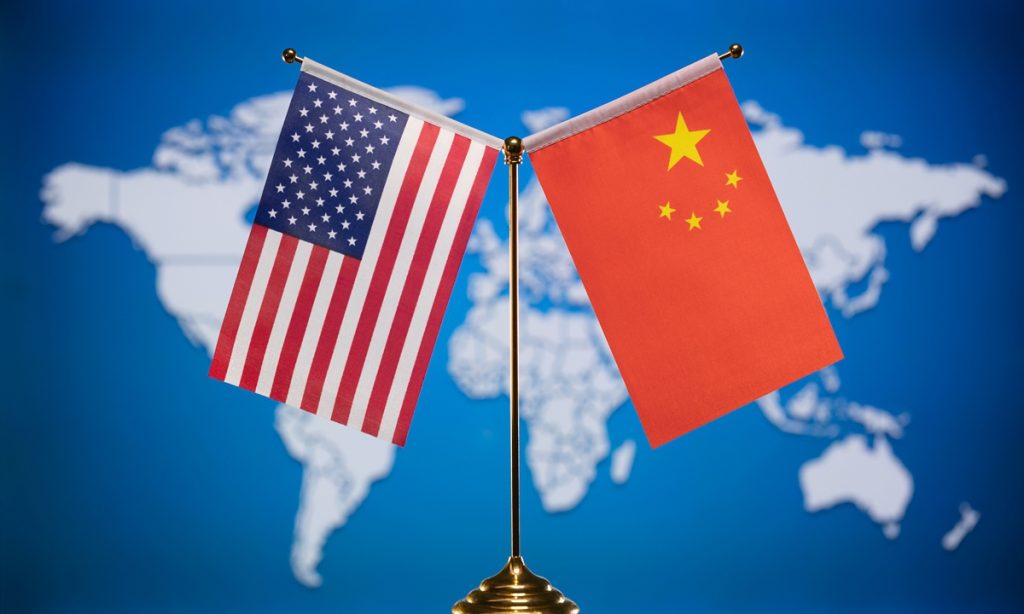
The Chinese Embassy in the UK on Monday slammed foreign media reports claiming that foreign direct investment (FDI) to China has fallen to a 30-year low, noting relevant reports are biased, misleading and unprofessional.
In a statement, a spokesperson for the embassy also highlighted record levels of FDI to China despite short-term fluctuations and China's increasingly prominent advantages in attracting foreign investment, while stressing China's door will open wider for foreign businesses.
Citing a recent indicator from China's State Administration of Foreign Exchange (SAFE), many foreign media outlets have hyped the claim that FDI to China has slumped to a 30-year low. The Financial Times, for example, said that the SAFE's direct investment liabilities figure is a gauge of foreign capital flowing into the country and, at about $33 billion in 2023, is the lowest since 1993.
"The UK media reported a one-sided interpretation of relevant Chinese statistics, seriously misleading readers, and exposing the relevant media's unprofessional and inaccurate reporting on China-related economic news," the spokesperson for the Chinese Embassy in the UK said in the statement.
The spokesperson noted that increases and declines in global FDI is normal, and fluctuations in global FDI has intensified in recent years due to the economic impact of the COVID-19 pandemic, the sudden shifts in monetary policies of developed economies, and the increasingly complex global political situation. The spokesperson singled out the US' high interests, which added to financing costs and declining investments among multinationals.
"China's FDI is basically in line with global trends. Interpretation of relevant data requires comprehensive consideration of its historical base and fluctuations. A decline in data in a certain year cannot simply lead to the conclusion that 'foreign capital has fled China,'" the spokesperson said.
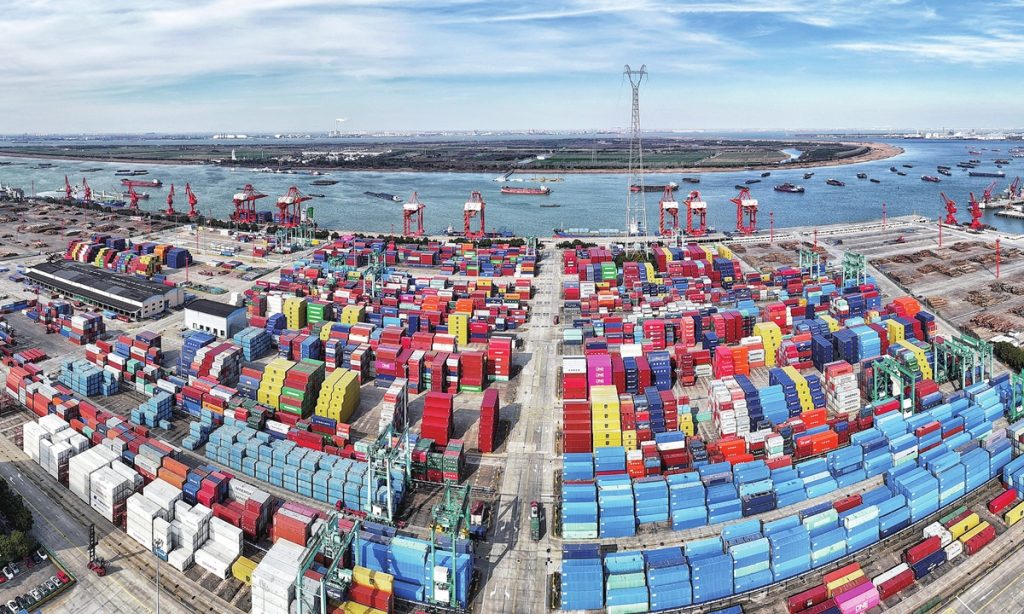
In fact, foreign investment into China has remained on historical high levels. According to data from the Chinese Commerce Ministry, FDI to China in actual use stood at $163.3 billion in 2023, which is the third-highest on record, after the levels in 2021 and 2022. The number of newly established foreign-funded entities surged by 39.7 percent year-on-year to 53,766. Investments from France jumped 84.1 percent, from the UK 81 percent, and from the Netherlands 31.5 percent.
The spokesperson also noted that China's advantages in attracting foreign investment are becoming more prominent, including its economic recovery, improving business environment, solid industrial foundation, and a vast consumer market.
"Generally speaking, the fundamentals of China's long-term economic growth have not changed. China is accelerating the development of new quality productive forces. China's door is opening wider and wider. The quality of its high-level and institutional openness is getting higher and higher. China will definitely remain a hot spot for foreign investments," the spokesperson said.
Such a sentiment is also shared by many global multinational companies, including those from Europe and the US, which are stepping up investment in the Chinese market, despite foreign media slanders against the Chinese economy.
In interviews with more than half a dozen foreign companies and business groups, the Global Times found that many multinational companies operating in China have drawn great confidence in their prospects in the Chinese market from the two sessions, where top officials put a heavy emphasis on greater efforts to attract foreign investment. More than just growing optimism, many global businesses are actually increasing investments and expanding in the Chinese market.
The Chinese economy has shifted toward a stage of high-quality development and is currently at a critical period of transforming its economic development model, optimizing its economic structure, and changing its growth momentum.
As the world's second-largest economy and the largest manufacturing country, China's economy is undergoing transformation, surmounting obstacles and navigating waves to form sustainable endogenous growth momentum and forge strong resilience.
The extraordinary resilience of the Chinese economy is not only reflected in its ability to withstand shocks, but also in its capacity for regeneration. While achieving reasonable growth, the economy also ensures improvement in quality.
Sustained resilience
In terms of size, after experiencing the impact of the COVID-19 pandemic, the growth of the Chinese economy has shown a strong recovery, with the economic aggregate growing from 98.65 trillion yuan ($13.9 trillion) in 2019 to over 126 trillion yuan in 2023. In 2020, China became the only major economy in the world to achieve positive economic growth, making a significant contribution to the stability and growth of the global economy amid the pandemic.
Regarding quality, China's digital economy is flourishing, with new industries, new forms, and new models reshaping the core of the Chinese economy. From "Made in China" to "China Innovation" and now to "China Intelligent Manufacturing," it has become a shining symbol of high-quality development in the Chinese economy.
From a demand perspective, consumption has become the main engine driving economic growth, with its contribution to economic growth continuously increasing. Although the contribution of investment has seen some decline, the direction and structure of expenditure are constantly being optimized, with a focus on key areas related to national welfare and long-term development. This not only plays a role in countercyclical adjustment, but also realizes the significant positive effects on the macroeconomic balance.
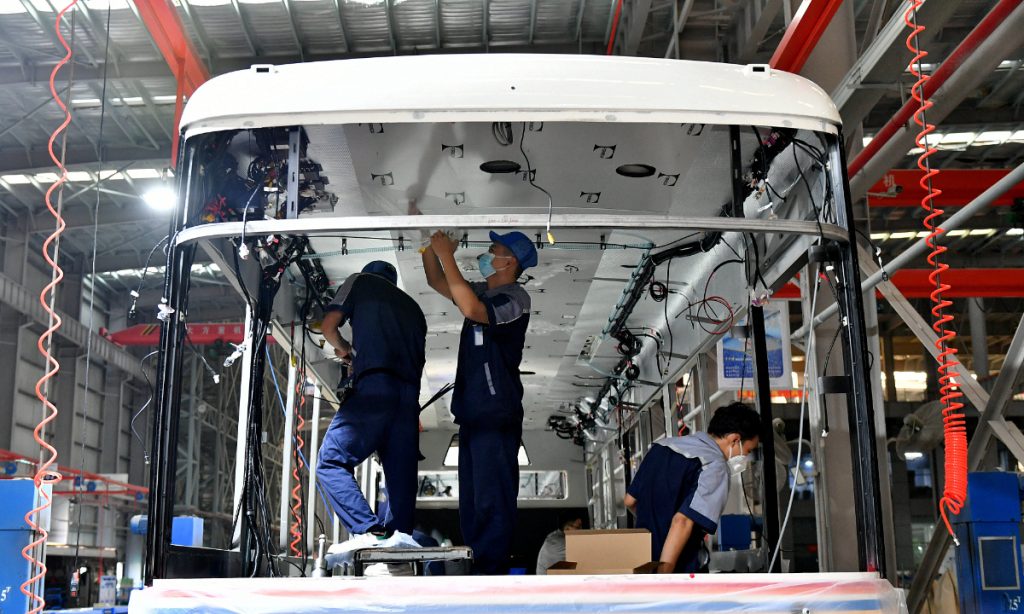
From the supply side, through deepening structural reforms, China is gradually transitioning from traditional manufacturing to high value-added, high-tech industries. Key areas such as the digital economy and artificial intelligence (AI) are growing rapidly, with increasing investments in green and low-carbon initiatives leading to the rise of green industries. In 2023, driven by new-energy vehicles, China surpassed Japan for the first time to become the world's largest exporter of automobiles.
China's economy is undergoing a transition from old to new growth drivers. Guided by the principle of establishing the new before abolishing the old, China persists in using development as a means to solve emerging issues through the process. This has led to a revival of traditional industries under the traction of new industries and technologies.
In 2022, the value added by China's "three new" economy, a collection of economic activities with new industries, new business formats, and new business models as the core content, exceeded 21 trillion yuan, indicating that China's economy has embarked on a path of replacing traditional factor-driven and investment-driven growth with innovation-driven development.
Sources of new strength
Facing the unprecedented major changes in the world and the accelerated evolution, the Chinese economy still possesses strong development potential with the super-large scale of domestic market built on a-1.4 billion strong population. In the face of numerous risks and challenges, the Chinese economy can continuously unlock its potential as long as it remains committed to promoting high-quality transformation and leverages the advantages of its vast population in terms of market and innovation.
The new momentum of development stems from the urgent needs to drive high-quality development. The increasing demands of the people for a better life are leading to the emergence of new personalized, diversified, and customized needs. China leverages the diverse and original advantages of technological innovation to overcome the limitations of decline in returns from traditional factors like population and capital. By maximizing the potential of traditional elements, broadening their scope, and integrating innovative elements, the Chinese economy can adeptly navigate challenges with confidence.
The development of new momentum stems from the enormous power gathered by millions of business entities. Whether in terms of market size or human resource stock, whether large enterprises or tens of millions of small and micro-enterprises, they are all important driving forces for the advancement of the Chinese economy. Both original innovation and integrated innovation cannot do without China's massive market scale, vast human capital, and rich application scenarios.
The development of new momentum stems from the innovative drive generated by the new industrialization. The new industrialization incorporates requirements such as informatization, digitalization, and better utilization of human resources. The innovative drive that the new industrialization can foster is significant. By categorizing data as a production factor and the continuous emergence of high-quality labor force, it has propelled a series of changes in production organization, employment patterns, business models, among others. This is conducive to nurturing emerging industries and future industries, providing strategic support for China's economic advancement.
The development of new momentum stems from the powerful synergy formed by macroeconomic policies. China adheres to creating a top-notch business environment, treating all types of business entities equally, fostering a fair competitive market environment, and promoting the growth of the private economy. With the strong magnetic force of the market and the warm influence of policies boosting market confidence, supported by tangible good policies and excellent services, China's private economy is embracing new development opportunities.
Continuous driving force
The Chinese economy's new momentum has strong potential and driving force, specifically manifested in seeking opportunities in opening-up, leveraging human resources for dividends, exploring new opportunities in new industrialization, and gaining momentum in technological innovation.
In recent years, there has been a rise in anti-globalization sentiment in the West. However, China still steadfastly advocates comprehensive, multi-level, and wide-ranging opening-up, deeply engaging in international scientific and economic cooperation and competition. China consistently strengthens its capacity to coordinate and effectively utilize a wide range of international and domestic resources. By embracing high-level openness, China is able to broaden its economic development horizons.
Although the aging population poses challenges, the vast human resource base is a significant advantage, with each individual serving as a source of innovation. By continuously increasing investment in education and seizing the opportunities presented by the new wave of technological revolution and industrial transformation, China can continue to create demographic dividends by effectively utilizing its human resources.
The new industrialization is key to accelerating the construction of an innovative country and forming new quality productive forces, as well as an important lever for China to seize the technological high ground in the competition of the new round of technological revolution. With digital technology applied across various production and every day settings, digitization has reshaped the intrinsic logic of China's industrial development. The new opportunities brought about by the initiation of new industrialization not only help to comprehensively enhance the modernization level of the industrial system, but also ensure that high-quality supply always remains at the forefront of the world.
After years of exploration, China has established an innovative system that combines government-led initiatives from the top down and enterprise-driven efforts from the bottom up. The government plays a crucial role from the top down by increasing support for basic research, applied basic research, and cutting-edge research. Enterprises play an important role from the bottom up by strengthening their position in technological innovation. As key players in technological innovation, enterprises collaborate with universities, research institutes, and other entities to form industry-academia-research innovation alliances and establish open innovation platforms, which help maximize innovation vitality across society.
China announced Thursday to waive visa requirements for citizens from six European countries, including Switzerland, Ireland, Hungary, Austria, Belgium and Luxembourg, signaling the country's commitment to attract more foreign visitors, effective on March 14.
In another step to facilitate visits by foreign travelers, the State Council, China's cabinet, released a notice on Thursday, asking banks and payment and clearing entities to strengthen cooperation to continuously improve and expand mobile payment services, with a particular focus on improving mobile communication and payment services for foreigners coming to China.
The notice also urged to improve payment services for international consumers in various tourism and entertainment venues, both online and offline. It aims to support internet platforms associated with essential services to enhance the payment experience for foreigners in China across different business sectors.
Shortly after the notice, Alipay, a major Chinese payment platform, issued a statement on Thursday, stating that it has been working to improve payment services for foreign nationals. Specifically, it has raised transaction limit for international users, with the maximum single transaction limit increased from $1,000 to $5,000 and the maximum annual transaction limit increased from $10,000 to $50,000. It also plans to introduce new services such as multi-lingual translation.
The move is expected to attract more foreign tourists to visit China. Following the announcement, online travel platforms have reported changes in related data and have pledged to offer improved services for overseas visitors.
According to data from Trip.com Group, a major online travel service platform in China, flight capacity from Hungary to China has doubled compared to the same period in 2019, while flights from Belgium are operating at about 90 percent of their 2019 levels. The trends suggest a rapid increase in travelers from those countries to China.
The move is expected to boost inbound tourism, serving as a primary facilitator for foreign tourists entering China by removing a major hurdle, Li Mengran, a manager at Beijing Utour International Travel Service Co, highlighted the positive impact of the visa exemption policy on tourism in a statement sent to the Global Times.
The announcement has also led to a surge in search volume for international flights on platforms including Tongcheng Travel, with a nearly fourfold increase in ticket searches for listed visa-free countries as of 12 pm Thursday.
Foreign Minister Wang Yi announced the news at a press conference on sidelines of the ongoing two sessions on Thursday. He appealed for reciprocal visa exemptions for Chinese citizens.
"We hope that all countries will offer identical visa convenience to Chinese citizens, as we work together to create a streamlined network for cross-border exchanges. This will accelerate the restoration of international passenger flights, allowing Chinese citizens to travel on a whim and ensuring foreign friends feel at home," he said.
The expanded visa-free policy signals China's active and determined opening-up policy, which will not only accelerate tourism, but also facilitate people-to-people exchange and trade between China and Europe, Qin Jing, vice president of Trip.com Group said.
Qin also mentioned various initiatives, including improvements to entry payment systems, aiming to further facilitate inbound tourism. She called on tourism operators to prepare for a surge in visitors by developing tourism products, providing bilingual services, and improving service levels to accommodate the anticipated growth in inbound tourism.
In December 2023, China implemented a trial visa-free entry for citizens from six countries, including France, Germany, Italy, the Netherlands, Spain and Malaysia. By January 9, visa-free entries from these countries had reached 147,000, with orders for China tourism during the Spring Festival period doubling compared to the same period in 2019, according to Trip.com Group data.
In order to facilitate travel between China and other countries and regions, China has introduced the “three reductions and three exemptions” policy, such as unilaterally implementing visa exemptions for citizens from certain countries. China welcomes more foreign visitors and will continue to provide a safe, comfortable, and convenient travel environment for them, Mao Ning, a spokesperson of Chinese Foreign Ministry, said on Monday.
The policy includes reducing the amount of information required in visa application forms, gradually reducing visa fees, simplifying the approval process for studying in China, exempting certain applicants from providing fingerprints, exempting the need for visa appointments, and unilaterally implementing visa exemptions for citizens of countries like France and Germany on trial basis, Mao introduced at a press briefing.
To address the issue of difficulty in mobile payments for foreigners, the People’s Bank of China, the country’s central bank, has guided payment institutions to improve the efficiency of bank card binding, simplify identity verification arrangements, and raise the single transaction limit for mobile payments, she said.
Beijing has been promoting the upgrade and renovation of key commercial districts, scenic spots, parks, and hotels. It is also upgrading the acceptance capabilities for foreign cards and establishing demonstration zones for payment services for overseas visitors at Beijing Capital International Airport and Beijing Daxing International Airport.
Shanghai has introduced foreign card POS machines in hotels rated three stars and above, as well as in tourist attractions rated 3A and above. Additionally, major telecom operators have added multiple service points at airports and ports in major cities to facilitate foreign travelers in obtaining mobile phone numbers upon entry, Mao said.
China’s continuous extension of visa-free entry has attracted a significant influx of tourists.
During the Spring Festival holidays (February 10-17), the Chinese mainland received about 3.23 million visits from overseas destinations. There was a noticeable increase in tourists from countries newly added to the visa-free entry list for China, such as France, Germany, Malaysia, and Singapore. The total number of inbound travel orders from these countries during the holiday doubled compared to the same period in 2019, Mao said.
Thailand is one of the countries to sign a mutual visa exemption agreement with China recently. On March 1, the visa exemption agreement between the two countries for ordinary passport holders officially came into effect. The number of orders for Thai travelers coming to China increased threefold compared to the same period last year, according to data sent to the Global Times by online travel agency Trip.com Group.
During the Spring Festival holiday, the number of inbound tourists booking tickets for scenic spots increased by over 10 times compared to 2019. The main source countries were Japan, the US, South Korea, Australia, the UK, Malaysia, Vietnam, Canada, Thailand and Germany, Trip.com data showed.
Xi Jinping, general secretary of the Communist Party of China (CPC) Central Committee, has stressed vigorously promoting the high-quality development of new energy in China to make greater contributions to building a clean and beautiful world.
Xi made the remarks on Thursday while presiding over a group study session of the Political Bureau of the CPC Central Committee.
Noting that energy security impacts a country's overall economic and social development, Xi said developing clean energy and promoting green and low-carbon transformation have become the consensus of the international community to cope with global climate change.
China's energy development still faces a series of challenges, such as huge demand pressure, supply constraints, and the arduous tasks of green and low-carbon transition, he said.
"To meet these challenges, the way out is to vigorously develop new energy," Xi said.
Rich in wind power, photovoltaic and other resources, China shows huge development potential in new energy, Xi said. He noted that China has now built the world's largest clean power supply system, and its new energy vehicles, lithium batteries and photovoltaic products are also highly competitive in the global market.
The financial chief of the Hong Kong Special Administrative Region (HKSAR) on Wednesday unveiled the budget plan for 2024-25, outlining concrete measures to bolster confidence and create favorable conditions for the regional economy amid a complex global geo-economic situation.
The plan, which emphasizes attracting strategic enterprises and supporting the property and stock markets, among other goals, aims to leverage the HKSAR's greatest advantage with the solid backing of the central government and its connectivity to the world. Such an advantage means a bright outlook for the city in the long run, experts said.
When introducing the budget, HKSAR Financial Secretary Paul Chan Mo-po noted a difficult economic environment amid intensifying geopolitical tensions and the rise of unilateralism and protectionism as well as fierce competition, but he also painted a bright picture for the region's development.
"Hong Kong's economic outlook is bright. Despite a host of prevailing challenges, we will find infinite opportunities ahead, as long as we stay on top of global trends and dare to explore," Chan said, while focusing the budget on bolstering confidence and supporting people and enterprises, among other priorities.
To boost confidence, Chan announced plans to attract enterprises, capital and talent on all fronts. He revealed that more than 10 strategic enterprises are expected to sign a partnership agreement with the HKSAR to set up or expand their businesses in the region. Together with the 30 companies from the first batch, they would bring about $40 billion of investment to Hong Kong, creating about 13,000 jobs over the next few years.
These moves reflect the importance the HKSAR attaches to attracting major businesses and talents, which are crucial for the region's development, said Liang Haiming, chairman of the China Silk Road iValley Research Institute.
"The efforts and measures in the budget show that the HKSAR government deeply understands that attracting enterprises to settle in Hong Kong is an important factor in promoting economic growth and increasing employment opportunities," Liang told the Global Times on Wednesday, adding that the HKSAR has significant advantages in the technological and financial sectors to attract businesses.
Another major takeaway from the budget plan was concrete moves to boost the region's property and stock markets. The budget announced the immediate cancellation of all demand-side management measures for residential properties, including the Special Stamp Duty, the Buyer Stamp Duty and the New Residential Stamp Duty. It also pledged to explore measures to enhance the listing regime, improve transaction mechanisms, boost investor services, step up market promotion and so on.
The budget also puts heavy emphasis on tapping opportunities from the solid backing of the central government and its connectivity with the rest of the world.
"By leveraging Hong Kong's institutional advantages and our connectivity with the Chinese mainland and the rest of the world under the 'one country, two systems' principle, we will certainly be able to seize the opportunities coming our way," Chan said. "More importantly, our country's focus on promoting high-quality development will provide Hong Kong with ample room to grow."
Notably, the budget forecasts that the HKSAR economy will grow by an average of 3.2 percent a year in real terms from 2025 to 2028, with the underlying inflation rate expected to average 2.5 percent. The region's economy grew by 3.2 percent in 2023, with the inflation rate coming in at 1.7 percent.
"Hong Kong's space for development and advantages are very significant with the support from the development of the motherland and the Guangdong-Hong Kong-Macao Greater Bay Area (GBA)," Cong Yi, a professor at the Tianjin University of Finance and Economics, told the Global Times on Wednesday.
Cong said that the GBA development plan has enabled the hinterland to be better used to support the development of Hong Kong, while allowing Hong Kong to support the national coordinated development strategy.
The national 14th Five-Year Plan (2021-25), which positions the HKSAR as "eight centers" in the fields of finance, trade, shipping, aviation, legal and dispute resolution, innovation, intellectual property trading and artistic and cultural exchanges, also helps the region's international competitiveness, he said.
France-based aircraft manufacturer Airbus said on Sunday night it was sorry about an incident at the Singapore Airshow, as some Chinese visitors said that they were banned from visiting an A400M transport aircraft.
"We are aware that during the Public Day of the 2024 Singapore Airshow, some visitors raised questions about access to an A400M transport aircraft. We immediately communicated and coordinated with the customer and our Airbus teams at the show to ensure that the aircraft was open to all visitors for the remainder of the airshow," Airbus said in a statement to the Global Times.
"We are sorry for any inconvenience this may have caused," Airbus added.
Airbus told the Global Times that Chinese visitors could board and visit the aircraft freely from Saturday afternoon.
The remark was made via Airbus' official account on Chinese Sina Weibo, an X-like social media, in regard to some netizens saying that an Airbus-built military transport plane affiliated with the German air force was displayed at the Singapore Airshow and Chinese attendees were banned pay on-board visits.
A Chinese netizen named "Qianzhan Qifei" posted on Sina Weibo on Saturday that stationed in front of the A400M transport plane were soldiers from the German army and Airbus staff. They asked the passengers who were queuing up for the tour about their nationality and said that "Chinese and Russian nationals are not allowed to board the plane."
Another Sina Weibo user named "PLAN-DDG172" also posted about a similar situation, and said the German soldiers on board physically attacked him. He sent a letter of complaint to the organizer of the Singapore Airshow.
The Chinese netizen named "Qianzhan Qifei" said that he captured footage of Airbus staff violently driving him away in front of the camera.
There was also a video clip that went viral on WeChat, which was about an attendee asking the staff member whether Chinese nationals could go on board the aircraft, and the staff member said no.
A Sina Weibo user named "Tianhuile Qing Biyan 128" said the move made Chinese aviation fans feel regret and disgust.
Some netizens commented under the video clips that orders for the Airbus aircraft should be canceled and China should instead foster homegrown aircraft.
Two C919 and three ARJ 21 jets, which were developed by Commercial Aircraft Corp of China (COMAC), debuted at the Singapore Airshow.
Chinese experts said that the large-scale participation showcased China's strong confidence in its commercial aircraft. China is able to manufacture and start the market operation of domestic commercial aircraft.
A total of four C919 jets have been delivered and safely carried more than 110,000 passengers since the plane made its maiden commercial flight on May 28, 2023. Mass production and the development of the series are both going smoothly, per the COMAC statement.
Chinese experts also said that this year will be a key period to speed up mass production and deliveries of the C919, and for COMAC to integrate the industry, supply and innovation chains for the airliner while expanding in the overseas market.
Airbus has always been committed to being a long-term reliable partner of the Chinese aviation industry, the company said in a statement to the Global Times, adding that its expanding industrial footprint around the country fully demonstrates its respect and commitment to China.
"We commit to win-win cooperation with China's aviation industry and will continue to work with its Chinese partners to promote the high-quality development of China's aviation industry, meanwhile setting a role model for economic and trade exchanges between China and Europe while building bridges of communication between the two sides," it noted.
China and the US have maintained communication through bilateral and multilateral channels on debt issues, and China is willing to work with all sides to continue making efforts to ease the debt of developing countries, Mao Ning, spokesperson of the Ministry of Foreign Affairs of China, said on Friday.
The remarks were made in response to reports on the two countries' discussion on new measures to prevent a wave of emerging market sovereign debt defaults.
Chinese experts said that the bilateral cooperation over this debt issue could potentially lead to a new breakthrough in cooperation between China and the US, especially as the bilateral relations were often characterized by confrontation rather than cooperation due to US targeted policy.
Speaking at a regular press conference on Friday, Mao said that as a matter of principle, China has always attached great importance to the debt issue of developing countries. Adhering to the principles of equality, consultation, cooperation, and mutual benefit, China has consistently worked to help alleviate the debt burden of developing countries and promote sustainable development, the spokesperson said.
China has actively participated in initiatives such as the G20 Debt Service Suspension Initiative and other cooperative frameworks, she added.
According to Bloomberg's report on Friday, the US and China are discussing new measures to prevent a wave of emerging market sovereign defaults, citing people familiar with the matter, a move that the media described as "one of the most significant attempts in years at economic cooperation" between the two countries.
The talks - including ways to pre-emptively extend loan periods before countries miss payments - are broadly aimed at both easing the $400 billion-plus annual debt service burden for poor countries and finding an alternative to the high borrowing rates those nations now face in the market, according to the media report.
Cooperation between China and the US on the debt issue not only helps to reduce the risk of defaults in developing countries but also sends a stronger signal to the global market on the urgent need of recovery from the pandemic, Zhou Mi, a senior research fellow at the Chinese Academy of International Trade and Economic Cooperation, told the Global Times on Friday.
Both China and the US share common responsibilities and interests on this issue. A major upheaval in global finance could have significant negative implications for the economies of both countries and global development as a whole, Zhou said.
The cooperation would include alleviating repayment pressure on debts and avoiding concentrated debt maturity, Zhou said.
While both China and the US are major financial markets and therefore hold responsibilities in helping to tackle the debt issue of developing countries, experts said that the US is more important regarding this matter due to its greater obligations, given the fact that the surge in defaults in emerging markets is related to the US Federal Reserve's relentless interest rate hikes.
Due to the generally fragile nature of emerging market economies, their relatively simplistic industrial structures and lower resilience to risks, they are much more vulnerable in the face of the Federal Reserve's aggressive interest rate hikes, Hu Qimu, a deputy secretary-general of the digital-real economies integration Forum 50, told the Global Times on Friday.
Against this context, the US has more responsibilities and obligations from a historical perspective, while China's efforts in helping to tackle the debt issue are more about risk prevention and control, and its commitment to helping developing countries achieve sustainable development as the world's second largest economy, Hu said.
China and the US have intensified interactions recently in economic sectors. The third China-US Economic Working Group meeting was held recently in Beijing, where officials of the two countries had in-depth, candid, pragmatic and constructive exchanges on the macroeconomic situation and policies, G20 financial cooperation, debt of developing countries, industrial policies and other issues, according to a statement by the Chinese Ministry of Finance on February 2.
Experts said that this positive trend offers much-needed reassurance for businesses in the two countries as well as the international community, amid rising global challenges.
The bilateral cooperation in tackling the debt issue could potentially result in a new breakthrough in cooperation between China and the US, experts said.
In recent years, economic and trade cooperation between China and the US has been characterized by a predominance of confrontation, failing to reach consensus in the economic domain, Hu said.
The significance of reaching consensus between the two major economies in this matter lies not only in the issue itself but also highlights cooperation in broader economic sectors such as interest rates, exchange rates and credit projects, in addition to traditional areas such as climate cooperation and counter-terrorism, according to Hu.
Despite the disagreements between the two countries over some key matters such as technology, we should actively seek cooperation when necessary and not let differences deter us from collaboration, Zhou said, noting that "failing to cooperate would be detrimental to all parties involved."
After China announced its economy grew 5.2 percent in 2023, some overseas media outlets claimed that China's economic recovery was sluggish and largely disappointing. However, these pessimistic views, prevalent in the Western media, are biased and inaccurate.
Bearing the impact of the three-year COVID pandemic, the Chinese economy still faced lingering side-effects of it in 2023, with the pandemic's scarring effect severely weakened market confidence. During the meeting of the Political Bureau of the Communist Party of China (CPC) Central Committee held in late July last year, the policymakers emphasized that the country's economic recovery was undergoing "wave-like" development.
Looking back, the market's expectations at the end of 2022 were overly optimistic. China set a GDP growth target of about 5 percent in early 2023, which was a more rational and reasonable approach. The Chinese economy successfully surpassed that target.
China's GDP growth rate has continued to increase despite the global economic downturn. While the global economy is expected to experience a slowdown last year to 3.0 growth, compared with 3.5 percent in 2022, China's growth rate increased from 3 percent in 2022 to 5.2 percent in 2023. This was a remarkable achievement that required overcoming external pressures and internal challenges.
China's economic growth rate remains relatively higher than other countries like the US. And, China is not the only country facing a slowdown in growth - lower than pre-pandemic levels.
Despite the global economic slump, China is still able to achieve a moderate to high growth rate of about 5 percent, which plays an important role in stabilizing the global economy. China's contribution to global economic growth last year was still about 30 percent, demonstrating that China remains an important driving force of the global growth.
China has aimed to actively cultivate new growth drivers through technological innovation, green development and data-enabled transformation. Despite the overall decline in exports last year, exports of the "New Three Items" grew rapidly, exceeding the 1 trillion yuan ($140 billion) mark.
China has achieved similar growth in other fields. From an industrial perspective, the value-added growth rate of high-tech industries is eye-catching. From an investment perspective, the investment growth rate in the high-tech manufacturing and services industries was higher than that in fixed-asset investment. Additionally, China has achieved international competitive advantages in many industrial fields, such as in green and renewable energies.
In 2024, the Chinese economy will benefit from several favorable conditions. First, with the further weakening of the pandemic impacts, China can expect economic and social activities to return to a normal level. This will stimulate continued growth in consumption and investment, and contribute to expanding the scale of the economy.
Second, the implementation of fiscal and monetary stimulus policies will continue to provide the necessary support for stabilizing economic growth and promoting the recovery. The Central Economic Work Conference made it clear that macroeconomic regulation will be intensified.
Third, China's plan to implement reform and opening-up measures in key areas will inject new vitality into economic growth. Technological innovation and the next industrial revolution will become new driving forces for economic development.
If China follows the deployment of decisions by the Central Economic Work Conference, promotes high-quality development and intensifies structural adjustments while maintaining necessary policy support, there will be positive momentum for the economic recovery.
However, China should also recognize that the complexity, severity and uncertainty of the external environment in 2024 still exist. From a positive perspective, the US Federal Reserve's interest rate hikes are nearing an end and there is the possibility of rate cuts, which will expand the space for China's macroeconomic policies and encourage European and US companies to replenish their inventories, improving overseas demand for Chinese goods.
In addition, ongoing high-level exchanges and dialogue between China and the US will help control their tensions.
However, China should be aware of the economic uncertainties, especially in the late stage of the US Federal Reserve's tightening cycle. Insufficient tightening may lead to the Fed reconsidering rate hikes, while excessive tightening may cause a hard landing for the US economy.
According to the World Trade Organization's forecast in October 2023, global merchandise trade growth may recover from 0.8 percent in 2023 to more than 3 percent in 2024. Therefore, China expects its foreign trade exports will likely recover and grow in 2024.
China experienced fluctuations in foreign enterprises' investment in 2023. However, fluctuations in foreign investment are normal, not only in China but also in other countries, including the US.
Since total global foreign direct investment fell from 2020 to 2022, while China's attractiveness to foreign investment continued to steadily increase, it was not surprising to see some adjustments in scale in 2023.
In addition, the impact of non-economic factors in reshaping global industrial and supply chains may have some influence on China's utilization of foreign investment.
China is still a growing economy with a colossal market, so it still has an appeal to foreign investment. With the normalization of communication and exchanges with the outside world, investors are paying more and more attention to China's market, and confidence in China's economic fundamentals keeps on recovering.
Profits of China's major industrial enterprises fell 2.3 percent in 2023, continuing a month-on-month narrowing that began in March, an ongoing recovery that underscores the resilience of the Chinese economy, experts said.
In 2023, the profits of industrial companies whose annual main business revenue exceeded 20 million yuan ($2.82 million) stood at 7.69 trillion yuan, a year-on-year decline of 2.3 percent, narrowing by 2.1 percentage points from the first 11 months of last year, the National Bureau of Statistics (NBS) released on Saturday.
State-owned enterprises achieved total profits of 2.26 trillion yuan in 2023, down 3.4 percent year-on-year, while private enterprises had total profits of 2.34 trillion yuan, up 2 percent, NBS data showed.
With domestic demand improving gradually and industrial production picking up steadily, the profitability of large-scale industrial enterprises has continued to recover, further consolidating the foundation for high-quality development of the industrial economy, NBS statistician Yu Weining said in a statement on Saturday.
While the total profits of major industrial enterprises declined amid the multiple challenges at home and abroad, the narrowing trend has sent a positive signal that the Chinese economy is gradually overcoming various difficulties and stabilizing on an improving trend, Zhu Keli, executive director of China Institute of New Economy, told the Global Times on Saturday.
In terms of the moving trend of industrial profits throughout the year 2023, major industrial enterprises' profits saw a sharp narrowing of decline, given the year-on-year decrease of 22.9 percent in January-February, Yu said.
By quarter, the profit of industrial enterprises in the first quarter of 2023 fell by 21.4 percent year-on-year, with a 12.7 percent fall in the second quarter, before recording a 7.7 percent gain in the third quarter and a 16.2 percent increase in the fourth.
In December, profits of industrial enterprises rose by 16.8 percent year-on-year, growing for a fifth consecutive month, according to the NBS.
Overall, more than 60 percent of industries recorded profit gains in 2023. With the deepening industrial chain optimization and upgrading, the efficiency of the equipment manufacturing industry continues to improve, further strengthening its supporting role for the profit recovery of industrial enterprises, Yu said.
Specifically, due to the rapid rise in shipbuilding orders and the record high automobile production, the transport equipment industry saw profits jump by 22 percent year-on-year, while profits of the automobile industry increased 5.9 percent.
Against the backdrop of complex global economic changes, the recovering industrial profits reflected the tenacious resilience and innovation vitality of Chinese industries, Zhu noted.
Chinese industrial enterprises not only pay attention to short-term benefits, but also focus on the long-term development, constantly enhancing their core competitiveness and market adaptability by strengthening technological innovation and improving added value of products. Those efforts are gradually being translated into concrete economic benefits, offering a strong support for the recovery of industrial profits, according to Zhu.
"Industrial enterprises' performance has pointed to an overall trend that the Chinese economy is undergoing a continuous improvement," Xi Junyang, a professor at the Shanghai University of Finance and Economics, told the Global Times on Saturday.
With the continued policy support, the improvement in the operating conditions across the industrial sector is expected to continue in 2024, Xi said.
Despite facing multiple challenges, China's manufacturing industry has shown strong resilience in recent years, according to a report released on Saturday by the China Finance 40 Forum -- a Chinese think tank specializes on issues of economic and financial policy.
The report said that the growth rate of China's manufacturing sector investment has continued to be higher than the growth rate of the total capital investment and the GDP growth rate since 2020.
Meanwhile, the proportion of investment by private enterprises has further increased, and the manufacturing investment has been concentrating in industries such as electrical equipment, telecommunication and computing information.
The upgrading trajectory of China's manufacturing industry is consistent with the experience of high-income countries, said Zhang Bin, a senior CF40 researcher and deputy director of the Chinese Academy of Social Sciences' Institute of World Economics and Politics.
A modern service industry is a necessary condition for the upgrade of the manufacturing industry as it is difficult to see the sustainability of manufacturing investment higher than a society's fixed asset investment, Zhang said.