Update: China extends visa-free policy to more nations, improves payment services for foreigners, in bid to boost inbound travel

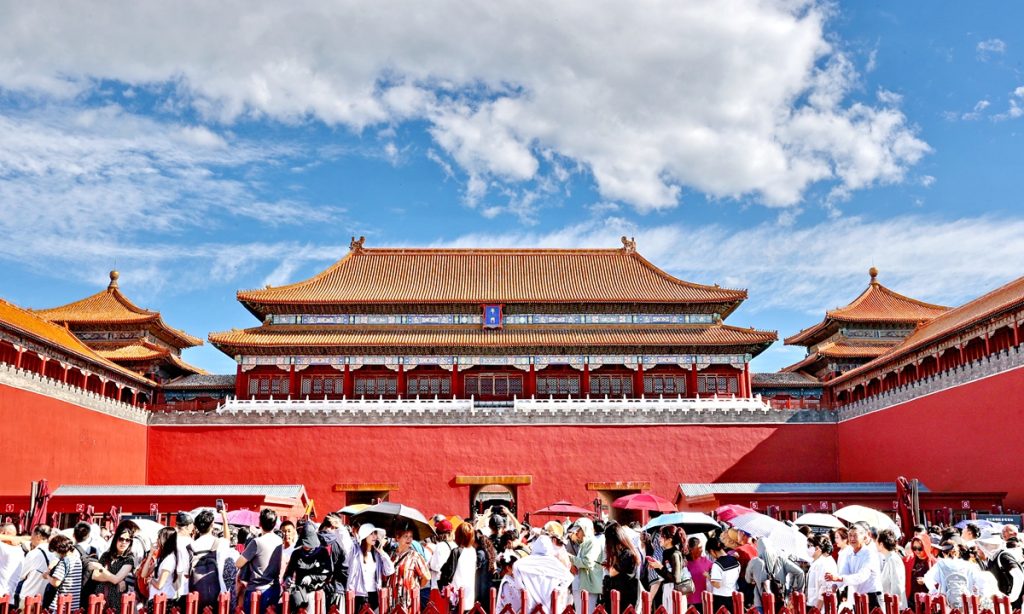
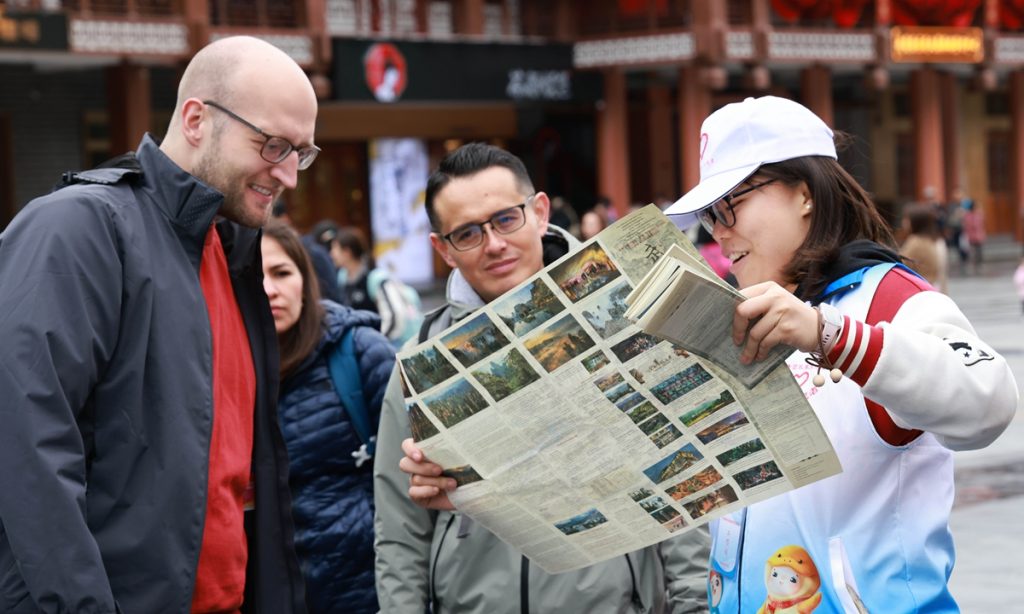
China announced Thursday to waive visa requirements for citizens from six European countries, including Switzerland, Ireland, Hungary, Austria, Belgium and Luxembourg, signaling the country's commitment to attract more foreign visitors, effective on March 14.

In another step to facilitate visits by foreign travelers, the State Council, China's cabinet, released a notice on Thursday, asking banks and payment and clearing entities to strengthen cooperation to continuously improve and expand mobile payment services, with a particular focus on improving mobile communication and payment services for foreigners coming to China.

The notice also urged to improve payment services for international consumers in various tourism and entertainment venues, both online and offline. It aims to support internet platforms associated with essential services to enhance the payment experience for foreigners in China across different business sectors.

Shortly after the notice, Alipay, a major Chinese payment platform, issued a statement on Thursday, stating that it has been working to improve payment services for foreign nationals. Specifically, it has raised transaction limit for international users, with the maximum single transaction limit increased from $1,000 to $5,000 and the maximum annual transaction limit increased from $10,000 to $50,000. It also plans to introduce new services such as multi-lingual translation.

The move is expected to attract more foreign tourists to visit China. Following the announcement, online travel platforms have reported changes in related data and have pledged to offer improved services for overseas visitors.

According to data from Trip.com Group, a major online travel service platform in China, flight capacity from Hungary to China has doubled compared to the same period in 2019, while flights from Belgium are operating at about 90 percent of their 2019 levels. The trends suggest a rapid increase in travelers from those countries to China.

The move is expected to boost inbound tourism, serving as a primary facilitator for foreign tourists entering China by removing a major hurdle, Li Mengran, a manager at Beijing Utour International Travel Service Co, highlighted the positive impact of the visa exemption policy on tourism in a statement sent to the Global Times.

The announcement has also led to a surge in search volume for international flights on platforms including Tongcheng Travel, with a nearly fourfold increase in ticket searches for listed visa-free countries as of 12 pm Thursday.

Foreign Minister Wang Yi announced the news at a press conference on sidelines of the ongoing two sessions on Thursday. He appealed for reciprocal visa exemptions for Chinese citizens.

"We hope that all countries will offer identical visa convenience to Chinese citizens, as we work together to create a streamlined network for cross-border exchanges. This will accelerate the restoration of international passenger flights, allowing Chinese citizens to travel on a whim and ensuring foreign friends feel at home," he said.

The expanded visa-free policy signals China's active and determined opening-up policy, which will not only accelerate tourism, but also facilitate people-to-people exchange and trade between China and Europe, Qin Jing, vice president of Trip.com Group said.

Qin also mentioned various initiatives, including improvements to entry payment systems, aiming to further facilitate inbound tourism. She called on tourism operators to prepare for a surge in visitors by developing tourism products, providing bilingual services, and improving service levels to accommodate the anticipated growth in inbound tourism.

In December 2023, China implemented a trial visa-free entry for citizens from six countries, including France, Germany, Italy, the Netherlands, Spain and Malaysia. By January 9, visa-free entries from these countries had reached 147,000, with orders for China tourism during the Spring Festival period doubling compared to the same period in 2019, according to Trip.com Group data.

First reusable launch vehicle test flight completed, marking milestone for China's space industry

Chinese private aerospace firm iSpace completed the country's first reusable launch vehicle test on Sunday. The achievement marks a milestone in China's development of space technology.

The Hyperbola-2 is the company's latest model for reusable launch vehicle tests. During the flight, the vehicle reached an altitude of 343.12 meters, with a flight time of 63.15 seconds, and landed with a landing speed of 1.1 m/s and a landing attitude angle of 1.18 degrees.

The rocket had its first stage test flight on November 2, with a well-controlled descent and touchdown. I-Space then spent less than 20 days on preparation and maintenance work for the rocket.

The test flight verified the reuse capability of a full-size liquid-oxygen-methane rocket and its reliability for low-altitude descent and touchdown, as well as the testing process, norms, and standards. It also verified the company's rocket recovery system, marking a step forward in the global market of reusable launch vehicles.

The successful test flight of the Hyperbola-2 rocket represented more than just a technological breakthrough for iSpace. In the field of reusable launch vehicles, large companies including SpaceX and Blue Origin have established dominant technology advantages. The success of the iSpace test signals that the Chinese company is making strides in the emerging market.

China has continuously invested in the space sector and maintains advancements in key areas. On Sunday, the Yaogan-39 satellite was successfully launched from the Xichang Satellite Launch Center in southwest China's Sichuan Province, marking the completion of the 500th flight mission of China's most iconic Long March series rockets.

China's private companies have been increasingly involved in the development of space technology in recent years. On Saturday, Landspace successfully launched a Zhuque-3 rocket with three satellites, Honghu, Honghu-2, and Tianyi-33, marking the first time the startup company has sent satellites into orbit.

China’s next generation artificial sun opens for global shared research and use in cooperation with ITER

The China National Nuclear Corporation (CNNC) announced on Thursday the global opening of the next generation artificial sun, "China Circulation-3," after the group's affiliated Southwestern Institute of Physics signed an agreement with the International Thermonuclear Experimental Reactor (ITER). The initiative invites scientists worldwide to come to China and collaborate toward the shared goal of pursuing "artificial sun energy."

The "China Circulation-3" is currently China's most advanced and largest-scale nuclear fusion device, also referred to as China's next generation "artificial sun." 

In August this year, it successfully achieved high-constraint operation mode under a plasma current of 1 million amperes, marking a significant advancement in China's magnetic confinement nuclear fusion device, propelling it to the forefront of international research. 

Over the years, the Southwestern Institute of Physics has been deeply involved in the development of key components for ITER, the world's largest "artificial sun" project, CNNC said, and together overcame numerous engineering and technical challenges.

This involvement of the Chinese institute has led to the accumulation of extensive experience in the construction, debugging, operation, and maintenance of fusion devices, laying a solid foundation for China to integrate with international advanced technology and eventually construct its own fusion reactor. 

Due to the similarity in the principles of the two experiments, the openness of "China Circulation-3" will not only focus on addressing key technical issues of interest to the ITER but will also enhance China's research and development capabilities and foster talent development.

In April this year, the other Chinese "artificial sun," the Experimental Advanced Superconducting Tokamak (EAST), which is also the world's first fully superconducting tokamak device in operation, saw a major breakthrough as it achieved a high power, stable, 403-second steady-state long-pulse high confinement mode plasma operation, setting a new world record for steady-state high confinement mode operation of a tokamak device.

Developer of the EAST, the Institute of Plasma Physics under the Chinese Academy of Sciences, said that they are aiming to use the EAST to generate fusion power before the centenary of the founding of the People's Republic of China, which falls in 2049.

Full-scale rescue underway as 6.2-magnitude earthquake in NW China kills 105 in Gansu and 11 in Qinghai

A 6.2-magnitude earthquake struck Jishishan county in Linxia Hui Autonomous Prefecture of Northwest China's Gansu Province on Monday midnight. As of press time, the earthquake has caused 105 fatalities and 186 injuries in Gansu and another 11 were killed in neighboring Qinghai Province.

Chinese President Xi Jinping issued important instructions on Tuesday regarding the earthquake in Gansu, demanding full-scale search and rescue efforts, proper resettlement of affected people, and maximum efforts to ensure the safety of people's lives and property. Premier Li Qiang also issued instructions.

It is the deadliest earthquake in terms of casualties in China following the devastating 2010 earthquake in Yushu, Qinghai Province, and the second-largest in magnitude. 

Notably, since the 2010 Yushu quake, the biggest earthquake had also occurred in Gansu Province with a maximum magnitude of 6.6, resulting in nearly 100 fatalities.

Houses and infrastructure related to water, electricity, and roads in and around the epicenter have been damaged to varying degrees.

It has also been found that the earthquake-stricken area in Gansu experienced mountain collapses, and there was displacement in the supports of a local bridge. 

"I live on the 16th floor and felt the tremors so strongly. The moment of the earthquake was feeling like being tossed up after surging waves… I woke my family up and we rushed down all 16 floors in one breath," A resident living near the epicenter surnamed Qin told media. 

It was freezing cold out there at minus 12 C, and Qin noticed his neighbors also fleeing from surrounding buildings, some wearing down jackets, some wrapped in blankets, and some even bare-chested.

The earthquake also affected the neighboring province of Qinghai. As of 6 am on Tuesday, the earthquake has resulted in 11 deaths and 140 injuries in Haidong city in Qinghai Province. 

Some houses have collapsed in counties and districts such as Minhe, Xunhua, and Hualong. Local electricity lines and communication networks are under urgent repair, and efforts in personnel rescue and disaster assessment are still ongoing.

In light of the severe disaster, the State Council's Earthquake Relief Command and the Ministry of Emergency Management have raised the national earthquake emergency response to Level II. The National Disaster Prevention and Relief Committee and the Ministry of Emergency Management have also elevated the national disaster relief emergency response to Level II.

Following the earthquake, a total of 1,440 firefighters from the national comprehensive fire and rescue teams were deployed to the disaster area for rescue efforts. Additionally, 1,603 firefighters from Gansu and surrounding provinces have been assembled and are on standby.

Army units from the PLA Western Theater Command swiftly prepared for emergency response. Over 300 officers and soldiers were mobilized overnight and arrived in the severely affected area by 4 am Tuesday to commence personnel search and rescue operations, road clearance, and other tasks.

According to Gansu earthquake administration, multiple consecutive tremors occurred late at night, with the maximum magnitude reaching 6.2. A total of 140 aftershocks have been recorded, with the largest measuring 4.1 in magnitude. 

Areas in other regions including Southwest China's Sichuan Province, Northwest China's Shaanxi Province and Ningxia Hui Autonomous Region, also experienced tremors.

The China Earthquake Networks Center has organized experts to conduct analysis on the seismic activity near the epicenter in Gansu, which occurred in the southeastern part of the province, approximately three kilometers from the nearest fault line - the northern edge fault of Laji Mountain. 

Preliminary analysis of the focal mechanism indicates that this earthquake was a thrust rupture. 

The active tectonic zone in southeastern Gansu lies in the northern part of the North-South Seismic Belt in China and is an important region on the northeastern edge of the Qinghai-Xizang (Tibet) Plateau. Due to the long-term compression between the Eurasian Plate and the Indian Plate, intense tectonic activity occurs in this region, characterized by the development of numerous deep-seated faults.

Within a 200-kilometer radius of the epicenter of this earthquake, there have been three earthquakes measuring magnitude 6 or higher since 1900. All were either isolated or main shock-aftershock type earthquakes.

The significant casualties this time also stem from the poor seismic resistance of buildings, relatively dense population in affected areas, and the timing of the quake when people are usually asleep and unable to evacuate in time.

The Earthquake Early Warning System, jointly developed by the Institute of Care-life and the China Earthquake Administration, told the Global Times that it had alerted the regions ahead of the earthquake. 

It provided warning to the Linxia Hui Autonomous Prefecture located 56 kilometers from the epicenter 12 seconds before the quake, and some 20 seconds to regions adjacent, including Gansu's capital city of Lanzhou. 

Preliminary statistics show that domestically manufactured mobile phones, televisions, and other devices equipped with the warning system were able to issue alerts in advance within the affected earthquake zone. 

Team China’s Guo Hanyu claims women’s singles tennis title

China's Guo Hanyu won the women's singles tennis gold medal at the FISU Games on Sunday by making a comeback victory over Chinese Taipei player Yang Ya-yi 2-6, 6-1,6-1 

"The FISU Games have been fruitful for me," Guo told reporters after the match, as Sunday's win came on top of her silver medal in the women's doubles with teammate Jiang Xinyu on Saturday.

"I enjoyed the match today after seeing room for improvement in yesterday's defeat," said the Southwest University student athlete, who had won the doubles title in the previous FISU Games in 2019 in Napoli, Italy. 

Guo was one of the two flagbearers for China at the opening ceremony of the FISU Games. She said it gave her more of a boost rather than pressure. 

"It gives me a little pressure but more importantly impetus," Guo told the Global Times.

Guo played the match under the gaze of tennis great Zheng Jie, one of the Chinese female tennis trailblazers who won the Grand Slam doubles title at the Australian Open and the Wimbledon Championships in 2006.

Zheng, who is a Chengdu native and now a vice president of the Chinese Tennis Association (CTA), has been promoting tennis among the young generation in the recent years.

In 2010, she initiated youth tournaments with the aim of increasing the number of opportunities for young players to compete. 

Over the past 14 years, the CTA has incorporated more than 90 youth tournaments into their ranking system, providing ample chances for aspiring young talents to showcase their skills. 

"Nowadays, young Chinese tennis players, if they are willing to play, can find matches to play, which is something I never could even imagine during my playing career," Zheng told the Global Times. 

Fans watching the game at the Sichuan International Tennis Center in Chengdu, capital of Southwest China's Sichuan Province, were troubled by the rain, as it has postponed the men's singles as well as pairs final.

15-year-old champ driven by father’s love, aiming for greater heights

Fifteen-year-old Chen Ye has become the youngest Chinese champion in the history of the Asian Games after winning the skateboarding park men's finals in Hangzhou, East China's Zhejiang Province, on Monday, which is also the first gold medal for the Chinese team in the world championships for skateboarding.         

After the game, the training ground made by Chen's father, which paved the way for this inspirational story, became the focus of media attention. In an interview with the Global Times on Tuesday, Chen expressed his gratitude to his father as the person he most wanted to thank after winning the gold medal. 

"The Asian Games gold medal is the greatest medal I has received so far. I will use it as encouragement to continue striving for higher goals," he said.

"I'm grateful to my father for building two bowl training grounds for me and studying skateboarding skills with me," Chen said. Chen said that he fell in love with skateboarding when he first encountered the sport in a shopping mall at the age of 8. 

"When I started skateboarding, I felt that it was a very exciting and thrilling sport. I felt very happy after completing each move," Chen said, comparing it to the piano and other hobbies that his father, Chen Wanqin, tried to introduce to him but which he found boring.

Once Chen Ye showed his true passion, his father, respected him the choice and supported him. In 2019, Chen Ye joined the Guangdong provincial skateboarding team. To help his son's training, Chen Wanqin and his wife rented a warehouse of more than 200 square meters to build a bowl training ground for him. 

After finishing second in the men's skateboarding park event at the 2021 National Games of China, Chen Wanqin built a new 900-square-meter skateboard park with a max height of nine meters in 2022 in order to improve his son's performance. Chen Ye said that during that time, his father quit his job and even spent all his savings to support his passion. 

But it was all worth it. After winning the Asian Games gold medal, Chen Ye now has the confidence to pursue higher goals. 

"Now that I've won the championship in an Asian event, I hope to perform better in global events and participate in more high-level competitions. In the future, I may participate in more Olympic ranking events," Chen Ye said. 

After entering the Paris Olympic cycle, the Chinese skateboarding team is not only preparing for the Asian Games, but also coordinating their preparations for the Olympic Games. It is worth mentioning that while Chen Ye snatched the championship, other Chinese athletes in the same event also made new breakthroughs. In the skateboarding park women's final held on Monday, Chinese athlete Li Yujuan won the silver medal, while Mao Jiasi won the bronze medal.

In addition, the Chinese skateboarding team has also seen the emergence of several young players with great potential in the Hangzhou Games. Apart from Chen Ye, 13-year-old Cui Chenxi is also considered a rising star. She is also the youngest athlete in the Hangzhou Asian Games Chinese delegation. The Chinese skateboarding team, composed of athletes born after the year of 2000, continues to make breakthroughs, and the future looks promising.

Millennial couple build 18 Beijing landmarks with 130,000 building blocks

Editor's Note:

How can art and culture from the past survive in a globalized world? While attempting to inherit the treasure of art and culture thousands of years old, young Chinese have created a new trend - Guochao, or China chic. It refers to a movement first started by young people endeavoring to revive and reinvent China's traditional culture.

Fashion designers have drawn inspiration from the precious murals inside the Yungang Grottoes, and traditional instrumentalists are creating new trendy music on the pipa. These young Guochao trendsetters have helped China's cultural legacies to be passed down and preserved for future generations.

To better understand this new approach to cultural preservation, the Global Times has conducted a series of interviews with young innovators to learn about their interpretation of Chinese culture. In this installment, the art of recreating iconic ­Chinese buildings using building blocks is revealed.
From Yongdingmen to Gulou and Zhonglou, 18 iconic landmarks along Beijing's Central Axis have been concentrated in a 16-meter-long panoramic building-block world. These works are produced by a millennial couple, Jiang ­Buting and Chen Xi, who spent 90 days using more than 130,000 building blocks to recreate the traditional buildings, with an aim to help boost the Beijing Central Axis' chances at gaining UNESCO World Heritage status.

"Building blocks are recognized globally for their recreational value, and we understand the building of building blocks as a borderless artistic language. Building blocks allow us to consider a new perspective on how to protect intangible cultural heritage and cultural relics in a new way, and spread traditional Chinese culture through this universally entertaining way, so that the charm of Chinese culture can be seen by the world," Jiang told the Global Times on Sunday.
Conveying cultural connotation

The pair uploaded the footage of their creations on the video-sharing platform Bilibili, where many netizens expressed their admiration. However, the process was not easy.

Before the assembling process could begin, a lot of preparation had to be done. First, they used computer-aided design (CAD) software to convert the survey map into a three-dimensional model and then used the actual image and converted measurements from CAD to virtually assemble the building-block models.

After the virtual assembly was completed, the software generated a list of parts to be used numbering in the tens of thousands, that had to be sorted and assembled. Jiang told the Global Times that one of the difficulties was how to use fixed-shape blocks to show the spiritual essence of traditional Chinese architecture.

"For example, we will use white ice cream-shaped parts to restore the appearance of pillars, and black banana parts to restore the roof overhang," Jiang said.

The other difficulty is how to use building blocks, a modern material, to interpret and express the construction logic and wisdom of ancient Chinese architecture, truly conveying its cultural connotation.

When restoring the Jiaolou, they did not add a pillar to support the indoor space, following the original construction logic of the building, although it was not easy to see in the model.

"We not only restore the appearance of these buildings, but also try to use building blocks as modern material to restore Chinese ancient architecture in a way that truly shows its construction logic and wisdom," Jiang noted. "We think we can create any scene we want with building blocks."

The pair has undertaken many building-block recreation projects, including China's aerospace aviation series, Tsinghua University's 100th anniversary celebration building series, Big Air Shougang, the Beijing 2022 Winter Olympics open-air event venue, and many animation scene restorations, novel-themed builds, and so on.
Indispensable part

"When we go to visit Yuanmingyuan today, we can only see the remains of buildings destroyed by fire. In order to restore them, we needed to read a lot of historical records about the scenes to recreate them," he said.

In the Yuanmingyuan restoration process video, not only are there ancient buildings, hills, and trees shown, but people are also incorporated as an indispensable part of the recreated landscapes, with every detail vibrant and well-executed.

"We choose to use building blocks to interpret traditional Chinese culture, because they are a material that is suitable for all ages and can be used by everyone. The simple and rich connection methods greatly encourage more people to participate enthusiastically," Jiang said.

This year marks the 10th anniversary of the Belt and Road Initiative (BRI). The pair used building blocks to recreate the ship used by legendary Chinese navigator Zheng He on his voyages to the coast of East Africa.

In 2022, the couple recreated the pavilion described in the Zuiwengting Ji, a famous essay by Ouyang Xiu (1007-1072).

In addition to the ­pavilion, they incorporated fishermen on the lakeside, woodsmen chopping down trees on the mountainside, farmers making wine in a wine cellar, and guests playing chess or shooting putts in front of screens.

According to Jiang, the couple is planning to recreate the scene described in The Peach Blossom Spring Story written by Jin Dynasty (265-420) poet Tao Yuanming of an ethereal utopia as described in the tale.

"We believe that wider public participation can turn cultural ­dissemination into a phenomenon, and more and more people will participate, co-create, and spread Chinese culture through this way, to make ancient Chinese architecture truly available to thousands of households," Jiang said.

Belgium: Ann Veronica Janssens Exhibition in M Woods Museum

Chargée d'Affaires Sophie Hottat at the Belgian Embassy in China visited the M Woods Museum in the 798 art district, Beijing, to take part in the opening ceremony of the first solo exhibition in China of Belgian artist Ann Veronica Janssens titled "pinkyellowblue."

Ann Veronica Janssens was born in 1956 in Folkestone, the United Kingdom. 

Janssens studied at the Brussels National School for Visual Arts of La Cambre, then permanently settled in Brussels where she has since been creating art for exhibitions all over the world. Janssens' works vary from sculptures to installations, videos, and even photos. Hottat noted the role of art in fostering connections between cultures and peoples: Art, and more specifically Janssens's art, does not need a knowledge of any language or cultural background to be understood. As such, it holds the inherent power to build bridges between cultures that are vastly different, especially when cultural and people-to-people contacts are difficult.

Building high-quality infrastructure, enhancing regional integration priorities in CPEC second phase: ambassador

Editor's Note:

China and Pakistan's "ironclad" friendship has long been characterized by strong diplomatic ties, economic cooperation and strategic collaboration. This year marks the 10th anniversary of the China-proposed Belt and Road Initiative (BRI) as well as the 10th anniversary of the launch of the China-Pakistan Economic Corridor (CPEC), a flagship project under the BRI. Over the last decade, the CPEC has achieved fruitful results which have not only deepened bilateral cooperation but also opened up new avenues for regional connectivity and economic development. What has the CPEC brought to Pakistan over the last decade? What will be prioritized in the next decade? On the occasion of the 10th anniversary of the CPEC, Global Times reporters Xie Wenting and Bai Yunyi (GT) talked to Pakistani Ambassador to China Moin ul Haque (Haque) on the development of the CPEC.  

GT: This year marks the 10th anniversary of the launch of the China-Pakistan Economic Corridor (CPEC). How does Pakistan assess the overall impact and achievements of the CPEC on Pakistan's economy and development?

Haque: The China-Pakistan Economic Corridor (CPEC), a flagship project of the Belt and Road Initiative (BRI) marked a new phase in China-Pakistan relations by placing economic cooperation and connectivity at the center of the bilateral agenda. 

This year, as we celebrate the CPEC's 10th anniversary, it is an opportune time to review and reflect upon its achievements and successes. The CPEC has been a "game changer" transforming the economic landscape of Pakistan. It has helped Pakistan to develop and upgrade its transport and communication infrastructure and address our essential energy needs. A network of highways and motorways has provided more reliable China-Pakistan connectivity across the Karakoram Mountains and smoother inland communications. 

Around 50 projects under the CPEC have been completed with a total investment of approximately $25 billion. The creation of over 200,000 jobs through these projects has helped Pakistan to improve livelihoods and reduce poverty, leading to the economic empowerment of its people. 

The CPEC has seen the success of important early harvest projects and has now entered into its second phase which is even more promising as it broadens the scope of cooperation and focuses on socio-economic development, science and technology, agricultural cooperation, and industrialization. 

GT: What specific sectors have benefited the most from the CPEC? How has it contributed to job creation and economic diversification in Pakistan?

Haque:
 Fully aligned with the national development agenda of Pakistan, the CPEC is the key to our socio-economic development and is an excellent example of an open, coordinated, and inclusive development paradigm that benefits all parts of the country and all segments of the society. Governed by the Cooperation Framework, the CPEC is supported by four pillars: Gwadar Port, energy, transport infrastructure, and Industrial Cooperation. 

Construction of Gwadar Port is a key CPEC Project, and is now operational and ready to serve as a hub for trade and investment. Phase I of the Gwadar Free Trade Zone has been completed. In order to support these economic activities, Prime Minister Shehbaz Sharif inaugurated the Eastbay Expressway in June 2022. In a few months' time, the Gwadar New International Airport (GNIA) will be inaugurated. We are confident that all these projects will lend a fresh impetus to the high-quality development of Gwadar Port in the coming years. 

Similarly, our energy cooperation, under the CPEC has been satisfactory. Thirteen new energy projects have been completed, injecting 8,000 MW of electricity into the system, boosting industrial output, and thus contributing to steady economic growth. 

Transport infrastructure cooperation, under the CPEC, has also achieved significant progress. Signature projects like the KKH-II (Havelian-Thakot), the Peshawar to Karachi Highway (Sukkur-Multan), and the Lahore Orange Line are fully operational. Both sides are also committed to implementing the ML-1 railway and Karachi Circular Railway (KCR) projects, once matured.  

Industrial cooperation, under the CPEC is pivotal for the second phase of its high-quality development. In 2022, both sides signed the CPEC Framework Agreement on Industrial cooperation. The Special Economic Zones (SEZs), being developed under the CPEC, are aimed to rejuvenate Pakistan's industrial sector and further spur economic development.

Socio-economic development cooperation, under the CPEC, has also achieved remarkable progress. So far, 27 projects in six areas of agriculture, education, health, poverty alleviation, energy, and professional training have been implemented leading to an improvement of people's livelihoods. 

GT: As the CPEC enters its second decade, what are Pakistan's priorities and expectations for further cooperation with China under this framework?

Haque:
 Building high-quality infrastructure and enhancing connectivity and regional integration would be prioritized in the second phase of CPEC development. 

Speaking at an event hosted by Pakistan to commemorate the 10th anniversary of the CPEC, Prime Minister Shehbaz Sharif underscored that the "CPEC is not merely a collection of different projects but a symbol of prosperity and shared development" for the entire region, including neighboring countries. He added that the first phase of the CPEC was about fixing the "hardware" side of development, and the upcoming second phase would upgrade the "software" of development by focusing on agriculture, science and technology, skill development, innovation, industrialization, economic growth, health, and education.

In that context, Pakistan and China would hold regular meetings of the CPCE's Joint Working Groups (JWGs) to evaluate and review progress made by each side in relevant fields. This would enable us to attain desired results expected from CPEC. 

GT: How does Pakistan view its role in the broader context of the BRI and its potential to foster regional economic integration and connectivity?

Haque:
 Pakistan considers the historic BRI is a win-win proposition aimed at bringing shared prosperity for humankind. It has emerged as a new model for deepening regional connectivity and economic integration among partner countries. The BRI provides a strong impetus for a wave of globalization by boosting bilateral and multilateral trade and foreign direct investment projects. 

Through a network of various corridors, the BRI is reshaping the geo-economics of the participating countries and has become a beacon of hope for them.

The BRI has also significantly contributed to stabilizing supply chains along the route while promoting a culture of economic resilience through industrialization, creation of jobs, entrepreneurship promotion, innovation, and advancing technology.