Brains of former football players showed how common traumatic brain injuries might be

There have been hints for years that playing football might come at a cost. But a study this year dealt one of the hardest hits yet to the sport, detailing the extensive damage in football players’ brains, and not just those who played professionally.

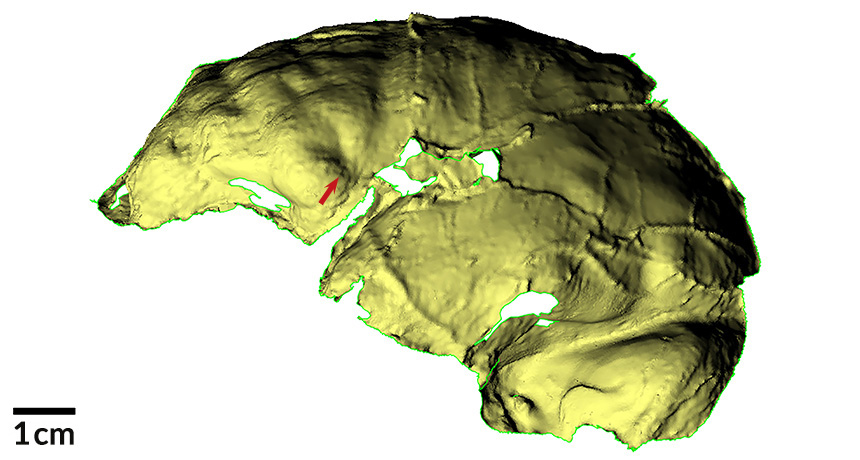
In a large collection of former NFL players’ postmortem brains, nearly every sample showed signs of chronic traumatic encephalopathy, or CTE, a disorder diagnosed after death that’s associated with memory loss, emotional outbursts, depression and dementia. Damaging clumps of the protein tau were present in 110 of 111 brains, researchers reported in JAMA (SN: 8/19/17, p. 15).
Those startling numbers captured the attention of both the football-loving public and some previously skeptical researchers, says study coauthor Jesse Mez, a behavioral neurologist at Boston University. “This paper did a lot to bring them around.” And that increased awareness and acceptance has already pushed the research further. “The number of brain donors who have donated since the JAMA paper came out has been astronomical,” Mez says.
As the largest and most comprehensive CTE dataset yet, the results described in JAMA are a necessary step on the path to finding ways to treat or prevent CTE, and not just for professional athletes.
Former college and high school football players’ brains were also examined, though in small numbers. Three of 14 high school players and 48 of 53 college players had signs of CTE. Many of the brains were donated by relatives who suspected something was amiss. That skewed sample makes it difficult to draw broad conclusions. Still, the study raised troublesome questions about the safety of youth sports.

Those questions haven’t been answered, though other research this year provided clues. A study of concussed hockey players ages 11 to 14 suggested that young brains may need more time than is usually allotted to heal after a hard knock. Players had troublesome changes in white matter tracts — nerve cell bundles that carry messages across the brain — three months after injury, despite normal thinking and memory abilities, researchers reported in November in Neurology.

To fully understand CTE, scientists need a way to identify and follow the disease as it progresses. A comprehensive study is now under way to look for CTE markers in live people, and has already hit on one clue.

Compared with postmortem brain tissue taken from healthy people and those with Alzheimer’s, tissue from people who had CTE had higher levels of an inflammation protein called CCL11, Mez and other researchers reported in September in PLOS ONE. In people with CTE, the more years that a person played football, the more CCL11. CCL11 levels, or other factors circulating in cerebrospinal fluid or blood, might one day let scientists monitor the brain health of athletes and others exposed to head trauma.

In marine mammals’ battle of the sexes, vaginal folds can make the difference

The battle of the sexes, at least among certain ocean mammals, may come down to well-placed skin folds, suggests research by Patricia Brennan, an evolutionary biologist at Mount Holyoke College in South Hadley, Mass., and colleagues.

In some species, enhanced male-female genital fit has evolved over time in ways that make mating easier. This is an example of what scientists call congruent evolution. In other species, genital anatomy reflects a battle, as shape and form change over time to give one sex an edge in control of fertilization. Fittingly, this is called antagonistic evolution.
Brennan’s recent collaboration, examining genitalia of porpoises, dolphins and seals, required extra creativity. In previous studies, her team used saline to inflate preserved penises from birds, snakes, sharks and bats. But the tough, fibroelastic penises of the cetaceans would not inflate with saline alone. So her collaborator, Diane Kelly, a penis biomechanics expert at the University of Massachusetts Amherst, suggested pressurizing the saline with a beer keg.

“We looked at each other and said, ‘This could be the best or worst idea we’ve ever had,’ ” Brennan laughs. But it worked. The scientists then created vaginal endocasts with dental silicone and made 3-D mathematical models to examine male-female fit. The team, led by marine mammalogist Dara Orbach of Dalhousie University in Halifax, Canada, described the work in the Oct. 11 Proceedings of the Royal Society B.

Story continues below image
The results show both antagonistic and congruent coevolution. In the model vaginas of short-beaked common dolphins ( Delphinus delphis) and harbor seals ( Phoca vitulina ), penises encountered no physical barriers to penetration.
But in harbor porpoises (Phocoena phocoena) and bottlenosed dolphins (Tursiops truncatus), the scientists found vaginal folds that may help females physically exert choice over sperm. By subtly changing body position during sex, females may use those folds to decrease penetration depth, reducing the likelihood of fertilization by unwanted males, Brennan says.
Brennan’s work has, understandably, made a splash over the years, attracting media coverage and, in 2013, criticism. Conservative news websites and internet trolls attacked her research, calling it “wasteful government spending.” Surprised by the reaction, Brennan responded publicly with an essay in Slate , arguing that basic science moves society forward and is a valid and valuable use of public funds. The experience convinced her that scientists must defend basic science.
Our ability to innovate is undermined without curiosity-driven science, she says. Brennan has developed an outreach program on basic science and plans to keep expanding knowledge of vertebrate genitalia. “In every species we have looked,” she says, “we have found something weird that nobody else knew.” Reason enough to keep discovering.

NASA’s next stop will be Titan or a comet

NASA’s next mission will go where some spacecraft have gone before. The two finalists in the agency’s selection process will return to either Saturn’s moon Titan or comet 67P/Churyumov-Gerasimenko, NASA announced in a press teleconference on December 20.

The Dragonfly mission would launch a drone-like craft to Saturn’s largest moon in 2025 that would land in 2034. NASA’s Cassini-Huygens mission showed that Titan has lakes and rivers of liquid ethane and methane, and may have chemistry that is conducive to life.
“We can test how far prebiotic chemistry has progressed in an environment that we know has the ingredients for life,” said lead investigator Elizabeth Turtle of the Johns Hopkins Applied Physics Laboratory in Laurel, Md.

The other finalist, the Comet Astrobiology Exploration Sample Return (CAESAR) mission, would launch a spacecraft before the end of 2025 to collect a 100-gram sample from the surface of comet 67P, which was mapped by ESA’s Rosetta spacecraft, and return it to Earth in 2038.

Story continues after image
Rosetta’s mapping work “dramatically improves the chances of success for a very difficult activity, which is grabbing a piece of a comet,” said lead investigator Steven Squyres of Cornell University.
Each project will receive funding to further develop the mission concepts. In July 2019, NASA will announce which mission will fly.

Two other missions, one to search for signs of life in the plumes of Saturn’s moon Enceladus and one to land on Venus, will receive funding to tackle specific technology questions to prepare the missions for future competitions.

A robotic arm made of DNA moves at dizzying speed

A new robotic arm made of DNA moves 100,000 times faster than previous DNA machinery.

The DNA nanobot is shaped like a gearshift, with an extendible arm that ranges from 25 to more than 400 nanometers long that’s attached to a 55-by-55-nanometer platform. Researchers remotely control this DNA device, described in the Jan. 19 Science, with electric fields that tug on charged molecules in its arm. Those electric fields help the nanomachine’s arm move much more quickly than previous DNA robots, which relied on chemical interactions between DNA molecules to move (SN: 9/11/10, p. 18).

Friedrich Simmel, a biophysicist at the Technical University of Munich, and his colleagues could swivel their DNA robotic arm 360 degrees in a matter of milliseconds. To lock the arm down in particular positions, the team built latches made of short, single-stranded DNA into the platform.

Such quick, efficient DNA nanobots could someday help move tiny cargo, such as molecules or nanoparticles, in a nanofactory that manufactures new types of materials.

Overlooked air pollution may be fueling more powerful storms

Though they be but little, they are fierce.

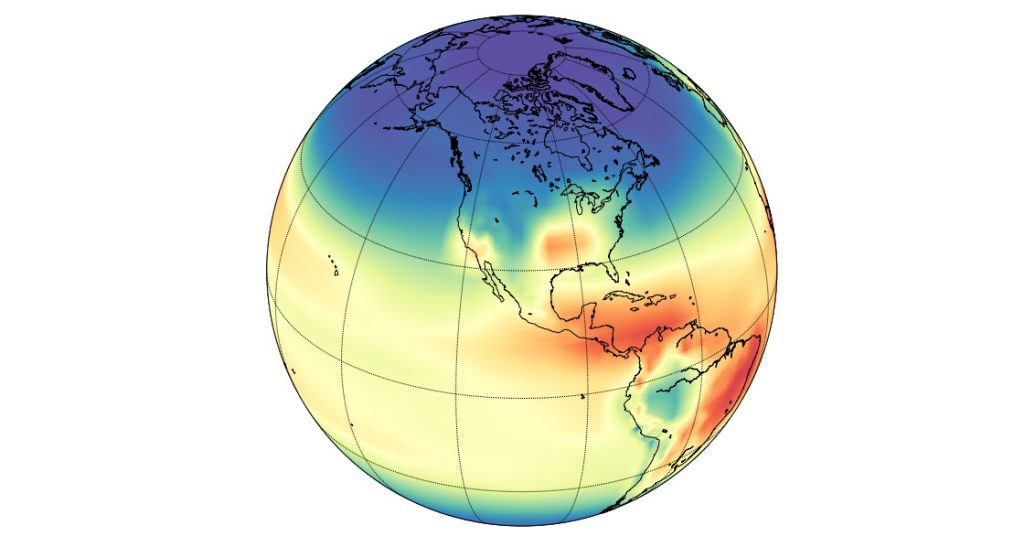
Airborne particles smaller than 50 nanometers across can intensify storms, particularly over relatively pristine regions such as the Amazon rainforest or the oceans, new research suggests. In a simulation, a plume of these tiny particles increased a storm’s intensity by as much as 50 percent.

Called ultrafine aerosols, the particles are found in everything from auto emissions to wildfire smoke to printer toner. These aerosols were thought to be too small to affect cloud formation. But the new work suggests they can play a role in the water cycle of the Amazon Basin — which, in turn, has a profound effect on the planet’s hydrologic cycle, researchers report in the Jan. 26 Science.
“I have studied aerosol interactions with storms for a decade,” says Jiwen Fan, an atmospheric scientist at the Pacific Northwest National Laboratory in Richland, Wash., who led the new study. “This is the first time I’ve seen such a huge impact” from these minute aerosols.

Larger aerosol particles greater than 100 nanometers, such as soot or black carbon, are known to help seed clouds. Water vapor in the atmosphere condenses onto these particles, called cloud condensation nuclei, and forms tiny droplets. But water vapor doesn’t condense easily around the tinier particles. For that to be possible, the air must contain even more water vapor than is usually required to form clouds, reaching a very high state of supersaturation.

Such a state is rare — larger aerosols are usually also present to form water droplets, removing that extra water from the atmosphere, Fan says. But in humid places with relatively low background air pollution levels, such as over the Amazon, supersaturation is common, she says.
From 2014 to 2015, Brazilian and U.S. research agencies collaborated on a field experiment to collect data on weather and pollution conditions in the Amazon Basin. As part of the experiment, several observation sites tracked plumes of air pollution traveling from the city of Manaus out across the rainforest. During the warm, wet season, there is little difference day to day in most meteorological conditions over the rainforest, such as temperature, humidity and wind direction, Fan says. So a passing pollution plume represents a distinct, detectable perturbation to the system.

Story continues after image
The international team examined vertical wind motion, or updrafts, and aerosol concentration data from one of these stations from March to May 2014. When a large plume of aerosols with an abundance of ultrafine particles passed by an observation station, the researchers observed a corresponding, more powerful vertical wind motion and heavier rain. Such updrafts intensify storms, helping to drive stronger circulation.

Next, the researchers conducted simulations of an actual storm that occurred on March 17, 2014, matching its temperature, wind and water vapor conditions, as well as a low level of background aerosols in the atmosphere. Then, the team introduced several pollution scenarios to interact with the storm, including no plume and a typical plume from the Manaus metropolis. The results suggested that the ultrafine aerosol particles, in particular, were not only acting as cloud condensation nuclei over the Amazon Basin, but also that the water droplets the aerosols created significantly strengthened the gathering storm.

If the conditions are right, the sheer abundance of the ultrafine particles in such a plume would rapidly create a very large number of cloud droplets. The formation of those droplets would also suddenly release a lot of latent heat — released from a substance as it changes from a vapor to a liquid — into the atmosphere. The heat would rise, creating updrafts and quickly strengthening the storm.

Aside from the Amazon, Fan notes that such pristine, humid conditions can also exist over large swaths of the oceans. One recent study in Geophysical Research Letters that she points to found a link between well-traveled shipping lanes, which would contain abundant exhaust including ultrafine aerosols, and an increase in lightning strikes. “This mechanism may have been at play there,” she says.

Atmospheric scientist Joel Thornton of the University of Washington in Seattle, who led the study on the shipping exhaust, says it’s possible that ultrafine particles play a role in that scenario. “What this paper does is raise the stakes in needing to develop a deeper, more accurate understanding of the sources and fates of atmospheric ultrafine particles,” Thornton says.

Meteorologist Johannes Quaas of the University of Leipzig in Germany, who was not involved in either study, agrees. “It’s a very interesting hypothesis.”

But the observations described in the new study don’t definitively demonstrate that ultrafine aerosols alone drive updrafts, Quaas adds. The weather conditions may appear highly consistent from day to day, but such systems are still highly chaotic. Everything from wind to temperature to how the land surface interacts with incoming solar radiation may be variable, he notes. “In reality, it’s not just the aerosols that change.”

Gassy farm soils are a shockingly large source of these air pollutants

California’s crops are creating some noxious air.

The Golden State is at the vanguard in the United States in reducing auto emissions of nitrogen oxide gases, which help produce toxic smog and acid rain. But the NOx pollution problem isn’t limited to auto exhaust. California’s vast agricultural lands — particularly soils heavily treated with nitrogen fertilizers — are now responsible for as much as 51 percent of total NOx emissions across the state, researchers report January 31 in Science Advances.
The catchall term “NOx gases” generally refers to two pollution-promoting gases: nitric oxide, or NO, and nitrogen dioxide, or NO2. Those gases react with incoming sunlight to produce ozone in the troposphere, the lowest layer of the atmosphere. At high levels, tropospheric ozone can cause respiratory problems from asthma to emphysema.

Between 2005 and 2008, regulations issued by the California Air Resources Board on transportation exhaust reduced NOx levels in cities such as Los Angeles, San Francisco and Sacramento by 9 percent per year. However, the U.S. Environmental Protection Agency has increasingly recognized nitrogen fertilizer use as a significant source of NOx gases to the atmosphere.

NOx gases are produced in oxygen-poor soils when microbes break apart nitrogen compounds in the fertilizer, a process called denitrification. The release of those gases from fertilized soils increases at high temperatures due to increased microbial activity, says Darrel Jenerette, an ecologist at the University of California, Riverside, who was not involved in the new study.

Jenerette and others have studied local NOx emissions from soils in California, but no statewide assessment existed. So Maya Almaraz, an ecologist at the University of California, Davis, and her colleagues designed a study to examine the question — both from above and below.
Using a plane equipped with scientific instruments including a chemiluminescence analyzer to detect NOx gases in the atmosphere, the researchers measured the concentrations of the gases above the San Joaquin Valley, an area of California’s fertile Central Valley, over six days at the end of July and beginning of August. The team also simulated NOx emissions from soils across the state, using the San Joaquin Valley data to ensure that the simulations gave accurate results. Finally, the researchers compared those data with nitrogen fertilizer inputs, as estimated by crop type and U.S. Department of Agriculture fertilizer consumption data.

Story continues below maps
Croplands are contributing 20 to 51 percent of the total NOx in California’s air, Almaraz’s team reports. In the simulations, those soil emissions were particularly sensitive to two factors: climate, especially temperature, and rates of nitrogen input. That findings suggests that regions with greater inputs of nitrogen fertilizer will also see greater soil emissions — and that the emission of NOx gases from the soils will also increase as temperatures rise in the region due to climate change.

Although food demands — and the need for fertilizer for crops — are likely to increase in the future, there are numerous possible ways to limit unwanted nitrogen fertilizer spillover, the researchers note. For example, farmers can use more efficient fertilization strategies such as adjusting how much fertilizer is used depending on specific growing stages, or planting what are called cover crops along with the target crops that enrich soils and consume the excess nitrogen.

Almaraz’s team has produced an important finding, Jenerette says. “The combination of bottom-up soil emission measurements and top-down airborne measurements provide strong evidence for their emission assessments,” he says. The finding that NOx emission rates will increase with warming temperatures also highlights the urgency of taking steps to better manage nitrogen fertilizer use in a warming world, he says.

A peek into polar bears’ lives reveals revved-up metabolisms

Female polar bears prowling springtime sea ice have extreme weight swings, some losing more than 10 percent of their body mass in just over a week. And the beginnings of bear video blogging help explain why.

An ambitious study of polar bears (Ursus maritimus) in Alaska has found that their overall metabolic rate is 1.6 times greater than thought, says wildlife biologist Anthony Pagano of the U.S. Geological Survey in Anchorage. With bodies that burn energy fast, polar bears need to eat a blubbery adult ringed seal (or 19 newborn seals) every 10 to 12 days just to maintain weight, Pagano and his colleagues report in the Feb. 2 Science. Camera-collar vlogs, a bear’s-eye view of the carnivores’ diet and lifestyle secrets, show just how well individual bears are doing.
The study puts the firmest numbers yet on basic needs of polar bears, whose lives are tied to the annual spread and shrinkage of Arctic sea ice, Pagano says. As the climate has warmed, the annual ice minimum has grown skimpier by some 14 percent per decade (SN Online: 9/19/16), raising worries about polar bear populations. These bears hunt the fat-rich seals that feed and breed around ice, and as seal habitat shrinks, so do the bears’ prospects.
Pagano and colleagues used helicopters to search for polar bears on ice about off the Alaska coast in the Beaufort Sea. It’s “a lot of grueling hours looking out the window watching tracks and looking at whiteness,” he says.
After tracking down female bears without cubs, the researchers fitted the animals with a camera collar. A full day’s doings of bears on the sea ice have been mostly a matter of speculation, Pagano says. Collar videos showed that 90 percent of seal hunts are ambushes, often by a bear lurking near a hole in the ice until a seal bursts up for a gulp of air. Videos also caught early glimpses of the breeding season and what passes for courtship among polar bears. Males, Pagano says, “pretty much harass the female until she’ll submit.”

The researchers also injected each bear with a dose of water with extra neutrons in both the hydrogen and oxygen atoms. Eight to 11 days later, the team caught the same bear to check what was left of the altered atoms. Lower traces of the special form of oxygen indicated that the bear’s body chemistry had been very active, and that the bear had exhaled lots of carbon dioxide. (The unusual form of hydrogen let scientists correct results for oxygen atoms lost in H2O, for instance when the bear urinated.)

Using CO₂ data from nine females, Pagano and his colleagues calculated the field metabolic rates for polar bears going about their springtime lives. The team found that female bears need to eat a bit more than 12,000 kilocalories (or what human dieters call calories) a day just to stay even. That estimate adds some 4,600 kilocalories a day to the old estimate. But merely maintaining weight isn’t enough for a polar lifestyle. To survive lean times, polar bears typically pack on extra weight in spring.

To get a broader view of the bears’ energy needs, similar metabolic measurements for other seasons would be useful, says physiological ecologist John Whiteman of the University of New Mexico in Albuquerque. That could help resolve whether and how much bear metabolism drops when there’s little food, a response that might protect bears during hard times. Using temperature loggers to estimate metabolic rates, he has seen only a gradual decline in metabolic rates in summer as food gets tougher to find. Winter metabolic rates remain a mystery.

Hunting success and bear activity are only part of the picture of polar bear health, says ecotoxicologist Sabrina Tartu, of the Norwegian Polar Institute, which is based in Tromsø. Tartu coauthored a 2017 paper showing that toxic pollutants such as polychlorinated biphenyls, or PCBs, can build up in bear fat. Such “pollutants could, by direct or indirect pathways, disrupt metabolic rates,” she says. So changing the climate is far from the only way humankind could affect polar bear energy and hunting dynamics.

Why cracking your knuckles can be so noisy

“Pop” goes the knuckle — but why?

Scientists disagree over why cracking your knuckles makes noise. Now, a new mathematical explanation suggests the sound results from the partial collapse of tiny gas bubbles in the joints’ fluid.

Most explanations of knuckle noise involve bubbles, which form under the low pressures induced by finger manipulations that separate the joint. While some studies pinpoint a bubble’s implosion as the sound’s source, a paper in 2015 showed that the bubbles don’t fully implode. Instead, they persist in the joints up to 20 minutes after cracking, suggesting it’s not the bubble’s collapse that creates noise, but its formation (SN: 5/16/15, p. 16).
But it wasn’t clear how a bubble’s debut could make sounds that are audible across a room. So two engineers from Stanford University and École Polytechnique in Palaiseau, France, took another crack at solving the mystery.

The sound may come from bubbles that collapse only partway, the two researchers report March 29 in Scientific Reports. A mathematical simulation of a partial bubble collapse explained both the dominant frequency of the sound and its volume. That finding would also explain why bubbles have been observed sticking around in the fluid.

Comb jellies have a bizarre nervous system unlike any other animal

Shimmering, gelatinous comb jellies wouldn’t appear to have much to hide. But their mostly see-through bodies cloak a nervous system unlike that of any other known animal, researchers report in the April 21 Science.

In the nervous systems of everything from anemones to aardvarks, electrical impulses pass between nerve cells, allowing for signals to move from one cell to the next. But the ctenophores’ cobweb of neurons, called a nerve net, is missing these distinct connection spots, or synapses. Instead, the nerve net is fused together, with long, stringy neurons sharing a cell membrane, a new 3-D map of its structure shows.
While the nerve net has been described before, no one had generated a high-resolution, detailed picture of it.

It’s possible the bizarre tissue represents a second, independent evolutionary origin of a nervous system, say Pawel Burkhardt, a comparative neurobiologist at the University of Bergen in Norway, and colleagues.

Superficially similar to jellyfish, ctenophores are often called comb jellies because they swim using rows of beating, hairlike combs. The enigmatic phylum is considered one of the earliest to branch off the animal tree of life. So ctenophores’ possession of a simple nervous system has been of particular interest to scientists interested in how such systems evolved.

Previous genetics research had hinted at the strangeness of the ctenophore nervous system. For instance, a 2018 study couldn’t find a cell type in ctenophores with a genetic signature that corresponded to recognizable neurons, Burkhardt says.

Burkhardt, along with neurobiologist Maike Kittelmann of Oxford Brookes University in England and colleagues, examined young sea walnuts (Mnemiopsis leidyi) using electron microscopes, compiling many images to reconstruct the entire net structure. Their 3-D map of a 1-day-old sea walnut revealed the funky synapse-free fusion between the five sprawling neurons that made up the tiny ctenophore’s net.
The conventional view is that neurons and the rest of the nervous system evolved once in animal evolutionary history. But given this “unique architecture” and ctenophores’ ancient position in the animal kingdom, it raises the possibility that nerve cells actually evolved twice, Burkhardt says. “I think that’s exciting.”

But he adds that further work — especially on the development of these neurons — is needed to help verify their evolutionary origin.

The origins of the animal nervous system is a murky area of research. Sponges — the traditional competitors for the title of most ancient animal — don’t have a nervous system, or muscles or fundamental vision proteins called opsins, for that matter. But there’s been mounting evidence to suggest that ctenophores are actually the most ancient animal group, older even than sponges (SN: 12/12/13).

If ctenophores arose first, it “implies that either sponges have lost a massive number of features, or that the ctenophores effectively evolved them all independently,” says Graham Budd, a paleobiologist at Uppsala University in Sweden who was not involved in the research.

If sponges emerged first, it’s still possible that ctenophores evolved their nerve net independently rather than inheriting it from a neuron-bearing ancestor, Burkhardt says. Ctenophores have other neurons outside the nerve net, such as mesogleal neurons embedded in a ctenophore’s gelatinous body layer and sensory cells, the latter of which may communicate with the nerve net to adjust the beating of the combs. So, it’s possible they’re a mosaic of two nervous systems of differing evolutionary origins.

But Joseph Ryan, a bioinformatician at the University of Florida in Gainesville, doesn’t think the results necessarily point to the parallel evolution of a nervous system. Given how long ctenophores have been around — especially if they are older than sponges — the ancestral nervous system may have had plenty of time to evolve into something weird and highly-specialized, says Ryan, who was not part of the study. “We’re dealing with close to a billion years of evolution. We’re going to expect strange things to happen.”

The findings are “one more bit of the jigsaw puzzle,” Budd says. “There’s a whole bunch we don’t know about these rather common and rather well-known animals.”

For instance, it’s unclear how the nerve net works. Our neurons use rapid changes in voltage across their cell membranes to send signals, but the nerve net might work quite differently, Burkhardt says.

There are reports of potentially similar systems in other animals, such as by-the-wind-sailor jellies (Velella velella). Studying them in detail, along with nerve nets in other ctenophore species, could determine just how unusual this synapse-less nervous system is.

Northern elephant seals sleep just two hours a day at sea

Northern elephant seals are the true masters of the power nap.

On long trips out to sea, the seals snooze less than 20 minutes at a time, researchers report in the April 21 Science. The animals average just two hours of shut-eye per day while swimming offshore for months — rivaling African elephants for the least sleep measured among mammals (SN: 3/1/17).

“It’s important to map these extremes of [sleep behavior] across the animal kingdom to get a better sense of the evolution and the function of sleep for all mammals, including humans,” says Jessica Kendall-Bar, an ecophysiologist at the University of California, San Diego. Knowing how seals catch their z’s could also guide conservation efforts to protect places where they sleep.
Northern elephant seals (Mirounga angustirostris) spend most of the year out in the Pacific Ocean. On these odysseys, the animals forage around the clock for fish, squid and other food to sustain their enormous bodies, which can be as hefty as a car (SN: 2/4/22). Because northern elephant seals are most vulnerable to sharks and killer whales at the surface, they come up for air only a couple minutes at a time between 10- to 30-minute deep dives (SN: 9/28/02).

“People had known that these seals dive almost all the time when they’re out in the ocean, but it wasn’t known if and how they sleep,” says Niels Rattenborg, a neurobiologist at the Max Planck Institute for Biological Intelligence in Seewiesen, Germany, who was not involved in the study.

To find out if the seals sleep while diving, Kendall-Bar and her colleagues developed a watertight EEG cap for the animals. Using the cap and other sensors, the team tracked the brain waves, heart rates and 3-D motion of 13 young female seals, including five at a lab and six hanging out at coastal Año Nuevo State Park north of Santa Cruz, Calif. EEG data recorded while seals were slumbering revealed what the animals’ naptime brain waves looked like.

Kendall-Bar’s team also took two sensor-strapped seals from Año Nuevo and released them at another beach about 60 kilometers south. To swim home, the seals had to cross the deep Monterey Canyon — a locale similar to the deep, predator-fraught waters frequented by seals on months-long foraging trips. Matching the seals’ EEG readings to their diving motions on this journey showed how northern elephant seals sleep on long voyages.

The animals first swim 60 to 100 meters below the surface, then relax into a glide, Kendall-Bar says. As they nod off into slow-wave sleep, the animals keep holding themselves upright for several minutes. But as REM sleep sets in, so does sleep paralysis. The animals flip upside-down and drift in gentle spirals toward the seafloor. Seals can descend hundreds of meters deep during these naps — far below where their predators normally prowl. When the seals wake after five to 10 minutes of sleep, they swim up to the surface. The whole routine takes about 20 minutes.

Looking for that distinct sleep dive motion, the researchers could pick out naps in the dive records of 334 adult seals that had been outfitted with tracking tags from 2004 to 2019. Those sleep patterns revealed that northern elephant seals conk out, on average, around two hours per day while on months-long foraging missions. But the seals sleep nearly 11 hours per day while on land to mate and molt, where they can indulge in long, beachside siestas without worrying about predators.
“What the seals are doing might be something like what we do when we sleep in on the weekend, but it’s on a much longer timescale,” Rattenborg says. He and his colleagues have found a similar feast-and-famine style of sleep in great frigate birds, which fly over the ocean (SN: 6/30/16). “Although they can sleep while they’re flying,” he says, “they sleep less than an hour a day for up to a week at a time, and once back on land, they sleep over 12 hours a day.”

Curiously, northern elephant seals’ sleep habits are quite different from how other marine mammals have been seen sleeping in labs. “Many of them … sleep in just half of their brain at a time,” Kendall-Bar says. That half-awake state allows dolphins, fur seals and sea lions to practice constant vigilance, literally sleeping with one eye open.

“I think it’s pretty cool that elephant seals are doing this without [one-sided] sleep,” Kendall-Bar says. “They’re shutting off both halves of their brain completely and leaving themselves vulnerable.” It seems the key to enjoying such deep sleep is sleeping deep in the sea.