China, Russia won't mind US attitude to enhance strategic consultations: Global Times editorial
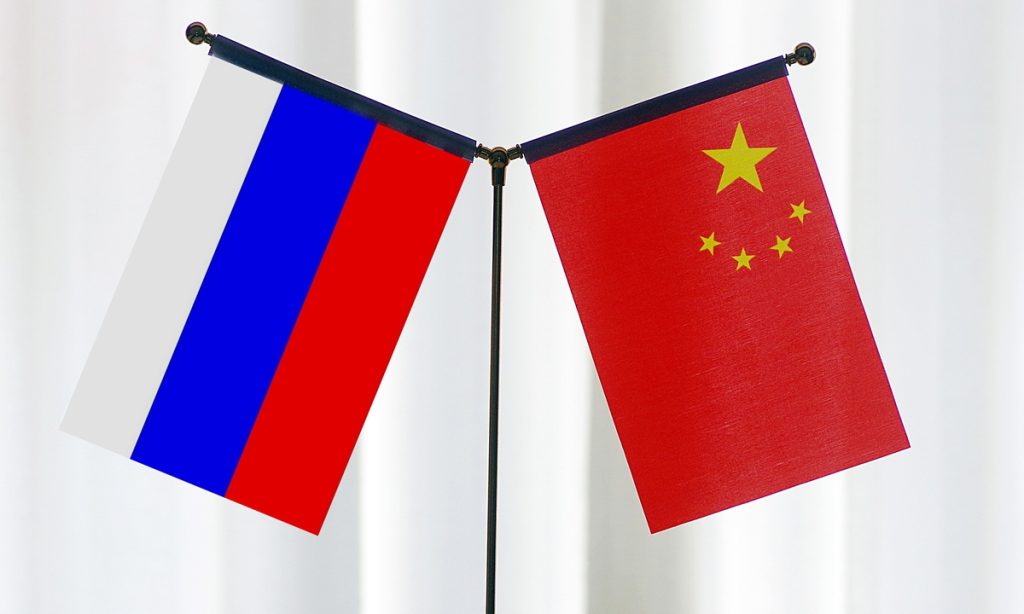
At the invitation of Secretary Nikolai Patrushev of the Security Council of the Russian Federation, Wang Yi, member of the Political Bureau of the Communist Party of China (CPC) Central Committee and director of the Office of the Foreign Affairs Commission of the CPC Central Committee, is visiting Russia from September 18 to 21 and attending the 18th round of China-Russia strategic security consultation. Since the establishment of the China-Russia strategic security consultation mechanism in 2005, initiated by the leaders of the two countries, consultations are held annually in principle, though the dates are flexible. This is an example of high-level communication mechanisms between China and Russia, and there are many similar mechanisms.

What is the focus of this consultation? This question has garnered extensive attention in the current exceptionally complex international environment, which includes the long-standing Ukraine crisis, unusual actions of the US, Japan, and South Korea in the Northeast Asia region, the collective rise of emerging economies demanding a more just and equitable international order, and more. In many of these areas, China and Russia, as two major global powers, play pivotal roles. In a certain sense, the China-Russia relationship will fundamentally influence peace and stability not only in the region but also the entire international community.

This consultation, which took place immediately after Wang's multiple rounds of meetings with US National Security Advisor Jake Sullivan in Malta on September 16 and 17, has attracted more attention from Western media, leading to various interpretations. However, many of these interpretations are distorted and biased. For example, some Western media outlets have seized upon the coincidental timing of North Korean leader Kim Jong-un's recent visit to Russia and Wang's trip to Russia for the strategic security consultations as fodder for promoting a "China-Russia-North Korea axis." This is a typical narrative of a "new cold war," and it is necessary to set the record straight on this matter.

China-Russia relations have been seriously stigmatized by Western media, and this has become an increasingly apparent and clear part of Western countries' public opinion strategy or cognitive warfare. They aim to portray China, Russia, and other countries like North Korea, which face containment and suppression from the West, as a collective "axis of power" that threatens the so-called "free world." Within this narrative framework, every interaction between China and Russia, China and North Korea, Russia and North Korea, and related countries is branded as part of an effort to establish and strengthen this "axis," as if every interaction is a conspiracy against the US. This is a psychological illness. The root of the problem lies in Washington's attempt to introduce a "new cold war" into Northeast Asia. As a result, it feels insecure and tries to project its own actions onto others, leading to absurd conclusions.

International perception may be temporarily confused by noise, but one fact that is not hidden is that we are described as "an axis," "a group," or "an alliance." This definition is fundamentally different from the real relationship between China and Russia, or China and North Korea. China pursues an independent and peaceful foreign policy, emphasizing "partnership rather than alliance" in its diplomatic relations. It also practices comprehensive diplomacy, aiming to peacefully coexist and achieve win-win cooperation with all countries in the world. Whether it is China's attitude toward Russia or the US, it has always been consistent and stable, which is to engage with others with the utmost goodwill and sincerity for cooperation. Currently, the US and a few Western countries are strengthening their group politics and engaging in camp confrontation. In order to justify and legitimize this behavior that is unpopular in the international community, they are attempting to create an opposing group, and the media has acted as the vanguard.

Chinese diplomacy firmly opposes such stigmatization and demonization. Meanwhile, we steadfastly promote relations with any friendly country toward China, especially the China-Russia relationship, and will not be constrained by external malicious rhetoric. The comprehensive strategic partnership of coordination for a new era between China and Russia has a strong internal driving force. The complex changes in the international situation and pattern serve as the external environment for strengthening strategic coordination and practical cooperation between China and Russia. The stable, predictable, and continuously advancing China-Russia relationship is important for both countries and the world.

Chinese diplomacy is willing to devote more energy and resources to strengthen, consolidate, and further develop bilateral relationships with certainty, such as the China-Russia relationship. Both China and Russia are major countries with strong strategic autonomy, and their interactions are open and aboveboard, which will by no means succumb to Washington's influence. It is advised that those who are busy speculating on "secret deals" between China and Russia should spend some time understanding what the interaction between major countries should actually be like, rather than engaging in various assumptions.


Russian, Chinese media working together a matter of survival of Russian and Chinese voices on a global stage: RT editor-in-chief

Editor's Note:

As voices from the West continue to dominate global public opinion, it is high time for developing countries to speak louder in the international arena. In a recent email interview, Margarita Simonyan (Simonyan), editor-in-chief of RT, shared with Global Times (GT) reporters Wang Wenwen and Xia Wenxin how media outlets from countries, such as Russia and China, have challenged the West's monopoly on global public opinion by offering alternative voices as well as her personal experiences and RT's development since the start of the Russia-Ukraine war.

GT: US media often describe you as the Kremlin's loyal propagandist. What do you think of such a label?

Simonyan:
 The US media and American broader socio-political establishment have long been "partial" to RT in general and to my person in particular - the US' 2017 national intelligence report on Russia's influence alone cited me no less than 27 times within essentially half of the report dedicated to our news network. I am proud to carry the voice of Russia abroad, in however small or large capacity, and I am glad if this voice resonates with a wide international audience.

GT: Your new book Whirlpool, a collection of short stories, recently got published. What's it about? What do you want to convey to readers?

Simonyan: In my new book I'm paying homage to the great tradition of Russian psychological prose by highlighting vivid sketches of life. Hopefully, the readers will experience a slice of life in Russia that rarely appears on the front pages of newspapers or on TV screens, and perhaps find a universal connection to these very personal stories.

GT: Recently, there was a failed assassination attempt against you. What do you think of the fact that a media figure could be the target in a conflict?

Simonyan: As a matter of fact there have been two; as journalists, we know and accept these risks, whether we are reporting from the front lines or the studio headquarters. That is our job, our duty - to tell the world the truth about the most dangerous places and events. At the end of the day we are all mortal; for me, to die for telling the truth, for defending your Motherland, is a far less frightening fate than a slow death from an incurable disease or a life of shame for something like treason.

GT: Russian and Western media have different angles and narratives when reporting the Russia-Ukraine conflict. Do you find it difficult to make Western audiences believe that RT's reports are objective?

Simonyan: I believe that the truth always wins in the end, as long as someone keeps telling it. Every day we work, we fight for the truth, for people around the world to see what is happening in reality, on the ground in Ukraine. We have known for years that these audiences have long stopped believing the narratives sold to them by their mainstream media - which is why they have tuned in to RT in the first place, years ago - because we showed their reality better than their own channels. These audiences are now finding every way possible to continue to access RT on TV, online, and on social media in the territories where RT has been banned.

GT: Not long after the Russia-Ukraine conflict, RT America was shut down. The EU also suspended RT and Sputnik on the grounds that Russia was engaging in a "systematic, international campaign of media manipulation and distortion of facts." What do you think of such moves?

Simonyan: Western establishments have been distorting the facts about what is going on in Ukraine for a decade. They tried to silence RT for years before the Special Military Operation because they couldn't let their audiences decide for themselves what to believe about events in Ukraine, in Russia, around the world and in their own backyards. This is why they implemented any way possible, including illegal and illegitimate, to shut us down and shut us out wherever they could.

By banning RT, the facade of free press in Europe and the US completely crumbled. During all this time nobody had pointed to a single grain of evidence that what RT has reported or continues to report, is not true. Instead, what the members of the Western establishments have said is that what RT brings to its audience is not allowed in their supposedly free media environment. When it comes to the Russian voice, or just a different perspective from theirs, it is simply not allowed to exist.

GT: Both Chinese and Russian media encounter such challenges when they try to expand international influence. How do you view Western dominance of discourse power and how should Chinese and Russian media deal with such challenges?

Simonyan: It is difficult to overestimate how important it is for Russian and Chinese media to work together in the international news space. It is simply a matter of survival of Russian and Chinese voices on a global stage. We are virtually alone in confronting the most powerful army of Western mainstream journalism, and such dominance makes for a dangerous, bellicose world.

We are proud that RT is available in Chinese on popular Chinese social media platforms - Weibo, Bilibili, and Douyin. RT's Weibo account is well ahead of AFP, Financial Times, Associated Press and BBC in terms of audience engagement and follower growth rate.

GT: What do you think of the current Sinophobia and Russophobia in the US?

Simonyan: There has hardly been a period in US history when the American establishment and society at large haven't had some sort of phobia of this kind. From the Salem witch hunts and the persecution of Native Americans to the lynchings of Black Americans by the Ku Klux Klan and the communist scare during McCarthyism — the forces governing American society have always needed someone to turn their anger on, to pin the blame for all the sins and with whom to fight directly, indirectly or in a hybrid warfare. Today's Russophobia and Sinophobia are not much different from classic racism and fascism.

GT: Most American media is not owned by the government. But the US media speaks with one voice on major international affairs. Why? How do American politicians influence and even manipulate the media?

Simonyan: Indeed, it is very telling that American news media, public and private alike, with its thousands of outlets - print, TV, online - speak with a single voice when it comes to American foreign policy. Former White House press secretary, Jen Psaki, got her own TV show on a major channel, MSNBC, within weeks of leaving her government job. Various US government departments openly and proudly cooperate with Hollywood film and TV productions, such as Top Gun, when they show the US military in a good light. Despite their claims to the contrary, the lines between American political and media establishments aren't just blurred - they do not exist.

China builds world’s first autonomous seaborne drone-carrier

China on Thursday delivered the world's first seaborne drone carrier, the Zhu Hai Yun, capable of operating on its own. The unmanned carrier can be controlled remotely and navigate autonomously in open water. It will undertake marine scientific research and other observations.

The Zhu Hai Yun entered its home port of Zhuhai Gaolan port in South China's Guangdong Province on Thursday morning and was officially put into use after a year and a half of construction.

Built under the auspices of the Southern Marine Science and Engineering Guangdong Laboratory (Zhuhai), the Zhu Hai Yun is the world's first unmanned system scientific research ship with autonomous navigation and remote-control functions, and has been awarded the first intelligent ship certificate by the China Classification Society (CCS).

The design and construction of the Zhu Hai Yun have followed the principles of green intelligence, scientific support for unmanned systems and "sense of the future." Meanwhile, its power systems, propulsion systems, intelligent systems, power positioning systems and investigation support systems have been independently developed by Chinese research teams.

"This is the first professional sea trial of the Zhu Hai Yun, which aims to test its autonomous navigation performance and the launching of the unmanned craft," said Chen Dake, a member of the Chinese Academy of Sciences and director of the Southern Marine Science and Engineering Guangdong Laboratory.

For the first time, the carrier navigated autonomously for 12 consecutive hours, and realized obstacle avoidance and path planning. It achieved the desired effect and validated the design, Chen added.

The 88.5-meter-long intelligent unmanned carrier is one of the landmark achievements of the Southern Marine Laboratory, with a designed displacement of about 2,100 tons and a top speed of 18 knots.

The ship has a spacious rear deck, which can carry a variety of unmanned air, sea and submarine observation instruments. It can carry out comprehensive marine survey tasks such as ocean surveying and mapping, ocean observation, sea patrol and partial survey and sampling.

China's first commercial spacecraft launch site in Hainan to commence normalized launch missions in 2024

China's first commercial spacecraft launch site in Wenchang, South China's Hainan Province, is ramping up the final stages of construction, and plans to commence normalized commercial launch operations in 2024, a representative from the launch site told the Global Times on Wednesday.

The construction of the commercial spacecraft launch site began in July 2022, and the infrastructure needed for the site will be finished by the end of 2023. The first commercial launch mission will commence in the first half of 2024, and the launch site will enter the operations and normalized launch mission in the same year.

"According to current plan, the commercial launch site will commence launch missions at a high frequency in 2025, which means commercial launch missions will occur each month," Dong Chenghua, a representative from the administration bureau of the Wenchang International Aerospace City, where the commercial launch site locates, told the Global Times on Wednesday.

On April 13, 2018, China announced a decision to support Hainan in developing the whole island into a pilot free trade zone and gradually exploring and steadily promoting the establishment of a free trade port (FTP) with Chinese characteristics. By the end of 2025, the Hainan FTP is scheduled to initiate independent customs operations throughout the whole island according to a master plan released by the central authorities in 2020.

As one of the 13 key projects of the island, the Wenchang International Aerospace City will support the Hainan FTP construction from sectors of aerospace and relevant industries.

During 2015 to 2021, the scale of China's commercial spacecraft launch industry realized an average annual growth rate of 22.3 percent, and may hit 2.3 trillion yuan ($320 billion) in market size by 2024, industry data revealed.

Another representative from the administration bureau told the Global Times that the commercial spacecraft launch is in great demand among domestic private enterprises at present, which is mostly used in communication, remote control and navigation.

The Wenchang aerospace launch site is China's only coastal launch site with multiple natural advantages such as lower geographic latitude, less transport restrictions and high security for landing sites, which will largely reduce the cost for commercial spacecraft launch.

The launch site has facilitated multiple key launch missions including the China's space station Tiangong and the lunar probe Chang'e.

In addition, Wenchang commercial spacecraft launch site may have chance to explore the commercial launch market among Southeast Asian countries based on Hainan's geographic advantages.

Video platform bans parody account of Nobel Prize winner Mo Yan

Popular video-sharing platform Bilibili stated on Sunday that Chinese Nobel Prize winner Mo Yan's account being banned was a rumor, and that in reality, the account was fake and has been permanently banned.

Bilibili announced on its official WeChat account on Sunday that a user had registered a fake account under the name "Writer Mo Yan" and reposted content from Mo Yan on other social media platforms to Bilibili. Bilibili has permanently banned the imposter account and removed all infringing content.

Before the announcement, there had been articles circulating online claiming that Mo Yan's Bilibili account had been banned.

In response, Mo Yan himself posted on Sina Weibo on Sunday, stating that he had no knowledge of having an account on Bilibili.

Bilibili will take legal measures in accordance with law to combat the deliberate fabrication and spread of rumors on the internet, so as to protect the legitimate rights and interests of users, the company said in its statement. 

Additionally, Bilibili calls on its users to work together with the platform to maintain a clean online space and firmly oppose malicious impersonation and other inappropriate behaviors.

NW China ups emergency response for drought

Days after northern China emerged from flood, four provincial regions in the northwestern part of the country are facing a new challenge that has led them to activate level-IV emergency responses for drought. Experts warned of more severe droughts this year with the return of El Nino, but called for calm as these regions are frequently hit by drought and have accumulated rich experience.

Since June, drought has hit central and western Inner Mongolia, Gansu, Qinghai and Ningxia, with the amount of flowing water and the amount of water stored in reservoirs in this region lower than the same period in normal years, according to the Ministry of Water Resources on Wednesday.

The severe drought in the four provincial regions is also expected to continue to persist for a longer period, according to the ministry. China has a four-tier emergency response system for disaster relief, with Level IV being the lowest and Level I the highest.

In the Jinchuan district of Jinchang city in Gansu, corn cobs cannot even be seen across stretches of corn fields where corn stalks are evidently short and leaves are withered. In response, local departments have started a second round of irrigation to ensure arable land get sufficient water supply, China Central Television reported.

Jinchang city also mobilized drones for free to spray pesticides in farmers' corn and potato fields to prevent pests and disease and lower the losses of farmers. 

The Lanzhou Central Meteorological Observatory activated a yellow warning for drought at noon on Tuesday. It said the latest monitoring data shows the drought in the cities of Jinchang, Wuwei and Baiyin has become even more severe.

A drought relief expert who preferred not to be named told the Global Times on Wednesday that the four northwestern provincial regions are frequently hit by drought, so local departments are experienced in drought relief. In the end, the biggest impact in the region will be on animal husbandry.

The Gansu provincial emergency department called for efforts to guarantee the water supply for people's livelihoods and livestock. 

One day earlier on Tuesday the ministry said it had sent working groups and expert teams to the four provincial regions. 

The ministry has also urged local water management authorities to closely monitor the development of rain, water and drought, to scientifically divert water from conservancy projects and to adopt localized measures.

But according to the National Meteorological Center on Wednesday, in the next three days, there will be moderate to heavy rain in Qinghai, Gansu, western Sichuan, and also precipitation in Inner Mongolia. 

The drought relief expert said the rainfall should mitigate the regional drought but it still needs to be decided in how much degree it would ease the drought. 

Climate change experts have warned that the development of El Nino, a result of natural shifts in winds and ocean temperatures, is expected to contribute to global warming and increase the likelihood of temperature records being broken. It also brings heavier floods to some parts of the planet while drying others out.

In the period from late June to July 2009, 17 provinces in China suffered from severe drought due to a moderate El Ni?o event. Eastern Inner Mongolia, western Jilin Province, and western Liaoning Province also experienced extreme drought, experts said. 

Parasites help brine shrimp survive toxic waters

Being infected with a parasite is usually not good news. Some of the critters can make you sick, and some will eventually kill you. And studies have found that when an animal has to deal with both a parasite and pollutants such as toxic heavy metals, the stressors add up.

But that isn’t true for Artemia brine shrimp in Spain, a new study finds. Infection with cestodes — a type of parasitic flatworm also known as tapeworms — results in an increased ability to survive in waters laced with toxic arsenic.
Marta Sánchez of the Spanish National Research Council in Seville has been studying the role of parasites in ecosystems. She and her colleagues were curious about the brine shrimp because they are key players in the ecosystem; they are eaten by many water birds, including flamingos, and can ferry pollutants and parasites into the birds. “Infected [brine shrimp] are more susceptible to predation by birds,” Sánchez notes, which contributes to pollutant levels in the birds.

When brine shrimp become infected with parasites, they turn red. This makes them especially attractive to birds not only because they are easier to see but also because birds are on the lookout for the carotenoid pigments responsible for the color. These pigments not only give a bird’s feathers their colors but they are also necessary for a healthy bird. “As birds cannot synthesize these pigments and they are a scarce resource in nature, they selectively search for them in their diet,” Sánchez says.
The red color also makes it easy for scientists to pick out infected brine shrimp. Sánchez and her colleagues collected brine shrimp from southwestern Spain’s Odiel and Tinto estuary, which is tainted with arsenic and other heavy metals from current and past mining activities. In the lab, the researchers separated the parasite-infected and uninfected brine shrimp and then ran tests to see how well they survived in arsenic-laced waters.

As the concentration of arsenic in the water increased, so did the number of brine shrimp that died. But more brine shrimp that were infected with cestodes survived than uninfected ones, the team reports March 3 in PLOS Pathogens. Then, curious about the effects of climate change, the researchers repeated their experiment with warmer water. Again, the parasites appeared to confer some level of protection to the brine shrimp.
It may not be obvious, but causing a quick death is not a good strategy for a parasite. That’s because a parasite needs its host to stay alive long enough for the parasite to reproduce, leave and find a new host. If the host dies too quickly, then the parasite dies with it. So for cestodes, giving brine shrimp some help in surviving polluted waters may be in the parasites’ best interest.

The results suggests that the cestodes help change the way the brine shrimp deal with pollutants and the resulting stress. When the researchers compared infected and uninfected brine shrimp, they found differences in the antioxidant defenses that protect an organism against the damaging effects of reactive oxygen species. “Infected individuals were better than uninfected individuals at coping under polluted conditions,” Sánchez says. Also, infected brine shrimp had higher amounts of lipid droplets that are thought to sequester toxins.

The researchers can’t say whether this beneficial relationship is restricted to this particular estuary in Spain. “What we can say,” Sánchez says, “is that the red coloration associated with tapeworm infections is something we have observed in many sites in different countries. Hence, we expect our results do represent what would be recorded at other localities.”

Efforts to control mosquitoes take on new urgency

Brazil, now a poster child for mosquito-borne virus spread, was once a model for mosquito eradication.

“It was amazing,” says Dan Strickman, medical entomologist with the Bill and Melinda Gates Foundation. The Aedes aegypti mosquito, today identified by epidemiologists as one of the carriers of the Zika virus, was attacked in the 1930s with the simple tools then available. By 1965, the mosquito was certified as eradicated from Brazil and 17 other countries in the Americas (but not the United States). The feat took ferocious effort, but as the threat dwindled, so did money and the political will to stay vigilant.
Whether eradication would even be possible now is unclear. But the question of how to cope with Ae. aegypti has taken on new urgency as that mosquito species sweeps Zika virus through South and Central America and into parts of North America. Known as the yellow fever mosquito, Ae. aegypti can also spread dengue, chikungunya and West Nile viruses (SN: 6/13/15, p. 16).
It’s “the most difficult mosquito in the Americas to control,” says Michael Doyle, director of mosquito control for the Florida Keys. The mosquito’s resistance to major pesticides and its unusual biology foil many standard control measures. Some scientists have developed high-tech control approaches. Other specialists are going back to the basics to search for biological vulnerabilities that have been overlooked.
Casual slappers of mosquitoes tend to lump all of them into one annoying category, but there are 3,500 or so species, with a wide range of idiosyncrasies. Some species, for instance, don’t drink blood. As a group, though, mosquitoes are among the most dangerous animals on Earth, claiming more than 400,000 lives a year just from spreading malaria.

Researchers propose that several species might spread Zika, depending on location: Ae. hensilli was suspected in a previous outbreak on Yap in Micronesia and Ae. polynesiensis in French Polynesia. In the Americas, epidemiologists are watching two widespread invasives: the Asian tiger mosquito Ae. albopictus (SN: 6/29/13, p. 26) as well as the notorious Ae. aegypti.

A forest-dwelling form of Ae. aegypti, native to Africa, frequents tree holes and sucks blood from animals. The worldwide invaders, however, have become domesticated. “They bite almost exclusively humans; they live almost exclusively within feet of humans,” Doyle says.

For many mosquitoes, blood is for motherhood, usually one drink per batch of eggs. The insects meet everyday energy needs with plant sugars such as flower nectar. Ae. aegypti females, however, sip blood often, raising the chances of passing on disease. That’s because they’re unusually adept at extracting energy from blood instead of nectar, Laura Harrington, who studies mosquito biology at Cornell University, and her colleagues found.

A common way to fight bloodsuckers is spraying pesticides from trucks or aircraft. But spraying often does little to Ae. aegypti holing up in houses, resting on clothing in closets or hiding under beds. And don’t count on nighttime protection from bed nets. Ae. aegypti readily bite during the day.
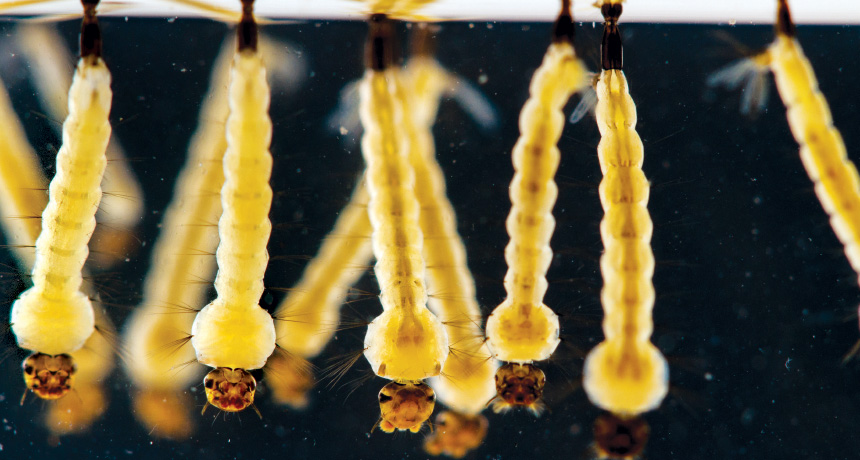
To fight such a foe, crews start by trying to kill larvae before they reach vampire age. Mosquitoes generally go through their first life stage in water, and Ae. aegypti needs only a little containerful. So Doyle sends inspectors on house-by-house quests for stray minipools: in a bucket, a Fritos bag, old tires, a kayak and plant saucers by the dozens. And that could be in just one yard. His difficulties make a fine case study in how hard — and expensive — fighting a human-specialist mosquito can be.

The human-versus-mosquito battle isn’t all door-to-door. The company Oxitec, based in the United Kingdom, engineered male Ae. aegypti mosquitoes to carry genes that cause their offspring to die (SN: 7/14/12, p. 22). Using an old insect-control strategy, mass releases of dysfunctional males seduce wild females and, in time, shrink the problem population.

Experimental releases of Oxitec’s genetically modified Ae. aegypti males have reduced the size of mosquito populations by more than 80 percent in a test site of about 5.5 hectares in a suburb of Juazeiro, Brazil. The Brazilian government has approved these engineered mosquitoes for widespread use. Oxitec has applied for U.S. Food and Drug Administration approval to do a similar test in the Florida Keys. On March 11, the FDA released a draft statement predicting “no significant impact” to the environment from the test (SN Online: 3/11/16).

Efforts to genetically sterilize mosquitoes may improve with advances in CRISPR/Cas9 techniques to cut and paste genes (SN: 12/12/15, p. 16). And an advance in the genetics of sex determination last year opens new possibilities for refining sterile-male releases. What’s called an M factor determines maleness in certain insects, and for the first time in any mosquito, researchers determined the sequence of the genetic components of Ae. aegypti’s M factor. Manipulating it to produce entire generations of only males could have many uses, says Virginia Tech’s Zach Adelman.
In a different approach to reengineering mosquitoes ( SN: 7/14/12, p. 22 ), researchers with the international consortium called Eliminate Dengue are testing a nongenetically modified mosquito in Brazil among other places. Instead of wiping out a population, the goal is to reduce its disease-spreading power. Infection with a strain of Wolbachia , bacteria common in insects, can render these mosquitoes less likely to transmit dengue virus. A paper due out soon will show that the Wolbachia -carrying mosquitoes are also less likely than uninfected ones to transmit chikungunya, as well as  Zika, says Wolbachia project leader Scott O’Neill at Monash University in Melbourne, Australia.
Search for an Achilles’ heel
What interests Cornell’s Harrington are the undiscovered mosquito-fighting targets. Her lab studies courtship and reproduction in mosquitoes. “I really believe that’s where their Achilles’ heel is,” she says.

Courtship among Ae. aegypti is unusual and more complex than anyone had imagined, Harrington, her student Lauren Cator and colleagues reported in 2009. The scent of a human host attracts amorous male mosquitoes, which fly nearby until a female arrives looking for a blood meal. Male mosquitoes’ wide, feathery antennae pick up harmonic overtones of the whine of female wingbeats. The mosquitoes then synchronize one of the wingbeat overtones. “They’re singing to each other,” says Ethan Degner, a Harrington graduate student. Perhaps there’s a way to disrupt this courtship.

Another of the Harrington lab’s findings might be more immediately relevant. Conventional wisdom is that Ae. aegypti mosquitoes mate only once in their lives. Degner offered lab females a second chance to mate, but with a collaborating lab’s genetically engineered males that produce fluorescent red sperm. In lab conditions, a low percentage of females showed red in their reproductive tracts, indicating they mated twice, Degner and Harrington reported online February 15 in the American Journal of Tropical Medicine and Hygiene. This result agrees with observations of what looked like occasional second matings in the wild. With millions of dollars going into mass releases of sterile competitors to local fertile males, female willingness takes on new importance.

If biologists come up with some new way to eradicate Ae. aegypti, then humankind would have to decide whether to use it. Aside from moral questions, removing any species from an ecosystem can have unexpected risks and consequences. The weighing of arguments will differ species by species, even for mosquitoes. But the human-seeking form is a relative newcomer to the Americas. So in this era of Zika and other rampant mosquito-borne diseases, whether to blast this mosquito out of the hemisphere, should it ever be possible, might not be a difficult decision at all.

Why some male hyenas leave and others are content to stay home

There must be something wrong with the guy who never leaves home, right? Maybe not — at least if that guy is a male spotted hyena. Males that stay with their birth clan, instead of taking off to join a new group, may simply be making a good choice, a new study suggests.

Spotted hyenas are a matriarchal society. Females are in charge. They rank higher than every male in the clan. And the females generally stay with the clan for their entire lives. But males face a choice when they reach two and a half years in age. They can stay with the clan, or they can leave and join a new clan.

Each choice has its pros and cons. Staying with the clan means that a male hyena keeps a place at the top of the male pecking order. He’ll probably have his mother around to help. But he’ll be limited in the number of females he can mate with, because many of the female hyenas won’t mate with him because they might be related. If he joins a new clan, the male hyena might have access to more females — and they might even be better than the ones in his home clan — but he’ll start with the lowest social rank and have to spend years fighting his way to the top.

Among most group-living mammal species, the guys that stay at home turn out to be losers, siring fewer offspring. But spotted hyenas, it appears, are an exception.

Eve Davidian of the Leibniz Institute for Zoo and Wildlife Research in Berlin and colleagues tracked 254 male spotted hyenas that lived in eight clans in Ngorongoro Crater in Tanzania throughout their lives, a study lasting 20 years. When these males reached the age of maturity, they left their clans to take a look at the other options available to them. Forty-one hyenas returned to their home clans, and 213 settled with new ones.

Even though the males that stayed at home probably had fewer potential breeding partners, they still managed to sire as many offspring as those males that left for greener pastures. Many mated at an earlier age, and they tended to mate with higher-ranking females than males that joined new clans. And both groups lived similar lengths of time, the researchers report March 18 in Science Advances.

The guys who stay at home, it seems, aren’t losers who couldn’t find better prospects elsewhere. They just found good enough prospects at home, where they are at the top of the social ladder — and have mom around to help them get access to food and females.

Seems like a good strategy — for hyenas, at least.