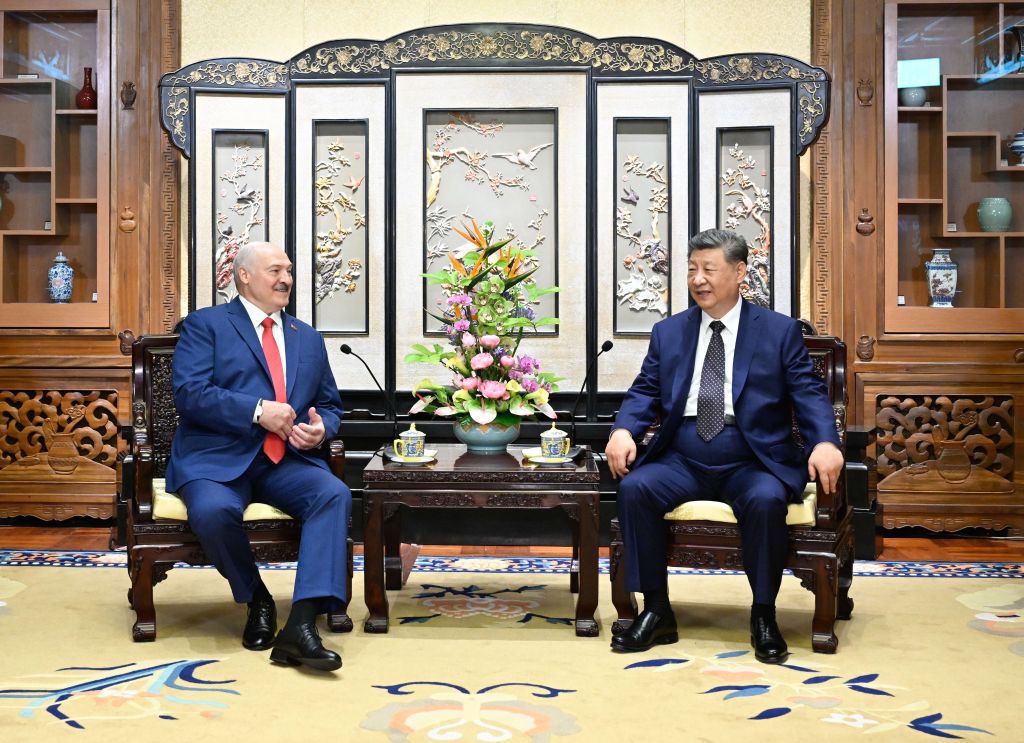
Chinese President Xi Jinping met with Belarusian President Alexander Lukashenko in Beijing on Monday.
China and Belarus should maintain strategic communication, and promote the continuous progress of bilateral relations that are already running at a high level to better benefit the people of the two countries, Xi stressed.
China supports Belarus in safeguarding its national sovereignty, independence and territorial integrity, and in pursuing a development path that suits its own national conditions, Xi said, expressing China's willingness to continue to offer assistance within its capacity for the development of Belarus.
Xi said China and Belarus are true friends who trust and support each other, good partners for common development and prosperity, and all-weather comprehensive strategic partners.
Having withstood the test of a changing international landscape, the bilateral relationship has made leapfrog development in recent years and has now entered the best period in history, he said.
The two sides have enjoyed solid political mutual trust, achieved fruitful results in high-quality Belt and Road cooperation, made tangible progress in key cooperation projects, and conducted productive multilateral coordination, Xi said.
The facts have proven that deepening the all-weather and all-round cooperation between China and Belarus is in line with the trend of the times and serves the fundamental interests of the two peoples, Xi said.
The two countries should mobilize resources from various sectors to advance Belt and Road cooperation, and enhance coordination and cooperation within multilateral frameworks to serve as a stabilizing force in a turbulent world, Xi said, adding that China is ready to work with Belarus to build a community with a shared future for humanity and implement the four major global initiatives proposed by China.
Hailing the comprehensive and in-depth practical cooperation between Belarus and China, which provides important support for Belarus' economic and social development, Lukashenko said the Belarusian side attaches great importance to its relations with China and looks forward to strengthening strategic communication, expanding cooperation areas, and promoting greater development of bilateral ties.
President Xi has put forward four major global initiatives to promote the political settlement of hot-spot issues, making significant contributions to world peace, stability and prosperity, said Lukashenko, adding that Belarus is willing to maintain close coordination with China on international and regional affairs and jointly promote global and regional peace, development and stability.
The Ministry of Emergency Management on Saturday activated a Level-IV national geological disaster emergency response for Anhui, Hubei, Hunan and Guizhou provinces.
China has a four-tier emergency response system, with Level I being the most severe.
Meteorological forecasts warn that heavy downpours are expected to lash regions spanning from the Guangxi Zhuang Autonomous Region and Guizhou to the middle and lower reaches of the Yangtze River.
Joint assessment by the Ministry of Emergency Management and the Ministry of Natural Resources indicated higher risks of geological disasters in parts of southern and western Anhui, southwestern and eastern Hubei, western Hunan, and southern Guizhou.
The ministry has urged local authorities in these regions to closely monitor rainfall, flood conditions and geological disaster risks.
US-Iran talks in Switzerland underwent twists and turns amid threats from US side and an Iranian delegation walkout. Mediators Qatar and Pakistan called high-level talks concluded on Monday positive and constructive. Both sides agreed to set up a de-confliction cell to resolve hostilities in Lebanon, with lower-level talks scheduled for the rest of the week.
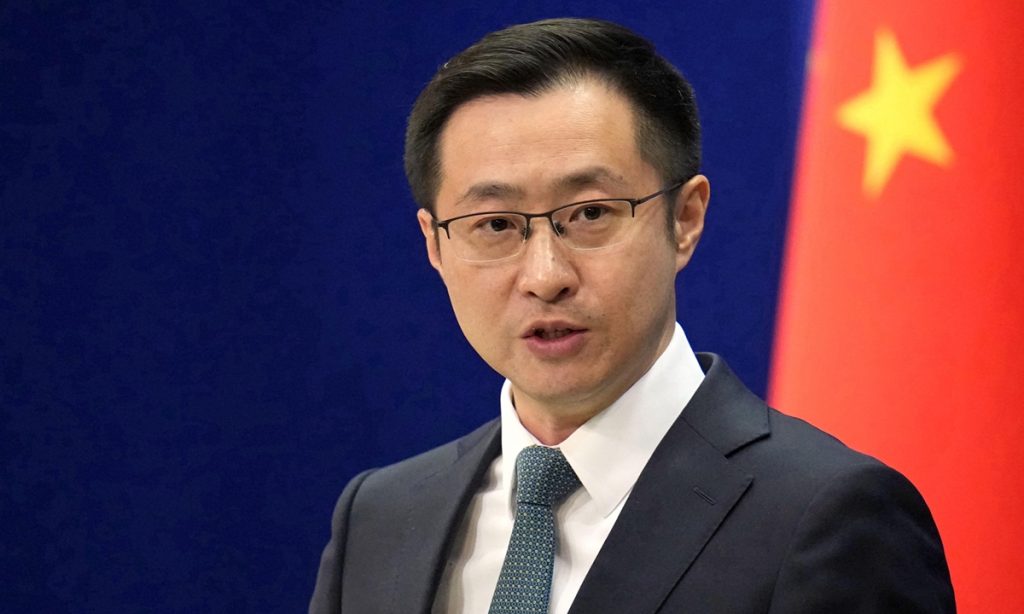
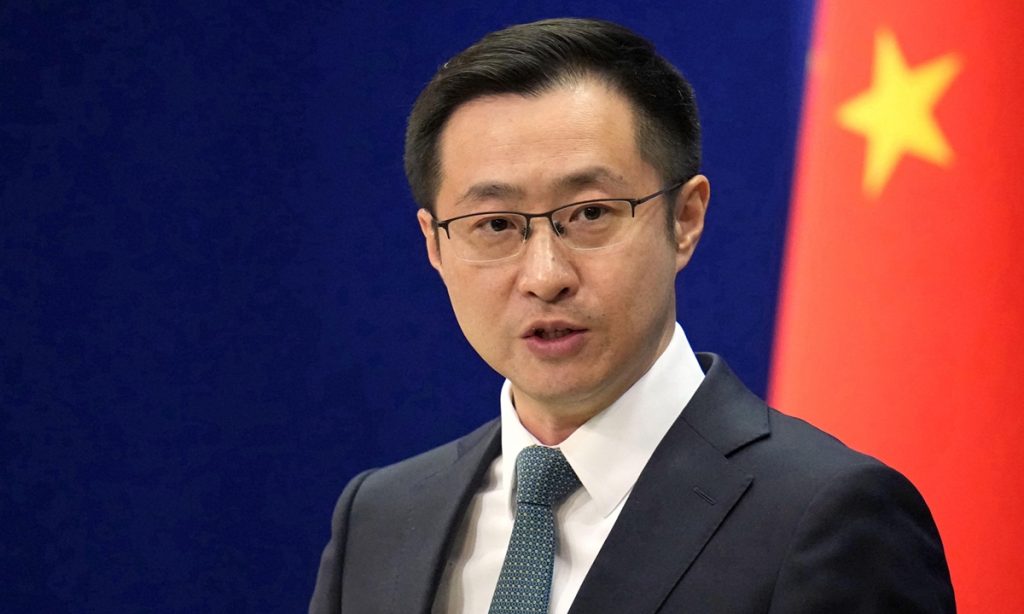
"China supports the mediation efforts by parties including Pakistan and Qatar. We hope Iran and the US will keep the talks going, further narrow differences and strive for good progress in their negotiation," Chinese Foreign Ministry spokesperson Guo Jiakun said on Monday, when asked to comment on that Iran and the US agreed Monday to set up communication lines to keep the Strait of Hormuz open and end fighting in Lebanon, according to mediators, Pakistan and Qatar.
US-Iran negotiations concluded constructively in Switzerland overnight and technical talks will continue this week, according to mediators, after US President Donald Trump's threats stalled progress. At one point, an Iranian source told CNN talks had stalled after Trump took aim at Iran in an interview with Fox News. Trump threatened to resume bombing Iran and take over the Strait of Hormuz, saying "If they don't make a deal, we'll collect tolls."
Iranian foreign ministry spokesperson Esmaeil Baghaei said Iran initially refused to continue after Trump's threats were aired, according to state media, per CNN.
But high-level negotiations continued before concluding in the early hours of Monday, with Pakistan and Qatar saying technical talks between the two sides would continue for the rest of the week, said the report.
Moreover, after round one of the talks concluded, the Iranian delegation refused to take part in a planned handshake and joint photo opportunity with American officials, according to the FirstPost.
Video footage shared by Iran's semi-official Tasnim News Agency showed the Iranian delegation leaving the conference room ahead of the scheduled media event with the US side. According to Iran's state news agency IRNA, the delegation exited the venue after the meeting owing to Trump issuing threats on social media.
According to one report, Pakistan's Shehbaz Sharif was shocked at the walkout and then sent the country's Interior Minister Mohsin Naqvi with the Iranian team as he discussed the matter with another key player, Pakistan's army chief Asim Munir, per FirstPost.
Later on Monday, mediators Pakistan and Qatar said the US and Iran agreed to establish a High Level Committee to provide "political oversight on the mediation." Negotiators reporting to the committee will lead groups focused on nuclear issues, sanctions, and other means to implement the US-Iran agreement, the mediators said in a joint statement, according to CNN.
The mediators also said "encouraging progress" had been made in the talks — a surprising outcome after a long stretch of uncertainty.
A statement from mediators Pakistan and Qatar said the cell would include the Lebanese government and would "ensure the adherence of the termination of military operations in Lebanon." But it remains unclear whether that will be enough to stop fighting between the Hezbollah and Israel, which occupies Lebanon and insists it must maintain a free hand to attack militants who are launching attacks into northern Israel, according to the Associated Press.
The talks marked the start of a 60-day diplomatic process that seeks to reach a permanent deal to end the Iran war. But the fighting in Lebanon remains one of the key sticking points, according to AP.
Iran's foreign minister has shared a post responding to Pakistan and Qatar's statement. "Tireless Pakistani and Qatari mediation has delivered major progress to end Lebanon War," Seyed Abbas Araghchi wrote on X.
"Oil and [petrochemical] exports are waived, blockade lifted, some frozen assets released, and major reconstruction and development plan launched for Iran," he added. However, he concluded by saying that the first "real test" will be the "Lebanon deconfliction cell."
Iranian President Masoud Pezeshkian said that his government entered the ongoing negotiations "with dignity and pride, without backing down," and described the outcome of this process as creating "good openings" in trade and investment, according to Iran Wire.
According to ISNA, speaking on Monday at the National Guilds Day ceremony at the Tehran Summit Hall, Pezeshkian said the negotiation process progressed in such a way that "we signed off on all the clauses we expected," and that the Islamic Republic "will not back down or bow down" when its rights are ignored.
Also on Monday, US Vice President JD Vance said that the Strait of Hormuz is open and crude oil and natural gas are flowing through. "We wanted to build a mechanism for keeping the Strait of Hormuz open. It is open," said Vance as he delivered remarks after the first session of US-Iran talks concluded at central Switzerland's Buergenstock resort, Xinhua reported.
Pakistani Prime Minister Shehbaz Sharif wrote on X on Monday that the First High-Level Committee Meeting under the framework of the Islamabad Memorandum of Understanding has concluded successfully in Burgenstock, Switzerland. The discussions were held in a positive and constructive atmosphere and yielded encouraging progress, including agreement on a roadmap toward a final deal within 60 days, the establishment of a High-Level Committee to provide political oversight, and the commencement of further technical talks.
Pakistan will continue to play its honest and sincere role in advancing dialogue and diplomacy towards a peaceful and lasting resolution, he added.
Sun Degang, director of the Center for Middle Eastern Studies at Fudan University, told the Global Times on Monday that the upcoming technical talks are a critical juncture. The true test of this mediation hinges on four seemingly irreconcilable pillars: the jurisdictional battle over the Strait of Hormuz, the concrete timeline for unfreezing Iranian assets, the nuclear material transfers, and a viable exit strategy for the ongoing conflict in Lebanon, Sun added.
The first and second volumes of selected works of Xi Jinping, general secretary of the Communist Party of China (CPC) Central Committee, on Party building have been published and are available for distribution in China.
The two volumes compile 102 pieces of the most important and fundamental works by Xi on Party building from November 2012 to February 2026, which come in forms such as reports, speeches, articles and instructions.
The publication of the works will provide authoritative materials for Party members, officials, and the public to study and implement Xi Jinping Thought on Socialism with Chinese Characteristics for a New Era, especially Xi Jinping Thought on Party Building.
It is of great significance for the entire Party to apply Xi Jinping Thought on Party Building to plan and advance the Party's development and exercise full and rigorous Party self-governance with higher standards and more concrete actions.
Compiled by the Institute of Party History and Literature of the CPC Central Committee, the books were published by the Central Party Literature Press.
A senior Chinese official on Wednesday refuted foreign media reports claiming that boarding schools in Southwest China's Xizang Autonomous Region represent "forced assimilation," "compulsory boarding," and "human rights violations." Those reports are completely inconsistent with the facts, the official said.
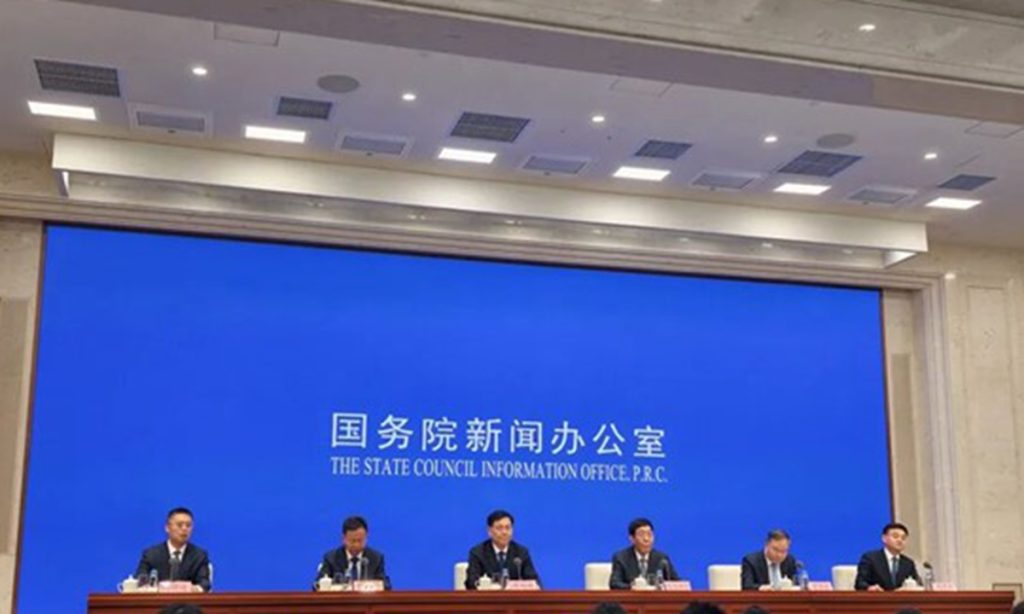
The boarding school system reflects China's commitment to ethnic equality and educational equity, Duan Yijun, vice minister of the United Front Work Department of the Communist Party of China Central Committee, told at a press conference on Wednesday. The State Council Information Office (SCIO) held a press conference on Wednesday regarding the Ethnic Unity and Progress Promotion Law and China's work on ethnic affairs.
China's Compulsory Education Law stipulates that county-level people's governments may establish boarding schools where necessary. The law also emphasizes that the purpose of boarding schools is to ensure that school-age children and adolescents living in dispersed areas can receive compulsory education. This policy was introduced by the Chinese government based on the country's specific national conditions to ensure equal access to education for all ethnic groups, not any particular ethnic group, Duan noted.
Second, China's boarding school system simply means that schools provide accommodation, meals, and other support services for students. They are not closed institutions, let alone militarized facilities, Duan said.
Whether a student boards at school is entirely a voluntary choice made by the student and their parents based on family circumstances and educational needs. In fact, the number of boarding students changes dynamically: some students switch from boarding to commuting, while others move from commuting to boarding, depending entirely on their own preferences and those of their families. Boarding students can return home on weekends, holidays, and during winter and summer vacations. Parents are free to visit their children at any time and may take them home whenever necessary, he introduced.
Third, judging from the results of the policy's implementation, Xizang farmers and herders have shown a strong willingness to enroll their children in boarding schools, Duan said.
As is widely known, Xizang covers a vast territory with a highly dispersed population. The cost of sending children to school is high, and the burden on parents who must transport them to and from school is considerable. To ensure that children of all ethnic groups on the plateau enjoy equal access to high-quality education, and in response to public demand, the government has implemented boarding education in certain rural and pastoral areas. This provides students with safer and more convenient conditions while meeting the needs of both parents and children, the official noted.
Duan also emphasized two other facts during the press conference. In old Xizang, there was not a single modern school in the true sense of the term. The enrollment rate of school-age children was less than 2 percent, and more than 95 percent of the population was illiterate. The children of serfs were deprived of the right to education. In particular, children in pastoral areas could only follow livestock as they moved from place to place. Equal access to education was simply beyond the reach of ordinary people. It is only under the leadership of the Communist Party of China that the light of educational equity has reached every tent and every household on the plateau. According to official statistics released by the Xizang Autonomous Region in 2024, the enrollment rate for school-age children reached 99.98 percent, while the retention rate for compulsory education stood at 96.94 percent.
Second, in world history, it was precisely some countries that now politicize human rights issues that once forcibly sent Indigenous children to colonial-style boarding schools, suppressing their culture and identity. China's boarding school system is fundamentally different from those practices, Duan pointed out.
It is also worth noting that, in order to better safeguard the equal right to education for people of all ethnic groups, the Ethnic Unity and Progress Promotion Law contains comprehensive legal provisions concerning language and script education, the compilation and use of teaching materials, shared learning and growth among students of different ethnic backgrounds, cross-regional exchanges among young people, and the allocation of public service resources. These provisions fully embody China's experience of pursuing common unity and common prosperity, and can provide valuable reference for ethnic affairs governance in other countries, Duan said.
When asked to comment on that the EU High Representative for Foreign Affairs and Security Policy Kaja Kallas said the EU had verified reports alleging that the Chinese military had been training Russian military personnel to fight in Ukraine, Chinese Foreign Ministry spokesperson Lin Jian said at a regular press conference on Tuesday that the relative claims have no factual basis and are purely slander and defamation.
China's State Council Information Office on Wednesday released a white paper titled "More Just and Equitable Global Governance: China's Principles, Proposals and Actions."
Chinese people believe that letters are as valuable as gold. For thousands of years, letters, across mountains and oceans, have been delivering the writers' sentiments and conveying friendship and expectations.
Chinese President Xi Jinping, also general secretary of the Communist Party of China (CPC) Central Committee and chairman of the Central Military Commission, has managed to find time to reply to some letters from different sectors of society and different parts of the world despite his busy work schedule.
Through these letters, he has corresponded with people from all walks of life on numerous occasions, part of a series of excellent stories of China in the new era.
The Global Times traced and contacted some of the recipients of these letters to hear their inspiring stories and their understanding of modern China.
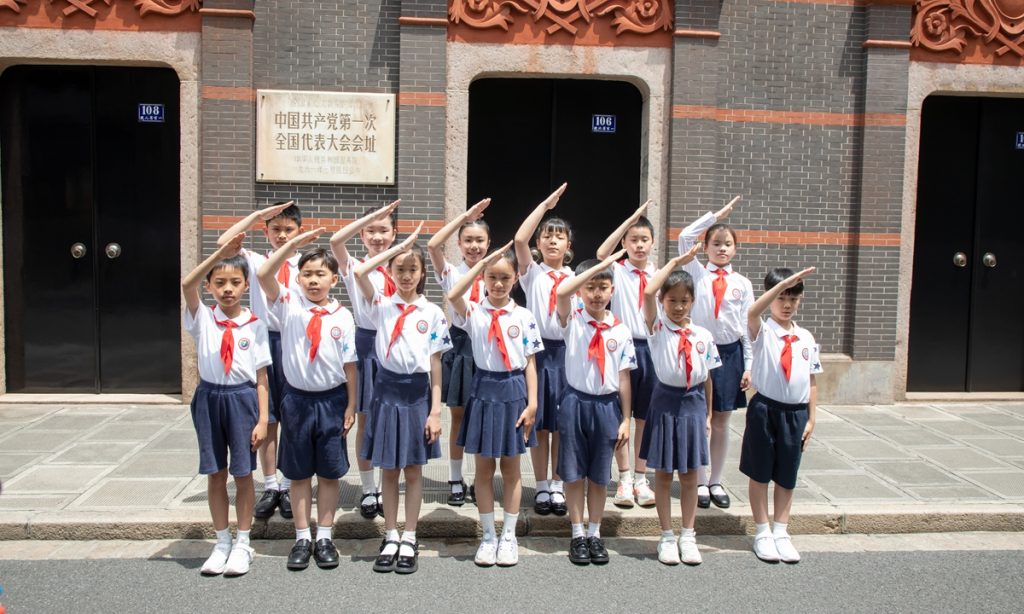
In this installment, we turn our attention to a group of Chinese teenagers who volunteer as student docents at the country's red-themed revolutionary memorial sites, telling the stories and spirit of the CPC and China's development. "We received a special letter!" A burst of delighted voices filled the classroom as 10-year-old Yan Zhiling and his classmates gathered around, their eyes sparkling with excitement.
Chinese President Xi Jinping recently sent a reply letter to student docents at the Memorial Hall of the First National Congress of the CPC and the Nanhu Revolutionary Memorial Hall, which are both the memorials of the birthplaces of the CPC. In the letter, he offered words of encouragement to the docents, who are members of the Chinese Young Pioneers (CYP), and extended festive greetings to them and to children nationwide, the Xinhua News Agency reported.
As a student docent at the Memorial Hall of the First National Congress of the CPC after school, Yan Zhiling was reminded of the moment he and several other young peer docents had sat down to write the letter together. "We wrote it very carefully, stroke by stroke, making sure every character was neat and tidy," he recalled.
"When we learned that we got the reply letter, we were overjoyed," the fourth-grader told the Global Times. "This letter was the most precious Children's Day gift we received."
A warm, inspiring reply
In his reply, Xi said that he was pleased to learn that the students had fostered a deep affection for the Party, the country and socialism, and had grown and learned a lot through recounting the Party's history, revolutionary stories and heroic deeds at the site of the First National Congress of the CPC in Shanghai and beside the Red Boat on Nanhu Lake in Jiaxing, East China's Zhejiang Province, Xinhua reported.
These words of encouragement felt both warm and deeply inspiring to Yan Zhiling. Yan Zhiling has always had a special affection for stories about the Party and the country's revolutionary history and development, especially the ones his father used to tell him, such as stories of the Party's early members holding its first national congress in Shanghai in 1921. Growing up surrounded by such vivid accounts, the young boy quietly planted a seed in his heart.
When the "Honglaba" (red loudspeaker) club at Shanghai Huangpu Luwan No. 1 Central Primary School recruited new members, Yan Zhiling signed up straight away.
The club mainly organizes students to use their spare time to tell Party history stories to child visitors at red-themed revolutionary sites and museums in Shanghai, such as the school's nearby Memorial Hall of the First National Congress of the CPC. After a period of training, Yan Zhiling became one of its members.
Other cities also have student docents like these. In April, members of the "Honglaba" club took part in a study-and-exchange visit with student docents at the Nanhu Revolutionary Memorial Hall in Jiaxing. In 1921, to evade pursuit by the reactionary forces, the last session of the First CPC National Congress was held on a boat on Jiaxing's South Lake. Both Shanghai and Jiaxing are witnesses of the moving stories of the CPC's early development.
During the study-and-exchange visit, young docents from the two cities gathered together, chattering excitedly as they exchanged tips and experiences from their work. From their own stories to their shared ideals, as the conversation deepened, so did their excitement. An idea then naturally took shape: Why not write a letter, reporting what they had learned and how they had grown through their work as student docents?
They began writing the letter at the end of April. By early May, the letter had been sent. To their surprise, they soon received the reply.
The young docents erupted with excitement the moment the reply letter arrived. "I felt so proud and moved. He is so busy, yet he still cares about the growth of ordinary Young Pioneers like us," said Li Ruicheng, a fifth-grader, also from Shanghai Huangpu Luwan No. 1 Central Primary School.
"The reply was filled with the Party and the country's earnest hopes for our younger generation," Yan Jiacheng, a student docent from Jiaxing Experimental Primary School, told the Global Times. "I will use my own voice to open the curtain on revolutionary stories, sharing these stories with more people."
'Let children tell'
In 2021, a nationwide initiative was launched to encourage CYP members across the country to study the Party's history and share these stories as docents at revolutionary memorial venues, according to Xinhua.
Since the initiative was launched, many red-themed museums and memorial sites across China have increasingly been visited by young student docents wearing the iconic red scarves of the CYP, as patriotic education moves beyond textbooks and into real-life practice. The "Honglaba" club is one representative example of this growing student docent team.
According to Chen Lili, a counselor (teacher) of the CYP work committee at Shanghai Huangpu Luwan No. 1 Central Primary School, the club was originally created with a simple goal: "to let children tell Party history stories to other children."
Chen noticed that in some red heritage venues, the standard adult-style commentary was often difficult for younger audiences to fully grasp, with language that could feel overly formal and abstract. The school then cooperated with the Memorial Hall of the First National Congress of the CPC, and invited professional docents of the memorial to help refine the scripts, translating them into child-friendly language. "In this way, the Party history told by children feels much closer to their peers' way of thinking, and is easier for children of the same age to understand," Chen told the Global Times. The experience of giving these talks has also become a rewarding journey for the pupil docents themselves. Chen said that through repeated on-site presentations, the transformation in these students has been striking: they have grown bolder, more confident and far more comfortable speaking in public. Children who once shied away from addressing a crowd are now able to stand calmly before dozens of visitors and deliver their talks with ease, she added.
When asked about the changes brought by serving as student docents, the children's eyes lit up. "I now truly understand what the Party's forebears went through, and I have a deeper grasp of these revolutionary stories and the spirit behind them," said Li, who has been a docent for four years. "I'm not just memorizing lines - I'm telling these moving stories naturally, from the heart."
Jiang Qingyue from Jiaxing Experimental Primary School, who has been a student docent in Jiaxing for three years, agreed. She told the Global Times that the experience has strengthened her character and deepened her sense of patriotism.
"I'm no longer simply reciting words; I'm speaking about the Party's memorable years with reverence and sincerity, carrying forward the original aspiration of the red spirit," she said.
Carrying the legacy forward
This year marks the 105th anniversary of the founding of the CPC and the Party's cause calls for unremitting efforts across generations. The reply letter encouraged the children to hold high the banner of the CYP and follow the Party, carry forward revolutionary traditions, enrich their knowledge and capabilities, build strong characters, grow into children devoted to the Party and the people, and carry the baton of history forward on the new journey, reported Xinhua.
This letter has planted the seed of inheriting the red legacy in the hearts of the young student docents, allowing it to take root and flourish as part of their lives and growth. "This seed reminds us to love our country, never bow to difficulties, and, as we grow up, stay true to our beliefs and ideals and become useful people," said Yan Zhiling.
How can more children be encouraged to take part, and how can red stories be told in a more vivid and far-reaching way? Some red heritage sites are continuing to explore new ideas and innovations.
For the Nanhu Revolutionary Memorial Hall, for instance, the experience for its student docents goes beyond standard guided tours. The venue has also staged immersive productions themed on revolutionary history, allowing the young docents to step into roles, relive history at close range and deepen their understanding of the revolutionary spirit, the Global Times learned from the venue.
For the student docents of the Memorial Hall of the First National Congress of the CPC, the script has expanded far beyond one version. In addition to the original Putonghua version, there are now English, Shanghai dialect, comic-strip and kuaiban (a traditional Chinese performance art that combines rhythmic clapping with storytelling) versions, making the stories of the Party's history more vivid and engaging, said Yang Yu, director of the memorial's publicity and education department.
"This kind of entertaining, educational approach helps children remember and understand the Party's stories much better - something even many adults can't achieve," Yang told the Global Times.
The English version has been equally heartening, Yang said. She recalled seeing a student docent at the memorial telling foreign visitors the story of the Party's founding in simple, but engaging, English. After the talk, the foreign audience applauded warmly. "Later, I asked the young docent how he felt, and he said he was very proud, saying, 'I just want foreign children to learn about our CPC's story, and I also want them to know how proud I am as a Chinese child.'"
Yang added that the memorial will continue to attract more teen students to join the effort to share the story of the Party's founding and development, "so that more children can tell the story in their own innocent, childlike voices, and more young listeners can become storytellers."
At the invitation of Minister of Foreign Affairs of Mongolia Battsetseg Batmunkh, Member of the Political Bureau of the CPC Central Committee and Minister of Foreign Affairs Wang Yi will visit Mongolia from June 13 to 15, a Chinese Foreign Ministry spokesperson announced on Thursday.
At a regular press conference on Thursday, when asked to brief on Wang's visit to Mongolia, Chinese Foreign Ministry spokesperson Lin Jian said that during the visit, Foreign Minister Wang Yi will meet with Mongolian leader and hold talks with Foreign Minister Battsetseg Batmunkh. The two sides will communicate on bilateral ties, practical cooperation, as well as international and regional issues of mutual concern.
China and Mongolia are close neighbors connected by mountains and rivers. Under the strategic guidance of the heads of state of the two countries, China-Mongolia relations have maintained sound momentum of growth. China expects this visit to further implement the important consensus reached by the leaders of the two nations and steadily advance the China-Mongolia comprehensive strategic partnership, Lin said.
Crystal clear brooks weaving down green grassy slopes against the backdrop of snow-capped mountains - this is the home of the Central Asian salamander, or Ranodon sibiricus, a relict species dating back 350 million years and co-habitants of dinosaurs, which is listed as EN (endangered) status by the International Union for Conservation of Nature (IUCN) Red List.
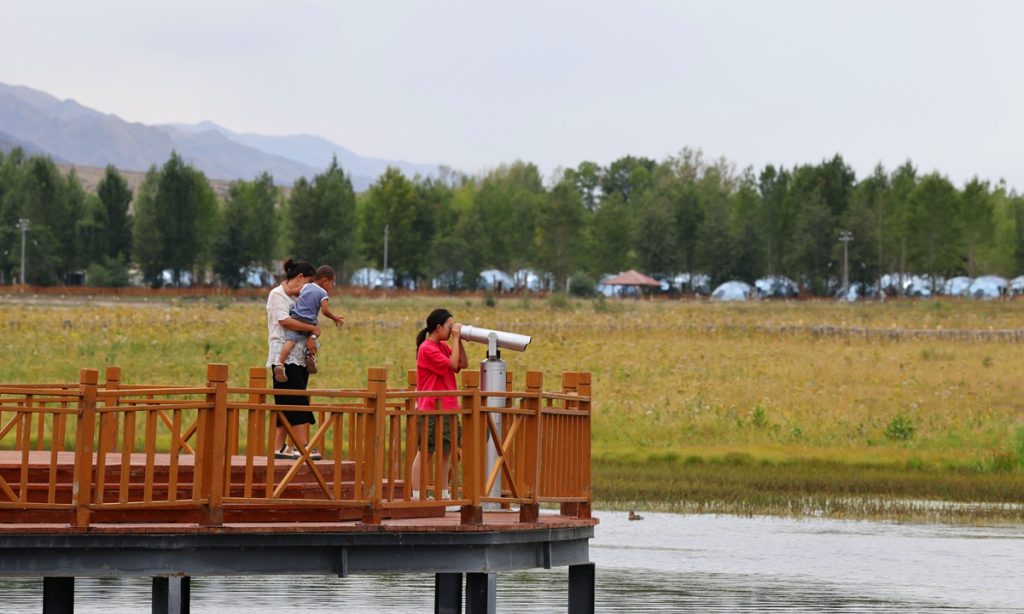
This rare amphibian, also called Xinjiang salamander, predominantly inhabits high-altitude mountain springs, streams, and also the shallow waters of lakes at elevations ranging from some 2,000 to 3,000 meters, the exact phrases that describe Wenquan county of Bortala Mongolian autonomous prefecture in Northwest China's Xinjiang Uygur Autonomous Region, which borders Kazakhstan.
Xinjiang salamander is a survivor of geological changes, a living fossil that bears witness to the evolution of life on Earth that also serves as a core indicator species reflecting the health of mountain ecosystems in Xinjiang.
Through a visit to the national nature reserve of Xinjiang salamander, the Global Times has gained a deeper understanding of how the local people have safeguarded the "living fossil" species at the borderland, writing their own verses in the building of a Beautiful China. 'Living fossil'
The story of Xinjiang salamander started in 1866 when a Russian biologist discovered the Central Asian salamanders, which only live in an area spanning 500 square kilometers in Dzungarian Alatau, a mountain range in the northern Tian Shan, in northwestern China and Kazakhstan.
It was never spotted again in the following century until in 1989 when a student at Xinjiang Normal University brought from their hometown Wenquan county a mysterious "four-foot snake," which was identified by biologist Wang Xiulin as the previously discovered Central Asian salamander, the Global Times learned from the Xinjiang Salamander National Nature Reserve.
For the following decades, studies were carried out on this species, which "did not transform much over the past 350 million years and provides unique and irreplaceable values in understanding the evolution of vertebrates, earning the title of a 'living fossil,'" Zhu Wenjing, chief at the manage station of the nature reserve, told the Global Times.
Measuring around 20 centimeters, Xinjiang salamanders are nocturnal and hibernant. They usually seek shelters in damp grass tussocks and burrows on the banks, or crevices beneath stones in the water, and live on insect larvae.
An interesting behavior of Xinjiang salamander recently observed is that the family members never meet each other - the mother lays eggs on stones; the father passes by, inseminates eggs and leaves; the egg self-hatches for 40 days and the baby comes to the world.
The "rediscovery" of this species in the 1980s fueled great public interest in the species and due to lack of protection awareness at that time, its population quickly dropped due to loss of habitats and poaching.
Fortunately, there were rising efforts to protect the species from the day it was rediscovered.
Wang and her team surveyed an area of 2,500 square kilometers, identified six habitats of the species, and through measures such as artificial mimicking of favorable conditions, succeeded in artificial hatching, the Global Times learned.
In 1997, the Xinjiang Salamander Nature Reserve was established at the autonomous region level. And in 2016, the Xinjiang Salamander Research and Education Center was also instituted, integrating science outreach, research, communication, and education. The following year, the Xinjiang Salamander Nature Reserve was upgraded to a national-level protected area.
Over the past decade, herding was banned in the area to turn grazing lands back into grasslands and wetlands, water has been diverted to improve habitat, and efforts have been made to promote public awareness to protect nature and the species, according to Wenquan county officials.
Zhu told the Global Times with excitement that "a latest survey estimated the wild population in China has recovered to 3,300 from around 1,500 in 2015."
"But we will not be satisfied with that. One obstacle is that the artificial-hatched salamanders are infertile, and that is the choke point we will strive to overcome in our conservation work," Zhu said. From species to ecology
Outside the fencing of the nature reserve stands a one-story building with a light blue roof, which is bluer than the clear sky on plateau. It is the Wusitubiegezen post under the manage station. Namucila, a local Mongolian and the ranger of the reserve, lives here with his wife, who is a civil border guard.
Namucila's duty is to patrol the reserve, monitor the streams and grasslands, expel livestock which break into the reserve, prevent risk of bushfire, and take care of all wildlife in this area if they are in need.
He endures strong winds and almost eight months of snow year-round, the man in his fifties said with a smile that the work isn't tiresome. "I like it. It is not toilsome."
Namucila has known of Xinjiang salamanders since his youth, but his life has been woven together with the rare species only recently when he left his small pasture nearby and became a full-time ranger.
Equipped with pan-tilt cameras, high-definition infrared dome cameras and high-definition infrared cameras, Namucila now can "patrol" the reserve online in extreme weathers. Also, the station dispatches drones often to monitor the reserve area.
Such measures can minimize the interruptions to the natural habitat of the Xinjiang salamanders, Zhu explained, adding that such systemic conservation efforts with the assistance of high technologies have greatly improved the overall health of the ecosystem.
The efforts invested for Xinjiang salamanders have benefited more wildlife, as the visitors include ibex goats, foxes, boars and even snow leopards, Zhu noted.
More importantly, through unwavering conservation efforts and growing public education, more and more local people now understand that environmental protection is bringing greater and longer-term benefits, prompting a voluntary participation in conservation of nature and the pursuit of harmony between human and nature, local officials said.